Most people get maybe 60% out of a cordless leaf blower, and the missing 40% has nothing to do with the motor. I've watched it for years: one battery in the tool and the other still in the box, full speed from the very first pass, wet leaves herded straight into the wind, and twenty minutes later a guy standing in the driveway waiting on a charger and calling the blower junk.
I spent 12 years running a tree service crew outside Charlotte, and I moved my light-duty kit to battery three years ago. Since then I've timed every pack I own with my phone, full blast, from a full charge, on dry leaves, wet leaves, and wet wood chips. The pattern never changes. The person who gets the most out of a cordless leaf blower is the person who plans the job before pulling the trigger.
This is the workflow I hand to new hires on the first cold morning of storm season, plus the two 21-volt handhelds I get asked about most at the two price points that matter.
Why you should trust me
I started as a ground guy at 19, hauling brush until my back quit, then learned to run a saw properly and never put one down. Twelve years of crew leading, storm season every year: hurricane debris off the coast, ice storms that fold maples over driveways, two trees off roofs this year alone. My first gas blower was a big-box special that needed a carburetor rebuild every other season. That tool is why I read the warranty card before I read the price.
My rules don't bend. No runtime claim without me timing it on my phone, full blast, from a full charge. No blower opinion without a wet-leaf test, because dry leaves are easy and wet leaves are the truth. No battery platform recommendation without checking what else the pack fits, because a tool with a dead-end battery is a trap with a handle. And no warranty claim unless the paperwork is actually in the box.
What I look for in a handheld battery blower
This is a how-to, not a shootout, so here's the checklist any cordless blower has to pass before it earns a spot in my truck or a mention in this guide.
Airflow, not airspeed. CFM is the number that moves leaves. Miles per hour is a sticker designed to impress you in the aisle. A blower rated in mph is selling you a number, not airflow.
Two batteries in the box. One pack means you work in shifts around a charger. Two packs mean you work. This is the single biggest quality-of-life difference at the budget end of the market.
Speed modes, not just a trigger. A low setting is not a gimmick. It's what you use on pollen strands on a concrete pad, on garage dust, and around flower beds where you don't want to strip the mulch.
The charger. A wall wart that charges one pack at a time will have you waiting all day for the second battery. A real charger, or at least a kit that includes one, is worth more than a slightly higher airflow number.
The wet-leaf test. Wet oak leaves on grass, in a pile, at full speed. Any blower can move dry leaves down a driveway. The ones that move wet leaves are the ones worth owning.
Weight and balance. You'll hold it for 45 minutes. A light blower with the battery mounted low is easier on your wrist than a heavier one with the pack up top, and your arms will know the difference by hour two.
Cold-weather behavior. A pack that sat in a cold garage overnight will sag in the first few minutes. That's chemistry, not a defect, but it changes how you plan a January job.
The two blowers this workflow is built around
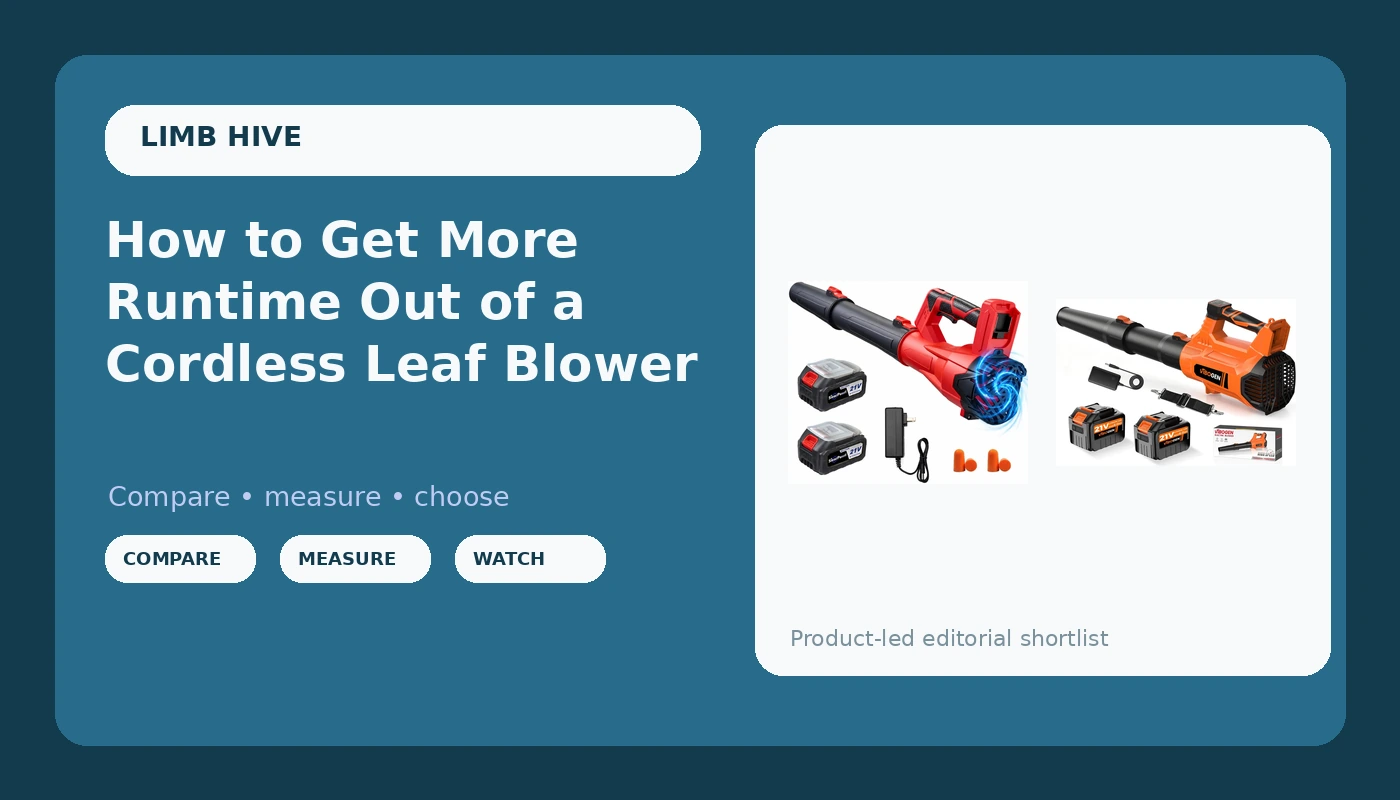
Both of these are 21-volt handhelds with two batteries in the box, which is the configuration I tell homeowners to buy. One sits at the budget end, one at the capacity end.
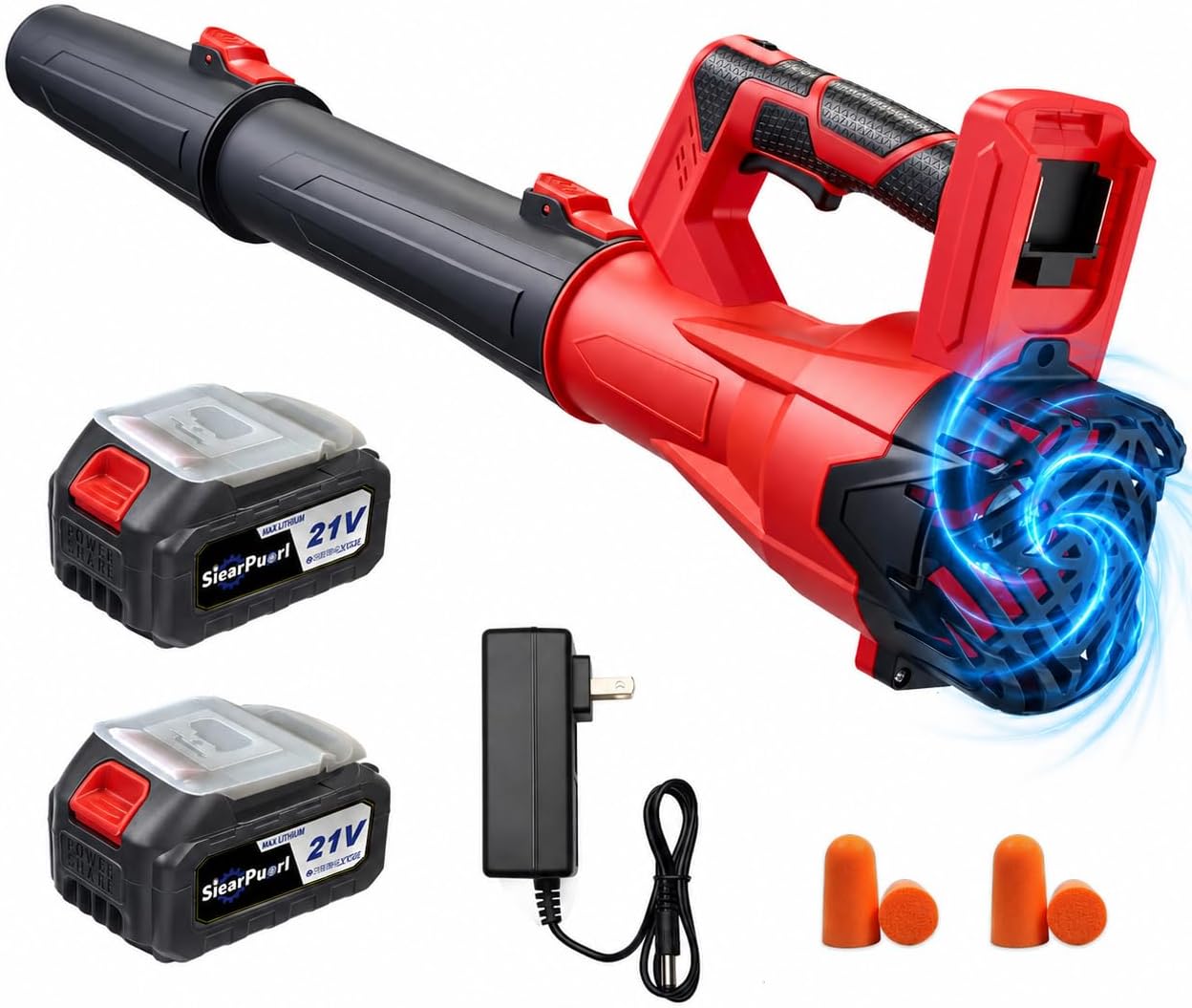
Budget pick: 6-Speed Modes Cordless Leaf Blower 21V,200MPH High-Velocity Electric Blower,Lightweight for Dry/Wet Leaves,Lawn Debris,Garage and Driveway Cleaning, Leaf Blower-2600mAh Battery*2
 Visit on Amazon →
Check current Amazon price. This is the one I point at when somebody wants a driveway, a garage floor, a pool deck, and a walkway handled without spending real money. The six speed modes are the part that matters most to me, because a low setting on concrete is the difference between clearing pollen strands and blowing a dust cloud back into your own face.
It ships with two 2,600 mAh packs, and two packs in rotation is the entire trick on a budget blower: one in the tool, one on the charger, swap at the halfway point of the job. It's light enough to carry one-handed along a fence line, which is where most people quit on a heavier tool.
Flaws but not dealbreakers: 2,600 mAh packs are the small end of the 21-volt world, so plan your work in sections instead of one long sweep. This is a suburban-lot tool, not an acreage tool. If your yard is a half acre of mature oaks, keep reading.
Anyone with a driveway, a sidewalk, a garage, and a couple of flower beds will get exactly what they paid for here.
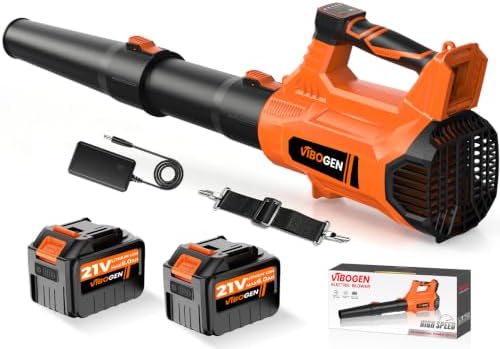
Upgrade pick: Electric Leaf Blower Cordless 21V with 2x6.0Ah Batteries & Charger
 Visit on Amazon →
Check current Amazon price. The story here is capacity. Two 6.0 Ah packs hold a little more than double the juice of the 2.6 Ah cells on the budget pick, and a charger is in the box, which means you're not hunting for a separate brick and you're not stuck with a one-pack wall wart. That combination is what turns a handheld blower from a 20-minute tool into a 40-minute tool.
If your property has a long driveway, a fence line, or a lot of oak and maple, this is the configuration that keeps you moving. Same 21-volt platform logic, same two-pack rotation, more minutes between swaps.
Flaws but not dealbreakers: More battery means more weight in the hand. If you have a shoulder that complains, run this one low and slow and let the airflow do the work instead of muscling it. Anyone clearing a big suburban lot or a long gravel drive should start here.
The actual workflow
Now the part you came for. This works on any handheld battery blower, and it works the same in October as it does in April.
Step one: charge both packs the night before. Not the morning of. Both packs, all the way, and pull them off when they're full. A cold pack that sat in the garage overnight will sag in the first few minutes of the job, so if it's January, bring the spares inside the night before and carry them in a jacket pocket. Warm packs hold voltage better than cold ones.
Step two: walk the property before you pull the trigger. Pick your lanes. Start at the far corner and work back toward where you'll pile the debris, not the other way around. Ten seconds of planning saves you from re-blowing the same strip twice.
Step three: match the speed mode to the surface. Hard surfaces get the low or middle setting. Grass and gravel get the higher ones. Full blast on a concrete driveway doesn't move leaves faster, it launches dust and grit into the air and back onto what you just cleaned. This is where a six-mode blower earns its money.
Step four: work with the wind, never against it. This is the most common mistake I see. If the wind is at your back, your leaves go where you push them. If it's in your face, you're fighting yourself for an hour and then blaming the blower. If the wind won't cooperate, work across it and accept two passes.
Step five: herd, don't scatter. Use the air to roll a pile, not to blast individual leaves across the yard. Short, controlled sweeps from the edges inward. On a driveway, run your lanes downhill if there's any slope at all, because gravity is free labor. Stop every few minutes and consolidate the pile instead of pushing a thin sheet of leaves fifty feet.
Step six: the wet-leaf pass. Wet debris is the truth-teller. Lower the nozzle closer to the ground, shorten your sweeps, and expect two passes instead of one. Wet leaves stick to grass and to each other, so you're peeling them up rather than blowing them across. If your blower bogs here, that's information, not a failure. If it keeps moving, you bought the right tool.
Step seven: swap batteries at the halfway point, not at zero. This is the trick almost nobody uses. Don't run a pack dead and then go find the second one. Swap when the first starts to feel weak, put the fresh pack in, and put the used one on the charger. You'll finish the job with a pack in reserve instead of standing in the driveway watching a charger blink.
Step eight: clean the tool before you put it away. Kill the power, then check the intake and the impeller housing for string, twine, and wet leaf mush. String wrapped around an impeller is what kills handheld blowers, and it takes thirty seconds to check. Wipe the housing down, and store the packs indoors where it's dry and above freezing.
A safety note, because I've seen the alternative: wear eye protection. Blowing grit off a driveway at speed is how people end up in urgent care with a piece of gravel in an eye. Add a dust mask if you're clearing a pile that's been sitting wet for a month, because mold spores are real. Never blow debris at another person, never blow into a storm drain or out into a road, and don't use a blower to dry a wet deck while somebody is standing on it.
Where this workflow stops working
Handheld battery blowers have a ceiling, and I'd rather tell you where it is than sell you past it.
If you're clearing an acre of wet oak leaves after a storm, you want a backpack gas blower. That's not a knock on battery tools, it's airflow and runtime math, and a handheld won't win it. Battery is the future, but the future still runs out of juice mid-job.
If there's storm debris in the mix, branches, shingles, wet wood chips, that's a different tool entirely. A blower moves leaves, not limbs. I keep three gas saws in the truck for storm calls and a battery kit for the easy stuff, and that split hasn't changed in three years.
And if you're looking at a blower with a proprietary battery that fits nothing else you own, look harder. One tool with a dead-end pack is a paperweight with a handle. Buy into a platform, or buy two batteries and accept that you're replacing the whole kit when the packs finally quit.
What this all costs
The math on a cordless blower is simple. Take what you pay, divide it by the number of Saturdays you'll actually use it, and that's your cost per cleanup. For most people that's a few dollars a weekend in the first year and pennies after that, and it's less than a tank of gas for a backpack blower that sits in the garage eleven months out of twelve.
The two units here sit at the budget end and the capacity end of the same 21-volt category. If you have a driveway and a sidewalk, the budget pick does the job. If you have a long drive, a fence line, and a lot of trees, spend for the bigger packs. Either way, the routine is the same: both packs charged, speed mode matched to the surface, wind at your back, and the swap at the halfway point instead of at zero.
That's the job. A blower is one of the few tools where technique matters as much as the motor. Run it like you mean to finish.