Related: Cordless Blower Runtime: What Two Batteries Actually Get You
Wet leaves are the truth-teller. Any blower moves dry oak leaves across a driveway in October. The gear that matters is the gear that still moves them the morning after a rain, when they are plastered to concrete and packed into the gaps between fence boards. I spent 12 years running a tree crew outside Charlotte, and fall cleanup was the part of the job nobody took pictures of.
This year I put a cordless leaf blower kit, a 72CC gas backpack, and a small airflow amplifier attachment through a full storm season, alongside the battery drill that lives behind the truck seat. The point was not to crown a winner. The point was to figure out which tool earns its space in the bed for leaves, which one is a trap, and what you should check before you spend anything. Here is the honest breakdown, plus the reference table I keep folded in the glovebox.
The short version
If you have a driveway, a walkway, a pool deck, and a couple of maples, buy the 20V cordless kit with two batteries. It is light, it starts every time, and the second battery means you keep working while the first one charges. If you have half an acre of wet oak leaves, a long gravel drive, or snow to push, the 72CC gas backpack is the tool that finishes the job. The airflow amplifier is a cheap upgrade that makes a small blower behave like a bigger one. And the brushless drill driver is in this list because leaf cleanup is never only leaf cleanup: gutter guards, fence panels, blower housings, and downspout brackets all need a screwdriver.
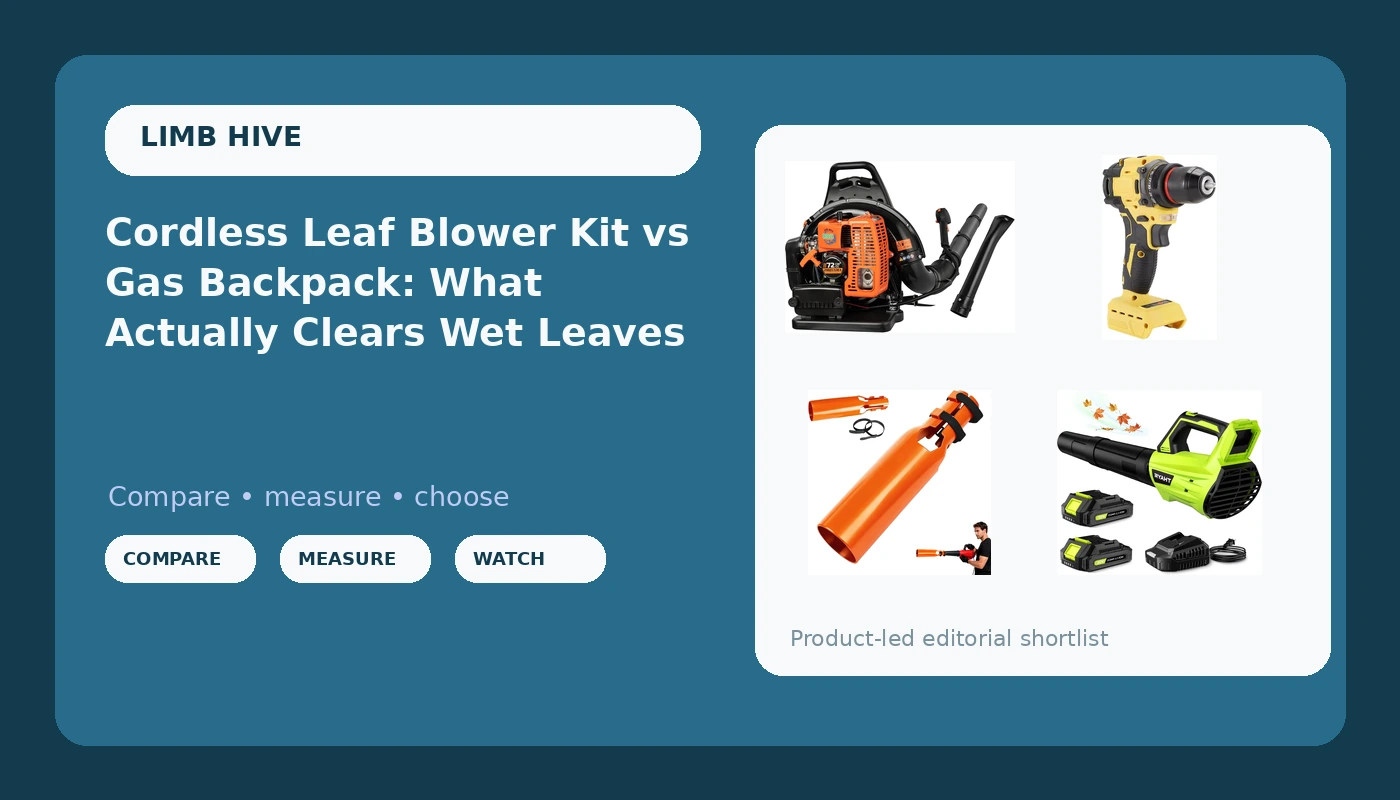
Cordless Leaf Blower with Battery and Charger, 2 Speed Modes, 2 Batteries, 20V, Green
This is the one I hand to a homeowner, and it is the one I grab first for my own driveway. Two batteries is the entire argument. One pack runs the tool while the other sits on the charger, so a Saturday cleanup does not end with you standing in the garage waiting on a wall wart charger to blink green. That single detail separates a usable kit from a paperweight.
The two speed modes are more useful than they sound. Low speed is for pollen strands on a porch, mulch beds you do not want to strip, and dust on a patio table. High speed is for the driveway and the gutter line. It is light enough to run one handed along a walkway, which matters if you have ever spent an hour holding a backpack blower at full throttle.
Where it stops is the wet-leaf test on a big property. A tight mat of soaked oak leaves on a gravel drive is more than this class of tool was built for, and no amount of throttle changes that. For a normal suburban lot, it is mission accomplished.
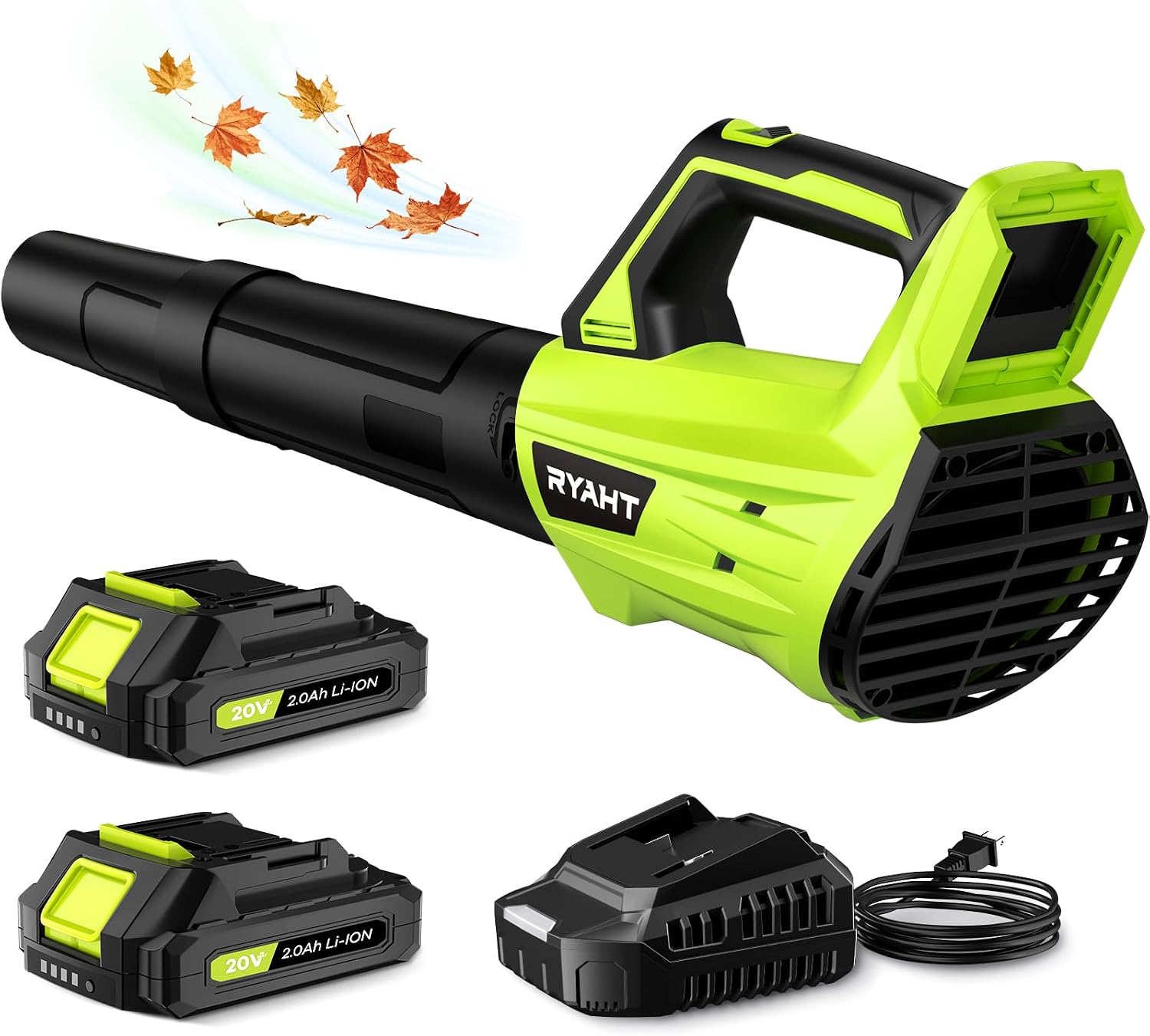
PROYAMA 72CC Gas Backpack Leaf Blower, Garden Yard Cleaning, Snow Removal
Gas is still the boss on large yards, and a backpack is the reason. The harness puts the weight on your shoulders and hips instead of your wrists, which is the difference between an hour of work and three. A 72CC engine on a backpack frame is in a different class from anything that runs on a 20V pack, and this one is also listed for snow removal, which matters here in the Piedmont when we get the ice and the wet snow that bends maples over driveways.
The tradeoffs are real and I will not pretend otherwise. You are mixing fuel, you are pulling a cord on a 30 degree morning, you are wearing hearing protection, and it is loud enough that your neighbors will know your schedule. Gas tools also want maintenance: fresh fuel, a clean filter, a spark plug, and a carburetor that behaves. Skip that and you get the saw that will not idle and the blower that dies at half throttle.
But for storm debris and a half acre of wet leaves, there is no comparison. This is the tool that finishes what the battery blower starts.
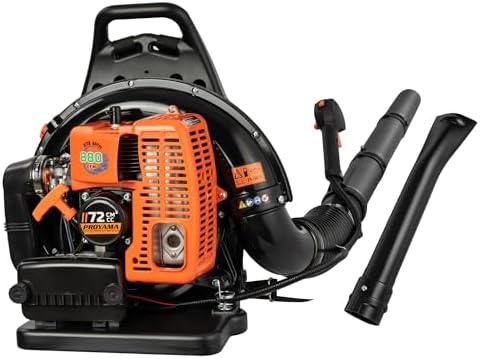
Leaf Blower Attachment, Airflow Amplifier Instantly Boosts Airflow (Orange)
This is the cheapest thing in the article and the one most people skip. It is a nozzle that narrows the air stream, and narrowing does exactly what you would expect: same volume of air, smaller opening, faster stream. It concentrates airflow, it does not create it, so be honest about which blower you are attaching it to.
On a handheld it turns a wide, lazy push into a tight, fast stream, which is what you want for gutters, fence lines, between shrubs, and under a deck where leaves collect and rot. On a weak blower you get a fast but thin stream that moves a narrow strip and leaves the rest. It is also bright orange, which sounds like a joke until you have spent ten minutes looking for a black plastic nozzle in tall fescue.
Brushless Drill Driver Compatible for DeWalt 20V Battery (No Battery)
This is not a leaf tool, but it belongs in the same conversation, because it is the cleanest example of the battery platform question. It ships without a battery, and it is built to run on DeWalt 20V packs you already own. That is a feature, not a flaw. If you are already on that platform, you are buying a bare tool and adding nothing to your charger rotation. If you are not, you are buying into a platform, and the price of the tool is not the price of the tool.
The spec sheet is a home repair spec sheet: brushless motor, two speed ranges at 0 to 450 and 0 to 1800 RPM, a 25 plus 1 position torque clutch, and a 3/8 inch keyless chuck. The 3/8 inch chuck is the honest limit here. It is a driver for gutter guards, fence pickets, brackets, and blower housings. It is not a deck-building monster with a half inch chuck and a side handle.
How I test blowers and battery tools
I do not review gear from a spec sheet, because spec sheets do not have wet leaves on them. The protocol is the same every season, and it starts before sunrise.
First, cold start. A tool that will not fire on the first or second pull after a night in the truck is dead weight, no matter what the box promised. Second, the wet-leaf test on a driveway that got rained on overnight, because dry debris is easy and wet debris is the truth. Third, runtime timed on a phone at full blast from a full charge, never the number printed on the packaging. Fourth, the battery platform check: what else does that pack fit, and what does a replacement cost relative to a whole new tool. Fifth, the handoff question, which is whether I would give it to a crew member at 6 a.m. after a storm and expect the job to get done.
I also read the warranty card before I read the price. If the card is missing from the box and there is no support email on the site, that goes in the notes, because that is the moment you find out what you actually bought.
Analysis and what it means for your yard
The single most useful thing I can tell you is that CFM is the number that moves leaves, and miles per hour is a sticker. A blower rated in mph is selling you a speed figure that says nothing about how much air it pushes. Airflow moves the pile. Speed moves a thin strip of it.
Battery tools have crossed the line for light duty. Three years ago I would not have said that. Now a 20V kit with two packs handles the driveway, the walkway, and the porch, and it does it without fuel, noise, or a pull cord. The catch is always the same: runtime on high is finite, and it ends before the job does if the job is big. Plan the batteries the way you plan the fuel.
Gas is not going anywhere for storm work and large properties. A backpack frame and a 72CC engine will clear debris that a handheld cannot touch, and the snow removal listing on the gas unit is not marketing filler in a state that gets ice.
The attachment question comes down to what you already own. A concentrator nozzle is the cheapest way to make a mid-size blower punch above its class on gutters and fence lines, and it costs less than a tank of fuel.
And the platform question sits underneath all of it. A battery that fits one tool is a trap, whether that tool is a blower or a drill. Buy into a platform, not a product.
Reference table
| Tool | Power source | What it does well | Watch out for | Price |
|---|---|---|---|---|
 Visit on Amazon → Cordless leaf blower kit, 20V, two batteries |
20V battery, two packs and charger included | Driveways, walkways, pool decks, patios, light wet debris. Two speed modes for mulch beds and pollen strands | Runtime on high is finite, and a big mat of soaked leaves will beat it | $65.99 |
 Visit on Amazon → PROYAMA 72CC gas backpack blower |
Gas, backpack harness | Large yards, wet leaves, storm debris, snow. Harness saves your arms | Fuel mixing, noise, cold starts, and real maintenance | $199.99 |
 Visit on Amazon → Airflow amplifier attachment, orange |
Fits a blower nozzle | Concentrates airflow for gutters, fence lines, shrubs, under decks | Concentrates, does not create. Weak blower, thin stream | Check current Amazon price |
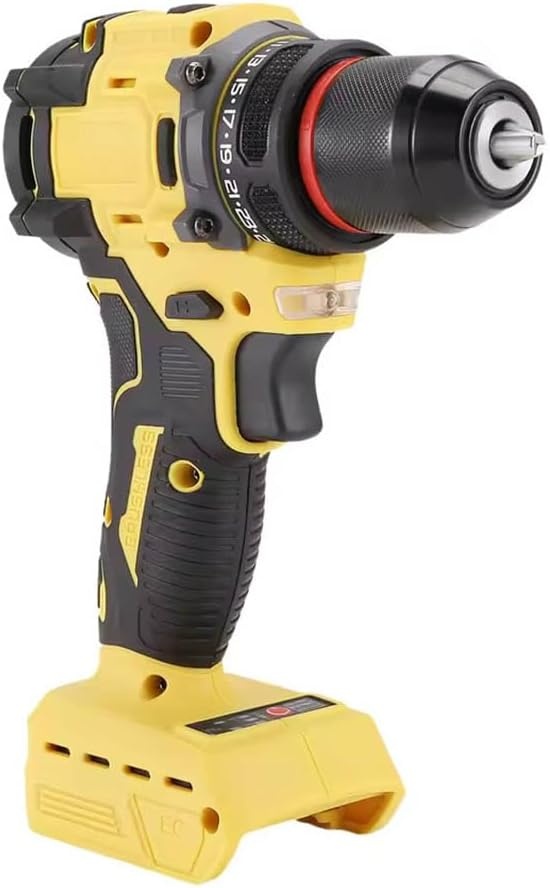 Visit on Amazon → Brushless drill driver, bare tool |
DeWalt 20V battery, not included | Gutter guards, fence pickets, brackets, blower housings, general home repair | No battery in the box, and a 3/8 inch chuck is a driver, not a deck builder | $39.99 |
Should you buy the cordless 20V leaf blower kit?
Yes, if your cleanup is a driveway, a walkway, a deck, and a few trees. Two batteries is the feature that matters, because it keeps the job moving instead of parking you next to a charger. It is light, it starts without a cord, and the two speed modes are genuinely useful on mulch and pollen.
Do not buy it expecting to clear half an acre of wet oak leaves. That is not what this class of tool is for, and blaming the blower for it is like blaming a pruning saw for not felling a maple.
Should you buy the PROYAMA 72CC gas backpack?
Yes, if you have acreage, a long gravel drive, storm debris, or snow. The backpack harness is the whole point, and 72CC of gas engine is a different category from a battery handheld. It will finish jobs the cordless kit cannot start.
Understand what you are signing up for: fuel, mixing, noise, hearing protection, and seasonal maintenance. Treat it like the saws in my truck and it will start when you need it. Neglect it and it will embarrass you at 6 a.m.
Should you buy the airflow amplifier attachment?
Yes, if you fight leaves in gutters, along fence lines, or under shrubs. It is the cheapest upgrade in this article and the one with the best ratio of dollars to usefulness, provided you understand it concentrates airflow rather than creating it.
Should you buy the brushless drill driver?
Yes, if you already own DeWalt 20V batteries. It is a bare tool, so the value is entirely in the platform you bring to it. Brushless motor, two speed ranges, a 25 plus 1 clutch, and a 3/8 inch keyless chuck make it a solid home repair driver for the brackets, guards, and panels that surround every yard tool.
If you are not on that platform, price the batteries and the charger first. That is the real cost, and it is the same lesson the leaf blower aisle teaches: buy the platform, not the product.