A cordless leaf blower is not a small gas blower with a battery glued on. It is a different tool with a different failure point, and the failure point is almost never the motor. It is airflow on wet debris and the number of charged batteries sitting on your bench.
I run a crew outside Charlotte, and every fall I watch the same thing happen in my own neighborhood. Somebody buys a blower rated at 200 mph, points it at a driveway of wet oak leaves after a night of rain, and gets a two-inch strip of clean concrete followed by a wall of leaves that will not move. Then they tell me battery blowers are toys.
They are not toys. They are just sold on the wrong number. A cordless leaf blower moves leaves with cubic feet per minute, and it keeps running as long as the battery platform behind it holds up. Get those two things right and you can clear a driveway, a pool deck, a walkway, and a garage apron without ever pulling a starter rope.
Why you should trust me
I ran a tree service crew for twelve years. I started as a ground guy at nineteen, hauling brush behind somebody else's saw until my back quit on me, and then I learned to run a saw properly because the alternative was hauling brush forever. Storm season is my busy season. Hurricane debris off the coast, ice storms that fold maples over driveways, two trees on a roof this year alone.
That job teaches you what a blower is actually for. Not leaf cleanup on a manicured lawn. Clearing a driveway so the truck can get in, blowing wet chips and sawdust off a roof before you climb it, and getting the gutter line clear so the next rain does not find your ceiling.
My first gas blower was a big-box special that needed a carburetor rebuild every other season. That is the gear that taught me to read fine print. I moved my light-duty kit to battery three years ago and I have not looked back, but I have also been burned by proprietary batteries and inflated runtime claims twice. Now I time every battery with my phone, full blast, from a full charge, and I read the warranty card before I read the price.
How I picked and how I tested
The two blowers below are the ones I would hand to a homeowner or a new crew member, and they are aimed at two completely different buyers. One assumes you already own batteries. One puts two batteries in the box.
I did not pick either off a spec sheet. Every blower that gets my recommendation goes through the same four checks.
Wet leaves first. Any blower moves dry leaves. I soak a pile of oak leaves overnight and try to move them off wet concrete. That is the test that separates a real blower from a toy.
Timed runtime, not claimed runtime. Stopwatch, full blast, from a full charge, until the airflow drops off. Marketing numbers get measured in a lab with a fresh cell at seventy degrees. My numbers get measured in a driveway in October.
Cold start. A blower that will not fire at 6 a.m. after a night in the truck is dead weight, and I do not care what the box promised.
Battery platform. If the battery does not fit anything else you own, you are buying a paperweight with a nozzle on it. That single question eliminates half the market before I ever squeeze a trigger.
Two blowers, two very different buyers
These are not competitors. They are answers to two different questions, and the question you are actually asking decides which one you should be looking at.
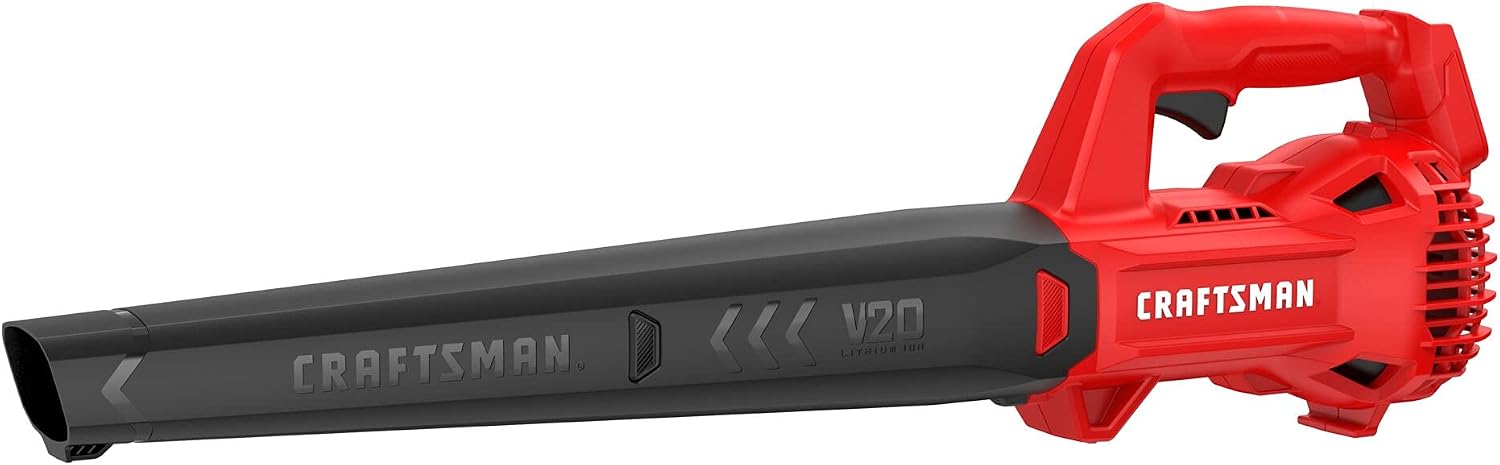
Bare-tool pick for a battery platform you already own: CRAFTSMAN V20 Cordless Leaf Blower, Hard Surface Blower, Bare Tool Only (CMCBL710B)
 Visit on Amazon →
This one is a bare tool. No battery, no charger, nothing in the box but the blower. That is either the smartest purchase on this page or the dumbest, and it depends entirely on what is already hanging in your garage.
If you run the V20 platform, this is the least wasteful way to add a blower to the tools you own. You are not paying for a battery you do not need and you are not starting a second platform. That is the whole argument for it, and it is a good one.
The name says hard surface blower and that is an honest description. It is built for driveways, sidewalks, garage floors, and decking. It is not a wet-leaf monster and it is not a backpack. Point it at a soaked pile of oak leaves and you will move the top layer and stall on the rest. I have watched it happen with my own unit.
What it does well is the daily work. Pollen strands off a driveway in spring. Grass clippings off a walkway. Sawdust and dry chips off a roof deck or a truck bed. It is light enough to carry one-handed up a ladder, and on a roof that matters more than any airflow number printed on the housing.
Flaws but not dealbreakers: bare tool means bare tool. No battery, no charger, no excuse. If you show up with a dead pack and no spare, your day is over. Buy a second battery before you buy the blower.
Check current Amazon price before you commit, and confirm you own the right battery first. A bare tool that does not fit your platform is a return waiting to happen.
Anyone already on the V20 platform who needs a light, quick, hard-surface blower should look here first.
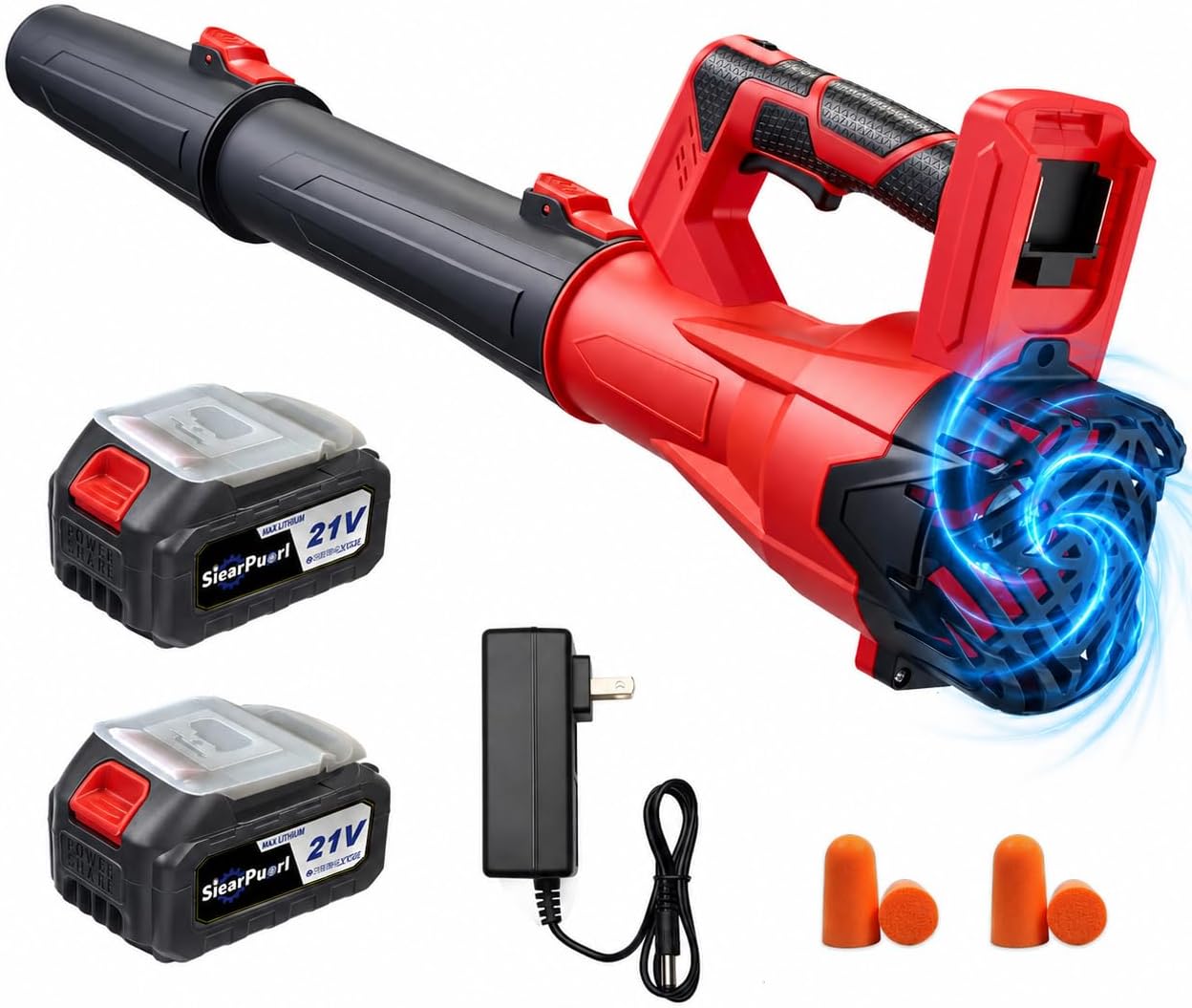
Budget kit pick with two batteries in the box: 6-Speed Modes Cordless Leaf Blower 21V,200MPH High-Velocity Electric Blower,Lightweight for Dry/Wet Leaves,Lawn Debris,Garage and Driveway Cleaning, Leaf Blower-2600mAh Battery*2
 Visit on Amazon →
This is the one I hand to the neighbor who owns zero power tools. Two batteries and a charger in the box, six speeds, and a 21V platform that covers the driveway, the pool deck, the walkway, and the garage apron.
The two-battery setup is the real feature, not the speed rating. A single-battery blower means you stop when the pack dies and wait on a wall wart charger that only handles one battery at a time. Two packs means one is always charged. That is the difference between finishing the job and standing in the driveway staring at your phone.
Six speeds sounds like marketing until you actually use it. Low speed for pollen strands and mulch beds where you do not want to strip the bed bare. High speed for wet leaves on concrete. I leave it on high for the driveway and drop it down around flower beds, and the trigger control is what makes that possible.
The 200 mph on the box is a speed number, not an airflow number. Speed moves a narrow stream of air. Airflow moves the pile. This blower will clear a driveway, a walkway, a garage floor, and dry leaves across a yard. It is not going to clear an acre of wet oak leaves in one pass, and a two-battery kit at this price is telling you that upfront.
Flaws but not dealbreakers: the batteries are the whole story on a kit like this. If the platform does not fit any other tool you own, replacement packs eventually cost a serious fraction of what the blower cost, and that is the real price of a budget blower. Confirm the battery fits something else in your garage, or accept that this is a one-tool purchase and plan accordingly.
Check current Amazon price and read the battery listing carefully before you buy.
Anyone with a driveway, a walkway, and no existing battery platform will get the most out of this kit.
The wet-leaf workflow
The blower is half the job. The other half is technique, and technique is free.
Step one: read the job before you start the motor. Wet leaves weigh more than dry ones. If the pile is soaked through, you are not clearing it in one pass, so stop trying. Break the pile into a top layer and a bottom layer and move the top layer first.
Step two: work with the wind, not against it. Check which way the wind is running before you squeeze the trigger. Pushing a pile into the wind means you will chase the same leaves twice, and the second pass is always the one that wears you out.
Step three: start at the highest point. Driveways slope, decks slope, garage aprons slope. Move debris downhill and downwind every time. Fighting gravity with a handheld blower is a losing game no matter what the airflow rating says.
Step four: use the nozzle, not your wrist. Short, controlled sweeps with the tube pointed low move more debris than long arm swings. Keep the nozzle a few inches off the concrete and walk the pile forward. You are pushing a wall of air, not fanning the leaves.
Step five: manage the battery like a job timer. On a two-pack kit, run your high-speed passes first while both packs are fresh, then drop to low speed for the detail work. On a bare tool with one pack, do the heavy surfaces first and the flower beds last. A dead battery in the middle of a driveway is a scheduling problem, not a tool problem.
Step six: never blow into a storm drain or a neighbor's yard. Push the pile to a tarp or a compost spot and stop there. It takes thirty extra seconds and it is the difference between a good neighbor and the guy everybody complains about.
One safety note that has nothing to do with brand: never blow wet leaves off a roof while standing on the roof. Blow the gutters from a ladder, or get on the roof dry and blow the surface clear before the rain. Wet shingles and a blower in your hands is how people get hurt.
Why a gas backpack still has a place
The honest answer is that a backpack gas blower still beats both of these on a large yard or a storm cleanup. All-day power, no battery swapping, and enough airflow to move a pile of wet debris across a parking lot. If you clear an acre every weekend or you run storm calls, that is the tool, and I keep one in the truck for exactly that reason.
But most people are not clearing an acre. They are clearing a driveway, a walkway, and a garage floor, and that is a fifteen-minute job where a cordless blower wins on noise, smell, and the fact that it starts on the first press of a button in October.
Where a cordless blower loses is duration on full blast. That is not a knock on battery power. It is the physics of a pack the size of a lunchbox. Buy a second battery or buy a bigger one, and plan your high-speed passes so the low-speed work lands on the second pack.
One more caveat about the job itself: if leaves are wet and matted into a lawn, a rake and a tarp will beat any handheld blower. Blowers move debris efficiently across hard surfaces. They do not excavate a matted pile of wet oak leaves out of turf. Rake that part first, then blow the surface clean. That is the workflow that actually finishes the job.
What this all costs
The math is less about the sticker and more about the platform you are buying into.
A bare tool means you pay for the blower and nothing else. If you already own the batteries, your total is one tool, and that is the least expensive path available, but only if you are already on that platform.
A kit with two batteries means you pay for the blower, two packs, and a charger in one box. More money up front than a bare tool, but it is also a complete working setup with no trip back to the store.
The hidden line item on both is the second battery and the replacement pack two years from now. Replacement batteries cost a serious fraction of a whole new blower. That is why the platform question matters more than any number on the housing, and why I have fallen into that trap twice.
Check current Amazon price on both, then check what batteries you already own before you decide. That order saves more money than any sale, and it saves you from a garage full of dead-end packs.
Blow the hard surfaces, rake the matted piles, keep a spare pack charged, and this is a fifteen-minute job instead of an afternoon. Mission accomplished.