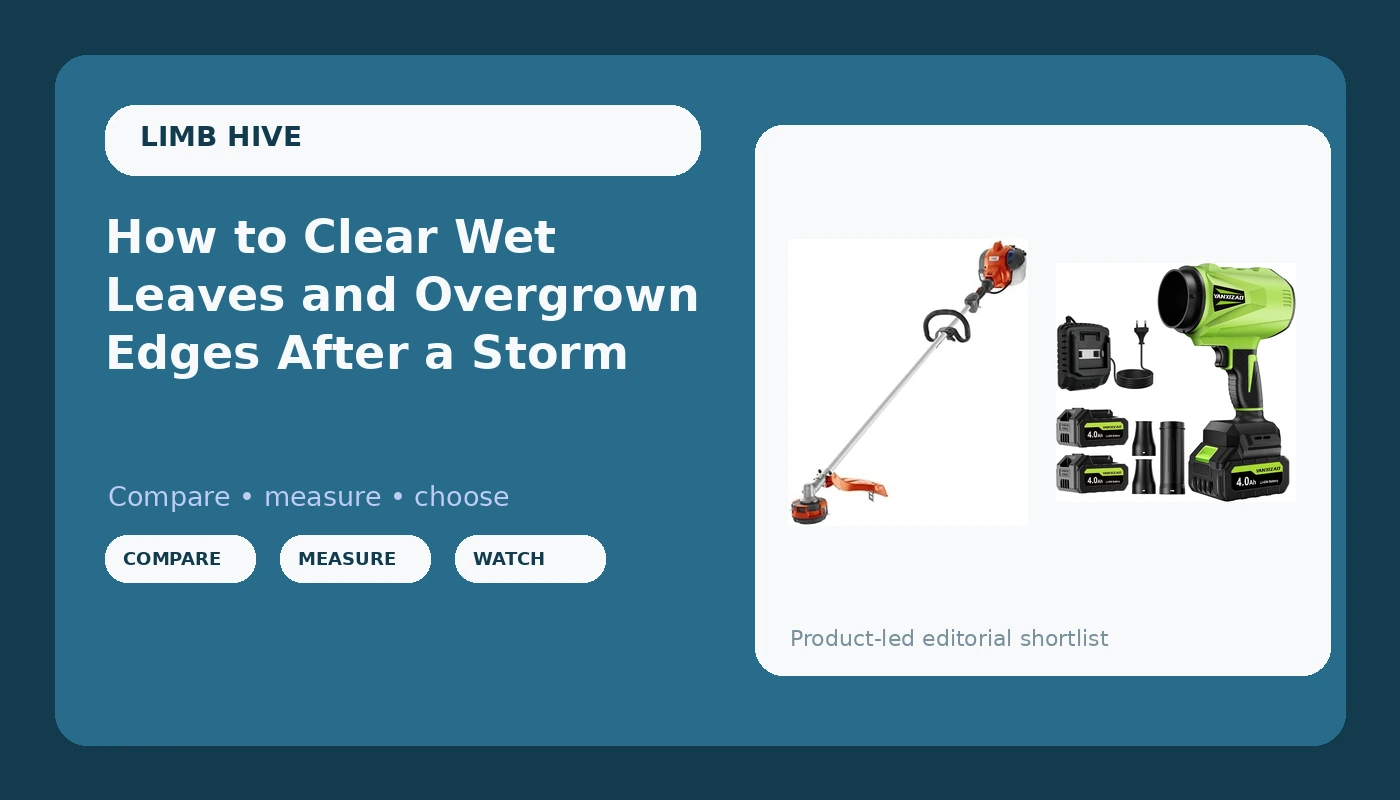
Storm season doesn't ask permission. One night of wind and rain and the driveway turns into a carpet of wet oak leaves, the beds are buried, and the fence line has grown six inches of grass the mower can't reach. You can give up a weekend to raking, or you can spend two hours with a cordless leaf blower for wet leaves and a trimmer that fires on the first pull.
I've cleared this exact mess more times than I can count. The most recent one was a Tuesday at 6 a.m., a maple across a customer's driveway, rain still standing in the low spots. The order of operations matters more than the tools, but the tools matter too, because the wrong blower just pushes wet leaves into a pile you still have to rake.
Here's the workflow I use, the two tools that do most of the heavy lifting, and the places where a spec sheet will lie to you.
Why you should trust me
I ran a tree service crew for 12 years outside Charlotte. I started at 19 as the ground guy, hauling brush until my back quit on me, then learned to run a saw properly and never put one down. Storm season is my busy season: hurricane debris off the coast, ice storms that bend maples over driveways, two trees on roofs this year alone.
The gear I recommend comes out of that work, not a showroom. I time every battery with the stopwatch on my phone, full blast, from a full charge. I run the wet-leaf test on every blower, because dry leaves are easy and wet leaves are the truth. And I check the warranty card in the box before I check the price on the page, because a tool with no paperwork is a tool you own alone.
How I picked and how I tested
This guide covers two tools and one job: getting a storm-damaged yard back to normal without hiring it out.
For the blower, I looked at airflow first. CFM is the number that matters. Miles per hour is a sticker. Then I looked at what comes in the box: how many batteries, how they charge, and whether the charger handles one pack at a time or two. A wall wart charger that only fills one battery means you wait all afternoon for the second one.
For the trimmer, I looked for a cold start. A trimmer that needs ten pulls after a night in the truck is dead weight. I also looked at cut width, because 18 inches of swath means fewer passes along a fence line, and at how the head loads string, because you will reload it more often than you think.
Everything below got the same treatment: wet debris, cold morning, full tank or full charge.
What you need before you start
Safety glasses, hearing protection, and gloves. A trimmer throws grit and a blower throws everything you forgot was on the driveway. Wear long pants and boots, not sneakers.
Beyond that: two charged batteries if you're running battery gear, a fresh can of mixed fuel if you're running gas, a rake for the matted layer, and a tarp if you plan to haul leaves instead of pushing them to the curb. A tarp beats a wheelbarrow because you can drag it.
The blower that moves wet leaves
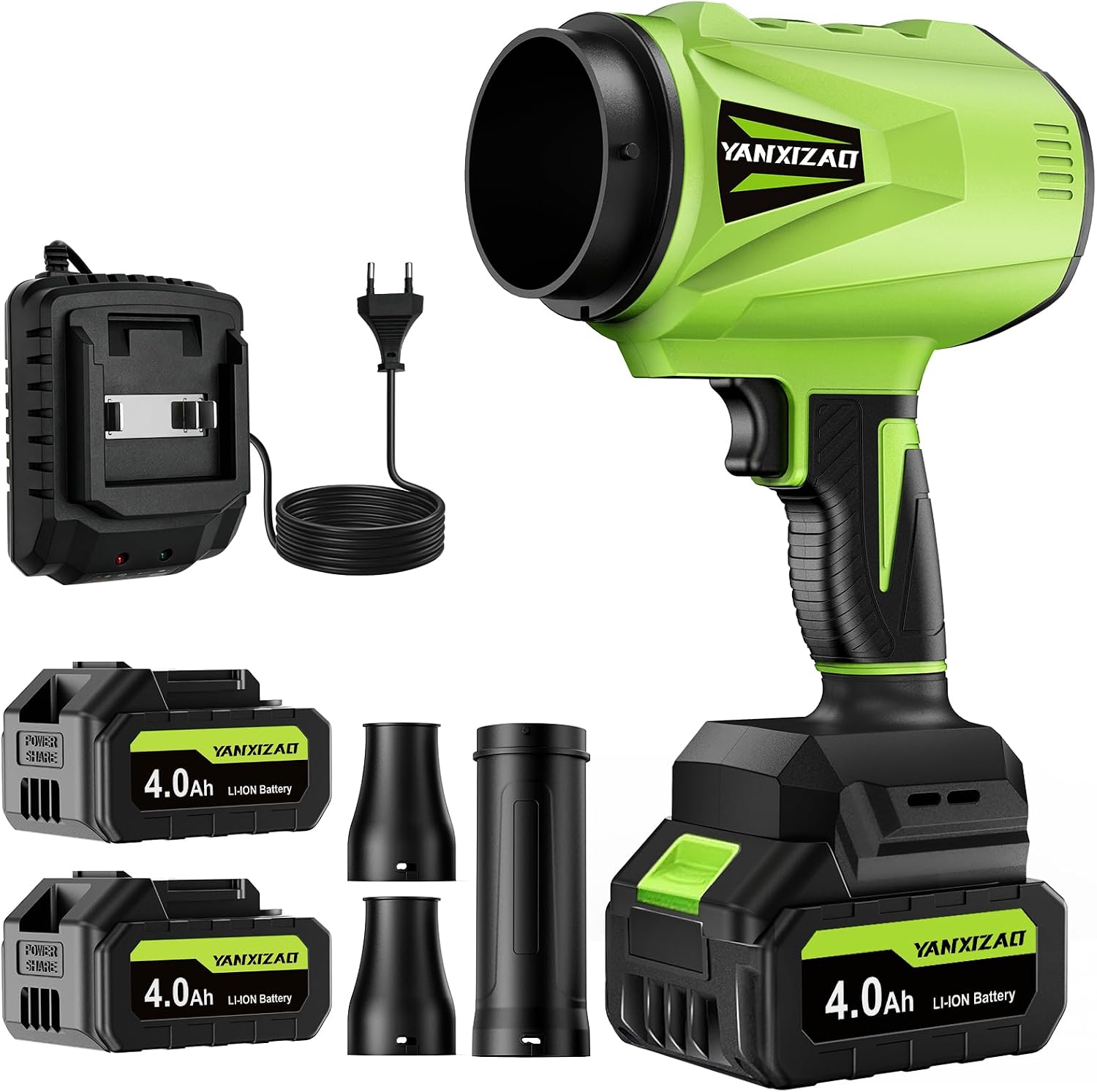
The wet-leaf pick: Handheld Cordless Leaf Blower 980,000 RPM Brushless Motor Electric Leaf Blower with 2 x 4.0Ah Battery Operated, Infinite Speed Control. 3 Nozzles for Lawn Care, Patio, Dust, Blowing Leaves
 Visit on Amazon →
This is the tool I'd hand a homeowner for a driveway, a walkway, a patio, and a pool deck. Two 4.0Ah batteries in the box means you can run one while the other charges, which is the difference between finishing the job and standing around watching a charger. The brushless motor is the part that matters over a long season: fewer wear parts and better efficiency out of the same pack.
The infinite speed control is not a gimmick. You want low speed for pollen strands on a concrete walk and for dry dust in a garage, and full speed for wet leaves on grass. Three nozzles let you match airflow to the surface instead of blasting a flower bed into the street.
Flaws but not dealbreakers: It's a handheld, so your forearm is a runtime limit as much as the battery is. On a big yard, plan to switch hands. And no handheld blower, cordless or gas, wins against a thick mat of leaves that sat through three days of rain and got pressed into the turf. Rake that layer first, then blow.
Check current Amazon price before you commit, and read the reviews on the listing for the runtime other owners actually report.
The trimmer that starts cold
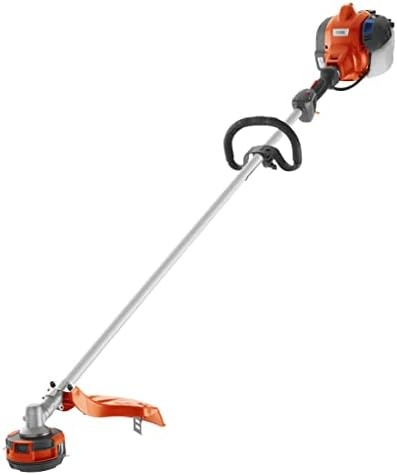
The cold-morning pick: Husqvarna 130L Gas String Trimmer, Trimmer Head, 18-Inch
 Visit on Amazon →
Gas still has one job battery can't take from it: it starts when you need it, and it doesn't care how cold the morning is or how many charges are left in the garage. The Husqvarna 130L is a straight-shaft trimmer with an 18-inch cut and a trimmer head you can reload without a fight. That cut width is why it's in this guide. Along a fence line, a driveway edge, or a bed border, width is time, and time is the whole argument for doing this yourself.
It's a two-stroke, which means mixed fuel, and mixed fuel means discipline. Use fresh mix, don't let ethanol gas sit in the tank over winter, and check the air filter and spark plug at the start of the season. Do that and it starts on the second or third pull after a cold night.
Flaws but not dealbreakers: It's louder than a battery trimmer and it smells like a trimmer, which is the price of not waiting on a charge. Keep string on hand, because an 18-inch head eats more line per reload than a small one.
Check current Amazon price, and read the warranty card in the box before the season starts.
The actual cleanup workflow
Now the part you came for. This is the order I run it in, and the order matters.
Step one: walk the yard before you touch a tool. Look up first. Storm cleanup starts with overhead hazards, not leaves. If a limb is hung up in a tree, that's a different job and a different conversation. On the ground, look for rocks, toys, garden hoses, and extension cords. A blower will find all of them at full speed.
Step two: gear up. Glasses, hearing protection, gloves, boots. Thirty seconds of work and the cheapest insurance in the yard.
Step three: cut the tall stuff first. Run the trimmer along the fence line, the foundation, the bed edges, and anywhere the mower can't reach. Do this before you blow, not after, because the trimmer throws clippings and you'd rather move them once. Keep the head parallel to the ground and let the tip do the cutting. Don't bury the head in wet grass; it bogs and wraps.
Step four: blow the hard surfaces. Driveway, walkway, patio, gutter line. Start at the far end and work toward where you want the pile. On concrete, low speed is usually enough, and low speed means longer battery life. Save the high setting.
Step five: work the beds and the fence line. This is where wet leaves actually live. Aim the nozzle low and at an angle so you lift leaves off the surface instead of pinning them down. Work with the wind if there is any. If there isn't, pick a direction and push the pile one way, because pushing leaves back and forth is how a two-hour job becomes a four-hour job.
Step six: deal with the matted layer. If leaves have been wet for days and pressed into the turf, blow what you can and rake the rest. No airflow number fixes a mat. Rake it into the pile, then blow the pile onto the tarp or to the curb.
Step seven: manage the juice. On the blower, run one battery down, swap to the second, and put the first on the charger immediately. Two packs will cover a normal suburban yard if you aren't holding full speed the whole time. On the trimmer, top off the fuel before you start, not halfway through, and don't leave mix sitting in the tank for months.
Step eight: final pass and put it away. One slow walk with the blower at low speed catches what the first pass missed. Then clean the trimmer's air filter, wipe the blower's intake, and hang both where you'll find them next storm. Ten minutes now saves an hour in November.
Where this plan falls apart
A few honest caveats.
If the leaves are soaked and matted to the ground, no blower wins. Rake first, blow second. Anyone who tells you a handheld blower clears an acre of wet oak leaves is selling you something.
Handheld blowers are arm-limited. If you have a large yard and you clear it every week, a backpack blower is the right tool, and no spec sheet changes that.
A gas trimmer is maintenance. Fuel lines, air filters, spark plugs, and mix that goes stale. If you won't do that work, a battery trimmer on a platform you already own is the smarter buy.
Battery runtime claims are marketing until somebody times them. I time mine on full blast from a full charge, and I'd tell you to do the same with whatever you buy, because the number on the box and the number in your yard are rarely the same.
And read the warranty card. If it's missing from the box, that's part of the review, and it's a reason to look elsewhere.
The tools that didn't make this list
Backpack gas blowers are the right answer for acreage and all-day storm debris. They're also heavier, louder, and more expensive, and they're overkill for a driveway and a fence line.
Corded electric blowers are cheap and they never run out of juice, but the cord is a leash, and a leash plus wet ground is a bad combination.
Small 20-volt trimmers are fine for a postage-stamp lawn and a sidewalk edge. The moment you're cutting wet grass along a long fence, cut width and power curve matter, and that's where a trimmer like the Husqvarna earns its place.
What this all costs
Both listings show current pricing, and I don't quote prices here because they move. Check current Amazon price on each before you buy.
The real budget is consumables and platform. String for the trimmer, mixed fuel for the season, and a second battery if you want to work without a break. Then do the math on what you'd pay somebody else. If a crew charges a flat rate to clean up after every storm, two tools that live in your garage pay for themselves in a couple of seasons, and they're there at 6 a.m. on the morning you need them.
That's the job. Wet leaves are the truth-teller, and a trimmer that starts cold is the difference between a plan and an excuse.