Chainsaw and blower storm cleanup is not one job. It is four jobs in a row, and each one has a different way to go wrong. You walk the damage, you cut the wood that is bent and loaded, you buck it into lengths you can actually carry, and then you clear the driveway before somebody slips on wet debris. Get the order wrong and you either pinch a bar in a sprung limb or you spend an hour chasing wet oak leaves a rake would have handled in ten minutes.
I ran a tree service crew for twelve years outside Charlotte, and storm season is the only season that matters to me. Hurricane debris off the coast, ice storms that fold maples over driveways, a tree on a roof twice this year. What I have learned is that most homeowners do not need a pro saw. They need a saw that starts, a blower that moves wet debris, and a sequence they can follow without getting hurt.
This is that sequence, plus the two tools I would put in the truck if I were building a light duty storm kit from scratch today.
Why you should trust me
I started on a crew at nineteen, hauling brush until my back gave out, then learned to run a saw properly and never put one down. Twelve years running my own crew. My truck carries three gas saws for storm calls and a battery trim kit for the easy stuff, and my first chainsaw was a cheap big box special that vibrated my hands numb and needed a carburetor rebuild every other season. My first gas blower was worse.
That gear is what taught me to read fine print. I time every battery with my phone, I check the warranty card before I check the price, and I do not repeat a runtime claim that came off a box. When a neighbor asks what to buy, they get the same answer my crew gets.
How I judge a saw and a blower
Five questions, every time. Will it start cold, first pull, after a night in the truck? How long does the battery really last on full blast, timed and not claimed? Does the battery fit anything else I own? Can it cut wet wood or move wet leaves? Would I hand it to my crew at six in the morning after a storm?
Two of those questions are about the tool and three are about the system around it, which is the part most buyers skip. A saw is a motor, a bar, and a chain, and the chain is the saw. A sharp chain on a cheap saw beats a dull chain on an expensive one every single time. So before you compare price tags, plan on learning to file a chain. Ten strokes a tooth by feel will keep you cutting all season.
For blowers, the number that matters is CFM, not mph. Airflow moves leaves. A blower rated in miles per hour is selling you a sticker, and a handheld that hits 200 mph with a narrow nozzle will lose to a wider tube with more volume every time. The other number is runtime on full blast, because full blast is the only setting that moves wet debris. Low speed is for pollen strands on a concrete driveway, not for anything that landed during a storm.
Battery platforms decide the real cost. If the battery does not fit anything else you own, that tool is a paperweight the day the pack dies, and replacement packs are not cheap. One platform, or do not buy.
The saw for the cutting
You want a saw that starts and stays sharp. Everything past that is marketing. Here is the one I would hand a homeowner who cuts storm limbs twice a year and does not want to fight a pull start in the rain.
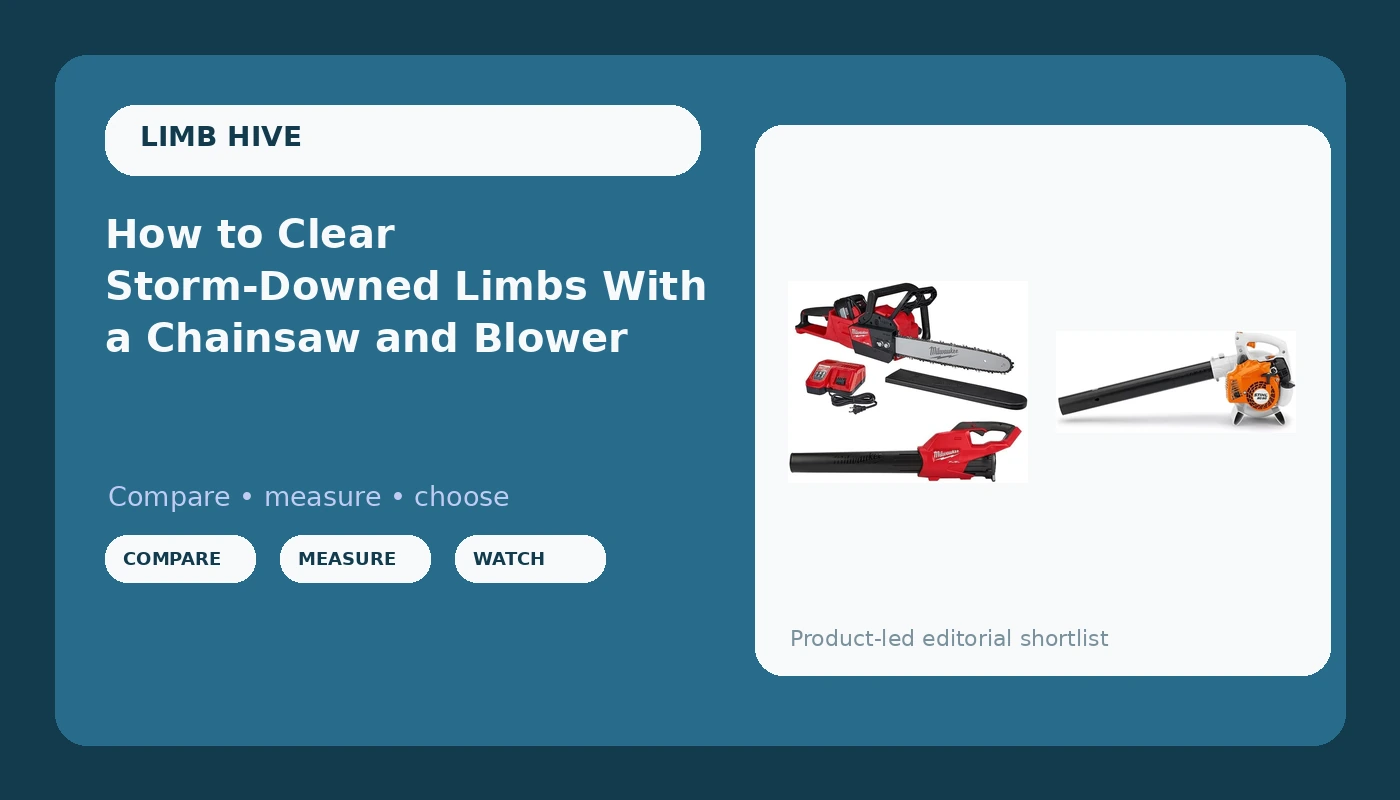
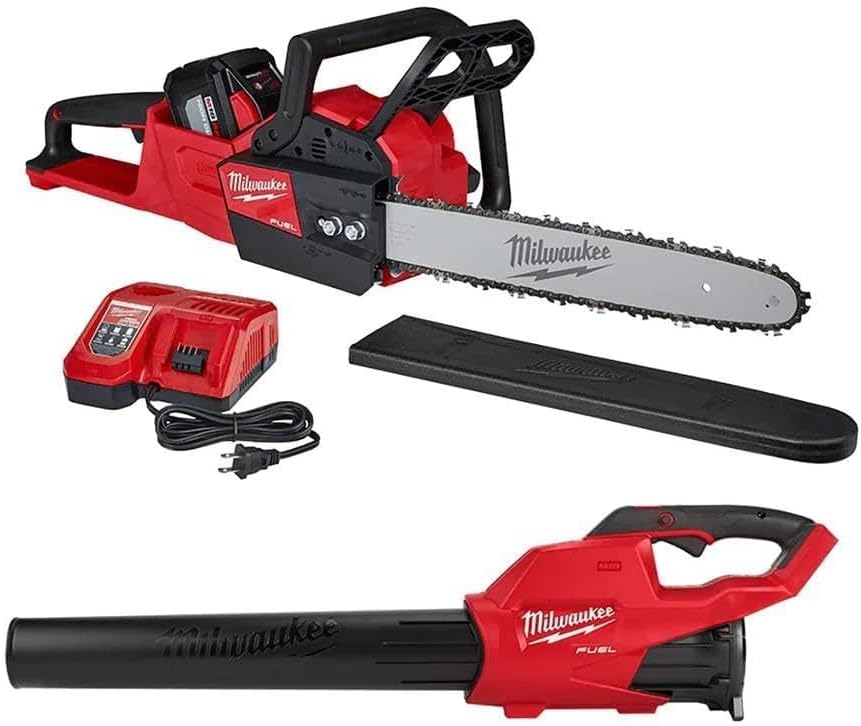
Our pick: Milwaukee 2727-21HDP M18 Fuel 16 in. Chainsaw with Free Blower Kit
 Visit on Amazon →
This is a battery saw on the M18 platform, with a 16 inch bar, and it comes with a free blower kit bundled in the box. Check current Amazon price. Two things make it the pick for a storm kit. First, M18 is a platform you can build on. The same packs run drills, lights, and a long list of outdoor tools, which answers the question I care about most: does the battery fit anything else I own. Second, no pull start. When you are standing in cold rain at six in the morning with a limb across the drive, no pull start is worth real money.
What to check before you order: the chain tension out of the box, because chains ship loose or dull more often than people expect, and the bar oil level, because a battery saw will cook a bar faster than a gas saw if you run it dry. Buy the bigger packs if you plan to buck a whole tree rather than limb a few branches.
Flaws but not dealbreakers: A 16 inch bar is a lot of bar on a battery saw. Keep the chain sharp and let the saw work instead of leaning on it. If you push a dull chain through wet wood, the motor will tell you, and so will your arms the next day.
Anyone cutting fallen limbs around a house, a driveway, and a fence line will get the job done without a gas can in the garage.
The blower for the cleanup
Dry leaves are easy. Wet leaves are the truth teller. A storm drops wet debris on wet pavement, and that is the test that separates the real blowers from the toys.
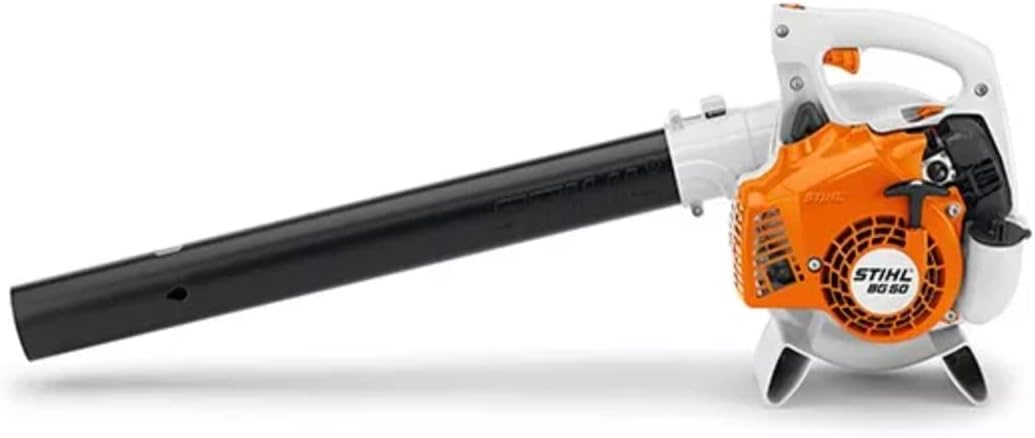
Runner-up: Stihl BG50 Lightweight Blower
 Visit on Amazon →
Check current Amazon price. This is a lightweight handheld gas blower, and it belongs in the kit for one reason: it runs when the batteries are empty. I keep gas tools in the truck because the future still runs out of juice mid job, and storm debris does not care about your charge level. A handheld gas blower this light is easy to carry up a ladder line or along a fence, and it moves wet grit off concrete where a battery blower on its last bar of charge will fade.
What to check: that the unit starts cold from a clean carburetor, that the fuel mix is right, and that you have the paperwork in the box. No warranty claim without the card, and no card means that is part of the deal. Run it dry or with stabilizer before you store it for the off season, because a blower that will not start in October is the same problem as a dead battery, only dirtier.
Flaws but not dealbreakers: It is gas, so it is loud and it needs mixed fuel and a little maintenance patience. It also does not share a battery platform with anything, because it does not use a battery. That is the trade. You get a tool that starts when nothing else will.
Anyone with a quarter acre, a long driveway, or a habit of losing power in storms will be glad it is hanging in the garage.
The actual cleanup workflow
Now the part you came for. This order works on any storm drop, from one limb to half a tree.
Step one: walk it before you cut it. Look up first. Hangers, leaners, and split trunks that have not fallen yet are the ones that hurt people. Never turn your back on a bent tree. If a trunk is under load against another tree, that is a rigging job, not a Saturday job.
Step two: gear up. Chaps, helmet with a face shield, eye and ear protection, gloves, and boots with a real sole. Kickback is the saw's way of telling you to respect it, and the bar comes up toward your face when the nose bites. Chaps are not optional on storm wood, because storm wood is dirty and full of tension.
Step three: start cold, start right. Choke it, prime it, and follow the start procedure instead of flooding it. On a battery saw, seat the pack fully and check the chain brake before you squeeze the trigger. On gas, fresh mixed fuel, not the can from last spring.
Step four: limb from the top back toward the trunk. Small branches first, so you can see what the wood is doing. Never stand on the downhill side of a log you are cutting, and never cut with the bar buried in dirt. Dirt is what dulls a chain in one pass.
Step five: read the tension before you buck. A limb bent under a load will pinch your bar the second you cut through it, and it can spring when it releases. Relieve the compression side first with a shallow cut, then come back and finish. If the wood is sitting on the ground, roll it with a cant hook or a pry bar so you are cutting air underneath, not dirt.
Step six: buck to a length you can carry. Cut to wheelbarrow size, not to what looks tidy. Your back decides this, not the log.
Step seven: sharpen when the chips get fine. Big chips mean a sharp chain. Fine dust means you are polishing the wood, not cutting it. Ten strokes a tooth, file at the angle stamped on the chain, and keep the rakers where they belong.
Step eight: blow the hard surfaces, and blow them downhill. Start at the garage door and push the debris away from the house, not into a pile against it. Full blast for wet leaves and grit, low speed for pollen strands and dry dust on a concrete pad. Move the nozzle in a sweeping pattern instead of stabbing at individual leaves, and let the airflow do the work. Do not blow the lawn. You will move the mulch and lose the topsoil.
Step nine: fuel and charge discipline. Charge every pack the night before a forecast storm, and top off the gas can. After the job, drain or stabilize the gas blower and store the batteries indoors at room temperature, not in a cold shed.
What I would not buy for this job
Big gas saws and backpack blowers are the right tools for the right person, and that person is not most homeowners. A 60cc class saw with a 20 inch bar is a storm saw for a crew, and it is a lot of weight to carry for two fallen limbs a year. A backpack blower will clear an acre of wet oak leaves, and it will also make your arms and shoulders sore if you only use it twice a season.
Cheap no name saws are a lottery ticket. Some cut fine for a season, most bog on wet wood, and the chain comes dull out of the box. You never know which one you got until you are mid cut with a limb on a fence.
A 20 volt budget blower with two batteries in the box is a fine tool for a pool deck and a walkway. Just do not ask it to clear a driveway of wet storm debris, and do not expect the packs to fit anything else you own.
What this setup really costs
The sticker price is the smallest part of this math. The real cost is the battery platform and the consumables. Bar oil, chain files, mix oil, and a spare chain are what keep a saw cutting, and a second battery pack costs a real fraction of the tool itself. That is why the platform question comes first.
Both tools above link to a current listing, and you should check current Amazon price on each before you buy, because pricing moves. Add a spare chain, a filing kit, a gallon of bar oil, and chaps to the cart on day one. That is the honest number, and it is the difference between a kit that works in October and a saw that sits in the garage with a dull chain.
The bottom line
Storm work is the only test that matters. If a saw will not start at six in the morning in cold rain with a tree on a roof, it is dead weight no matter what the box says. Buy a saw that starts, learn to file the chain, keep one gas blower as the backup you never apologize for, and clear the driveway before somebody slips on it.
That is the job. Mission accomplished.