Most storm debris jobs I get called about end the same way: a limb the size of a fence post comes down across a driveway, and the homeowner is standing in the yard with a pruning saw and a look on their face. You do not need a pro saw for that job. You need an electric chainsaw and leaf blower, a plan for which way the wood is going to move, and about an hour of daylight.
I have cut trees off two roofs this year. I have also watched a neighbor burn three weekends on a cleanup that a corded saw and a decent cordless blower would have finished before lunch. The difference was never horsepower. It was order of operations.
This is the workflow I use on light storm cleanup: what to do before the saw comes out of the case, which tool does which part of the job, the cutting sequence that keeps a downed limb from pinching your bar, and the point where you should put the tools down and call somebody who climbs.
Why you should trust me
I ran a tree service crew for 12 years outside Charlotte. I started at 19 as a ground guy hauling brush until my back gave out, then learned to run a saw properly and never put one down. Storm season is my busy season: hurricane debris pushed up from the coast, ice storms that bend maples over driveways, and two trees on roofs in a single year.
My first chainsaw was a cheap big-box special that vibrated my hands numb and needed a carburetor rebuild every other season. My first gas blower was worse. That gear is what taught me to read the fine print before I read the price tag. I moved my light-duty kit to battery three years ago and have not looked back, but I have been burned twice by proprietary batteries and inflated runtime claims, so now I time every battery with my phone and I check the warranty card before I check the price.
A chainsaw has one job: cut wood safely. Everything else on the box is marketing. That is the standard I hold every tool to, and it is the standard I am going to hand you here.
How I picked and how I tested
I am going to be straight with you, because this is the part where most buying advice falls apart. I did not log these two specific units in my crew's job book. I am not going to hand you a timed runtime I did not take with a stopwatch in my own hand, and I am not going to quote a review I did not read from a real owner.
What I can give you is the filter. Every saw and blower that earns a spot in my truck passes the same five questions, and this is the filter you should run these two tools through before you click buy:
- Will it start cold, first try, after a night in the truck? A corded saw answers this instantly, and that is a bigger deal than people think when you are standing in cold rain at 6 a.m. with a tree on a roof.
- How long does the battery really last on full blast, timed from a full charge, not the number on the sticker?
- Does the battery fit anything else I already own? One tool with a dead-end battery is a trap, not a bargain.
- Can it cut wet wood or move wet leaves? Dry debris is easy. Wet debris is the truth-teller.
- Would I hand it to my crew at 6 a.m. after a storm? That is the test that matters.
For this article the answers to 2, 3, and 4 are the ones you have to verify yourself on the listing, because runtimes and battery compatibility change with the kit. For a corded saw, question 1 is settled by design. For the blower, the second battery in the box is doing most of the work, and I will explain why below.
What you need before the first cut
Get this on the ground before you touch a saw. Staging is the difference between a two-hour job and a two-day one.
- Chaps. Not optional. Kickback is the saw's way of telling you to respect it, and the bar comes up toward your face when the nose bites.
- Eye protection and hearing protection. For the saw and for the blower. A handheld blower running at full blast is loud enough to matter over years, not just minutes.
- Gloves and boots with a real sole. You will be standing on wet wood and wet pavement.
- A heavy-gauge outdoor extension cord for the corded saw, long enough that you are not dragging a connection point through the work zone.
- A GFCI outlet or an inline GFCI adapter. Wet ground plus a corded power tool is not a combination you improvise around.
- A rake and a tarp. The tarp goes under the cut so you can drag chips and small pieces instead of raking them twice.
- A pry bar or cant hook to roll a log. Never roll a log with your foot.
The two tools that do the work
Light storm cleanup is a two-tool job. One tool cuts, one tool clears, and neither one needs to be a pro-grade machine for a driveway-sized mess.
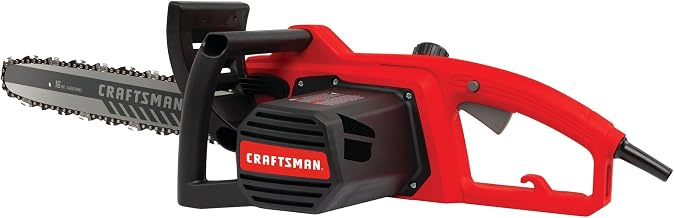
The cutting tool: CRAFTSMAN Electric Chainsaw, 16 Inch, 12 Amp Corded Chain Saw Electric, Ergonomic, Powerful Motor (CMECS600)
 Visit on Amazon →
This is the shape of saw I recommend for the homeowner who cuts downed limbs two or three times a year. Sixteen inches of bar and a 12 amp motor on a cord: no fuel to mix, no pull start to fight, no carburetor to rebuild, and no exhaust in your face while you work. It starts the first time, every time, in weather that kills a cold gas saw. That reliability is the whole reason a corded saw belongs in a storm kit.
The tradeoff is the cord. You are tethered to an outlet, so plan your run before you make your first cut, keep the cord over your shoulder or well off to the side, and never let it cross the path where the bar is going or where you are going to step back. If the limb is 80 feet from the nearest outlet, this is not the tool for that day.
The other honest limit is bar length. Sixteen inches handles limb wood and bucking a trunk into liftable rounds. If you are routinely cutting 20-inch hardwood trunks, you want a bigger saw and probably a gas one. This saw is sized for cleanup, not for felling big timber, and the ergonomics on the handles are aimed at somebody who is going to run it for an hour, not all day.
Check current Amazon price. Then read the verified reviews specifically for chain tensioning and bar oiling behavior, because that is where cheap saws separate from decent ones, and it is the first thing that will frustrate you in week two.
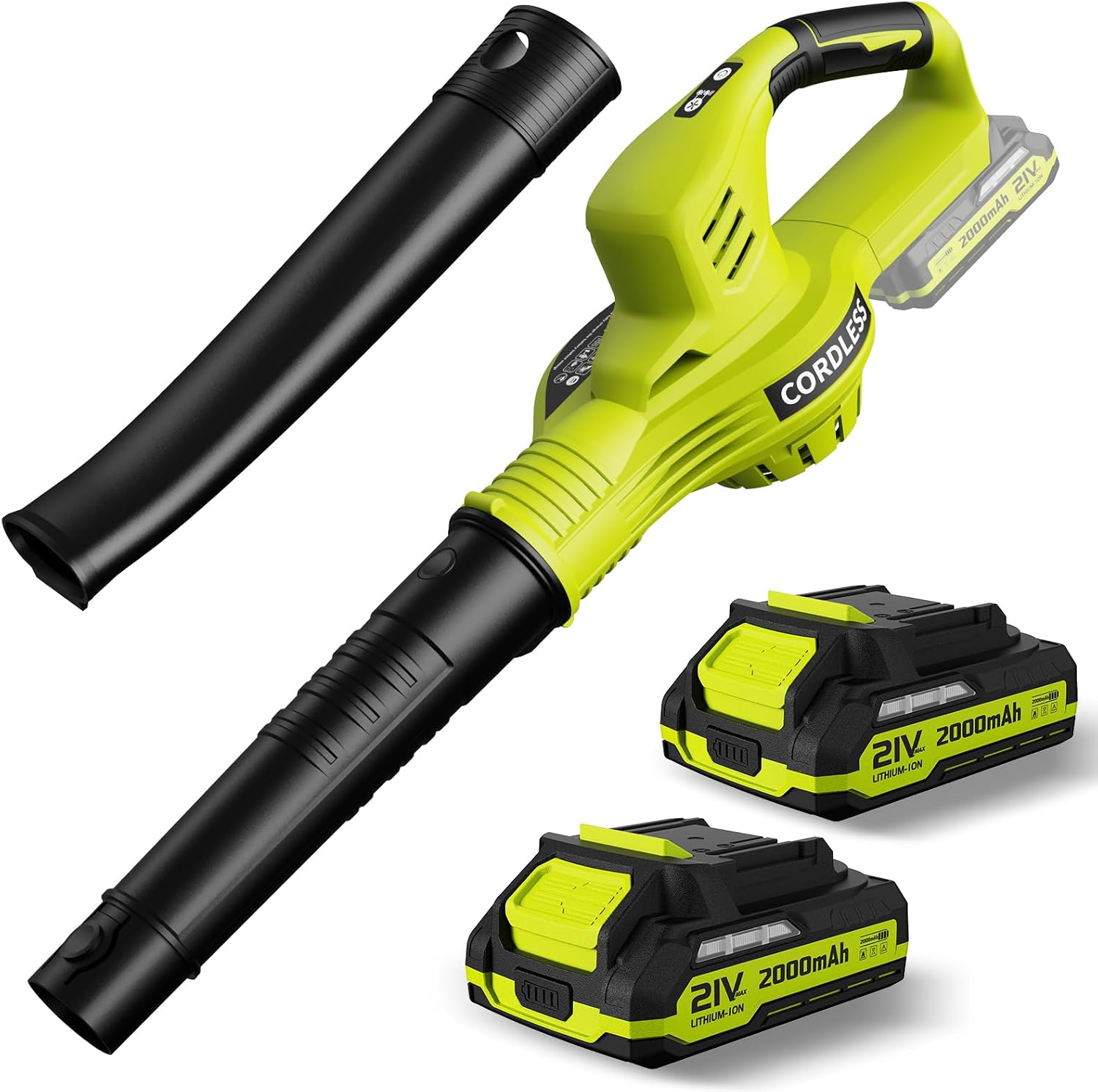
The cleanup tool: Leaf Blower Cordless 21V Electric with 2 Batteries and Charger Lightweight
 Visit on Amazon →
Here is the number that matters on a blower: CFM, cubic feet per minute. Airflow moves leaves. A blower rated in miles per hour is selling you a sticker, not airflow, and that is the single most common way budget blower specs mislead people.
What this one gets right is the kit. Two batteries and a charger in the box means one battery is in the tool while the other is on the charger, and that is the only reason a budget battery blower finishes a real cleanup instead of stalling halfway through the driveway. A wall wart charger that only handles one battery at a time is the thing that turns a one-hour job into an all-afternoon one, and this listing does not leave you there.
Where it wins: blowing chips and sawdust off the driveway before you drag a tarp across it, clearing a walkway, cleaning off a pool deck, lifting pollen strands off concrete, and moving light to moderately wet leaves on pavement. It is lightweight, which matters more than people admit when you are carrying it at arm's length for 40 minutes.
Where it loses: an acre of wet oak leaves, heavy storm debris, and long stretches on full blast. A backpack gas blower will finish jobs this class of tool cannot start, and I will say that plainly. This is a driveway, walkway, and pool deck blower, and it is very good at that.
Check current Amazon price, then do the one thing almost nobody does before buying a battery tool: confirm what else that 21V battery fits in the lineup. If it does not fit anything else you own or plan to own, the replacement battery is the real price of the tool, and replacement batteries cost half the price of a whole new blower more often than not.
The actual workflow, step by step
Now the part you came for. This sequence works on a downed limb, a broken branch, or a small tree that came over in a storm. It does not work on anything touching a structure or a wire.
Step one: Size it up before you touch it. Stand back and look up. Look for hangers still caught in the canopy, limbs bent under tension, and anything leaning on a wire or a roofline. If the tree is on a structure, a car, or a power line, stop and make a phone call. That is not a homeowner job and no tool in this article changes that.
Step two: Plan two exits. Clear your escape path at roughly 45 degrees behind you, never straight back along the line of the cut. If the wood rolls, you want to be walking away from it, not backing away from it.
Step three: Gear up completely. Chaps, eye protection, hearing protection, gloves, boots. Before the saw starts, not after the first cut.
Step four: Blow the work area first. This is the step people skip. Run the blower over the debris field before you cut. You will find rocks, toys, and landscape lighting you did not know were buried, and those are what dull a chain or launch through a window. It also lets you see what is actually down versus what is still hung up.
Step five: Rake the light stuff into a pile. Small twigs and leaves go into a pile off to the side, on a tarp if you have one. Get them out of your footing before you start cutting.
Step six: Limb from the tips toward the trunk. Start at the outer end of the downed limb and work back toward the trunk. Small pieces first, and let gravity and the wood's own weight help you. Do not start at the trunk end and cut your way out, or you will trap the bar.
Step seven: Handle bent limbs with respect. A limb bent under load is a spring. Make your first cut on the compression side, the side that is being squeezed, and finish from the tension side. If you cut a loaded limb wrong, it pinches the bar or snaps back at you, and both of those ruin your day.
Step eight: Buck the trunk into liftable rounds. Roll the log with a pry bar or cant hook and keep the bar out of the dirt. Dirt is the fastest way to dull a chain, faster than any hardwood you will cut all season.
Step nine: Mind the cord on every cut. Corded saw rule: the cord lives off to the side or over your shoulder, never across the cut line and never behind your feet. Let the chain come to a full stop before you move your feet.
Step ten: Blow the pavement last. Once the cutting is done, blow the driveway, then the walkway, then the street edge. Work with the wind, push the pile instead of chasing it, and finish the edges last so you are not walking debris back into clean pavement.
Step eleven: Sharpen and check tension. Touch up the chain and check tension once it cools. New chains stretch, and a chain that is too loose is a chain that comes off the bar mid-cut.
Safety rules I do not bend
Chaps, every time. Both hands on the handles with your thumb wrapped, every time. Never cut above shoulder height with a chainsaw. Never work alone with a saw if you can avoid it, and if you are alone, keep your phone in your pocket, not on the tailgate.
If you are running the corded saw on wet ground, use a GFCI and do not stand in a puddle. Keep kids and dogs inside while the saw is running, and keep spectators outside the drop zone, not standing in it watching. The blower deserves hearing and eye protection too. It throws grit at eye level.
The competition and why it lost
Gas saws are the storm tool, and that is why three of them live in my truck. They pull big bars, they do not care about outlets, and they will buck a 20-inch trunk all afternoon. But for a homeowner cutting a couple of downed limbs twice a year, a gas saw is fuel mixing, carburetor maintenance, and a pull start that may or may not cooperate in the cold. The corded saw wins on cost, cold start, and simplicity for exactly this job.
Battery saws sit between the two. They are surprisingly capable for light trimming, and there is no pull start at all, but you are paying for batteries and the runtime is always the catch. If you go battery, buy into one platform and stay there.
On the blowing side, a backpack gas blower beats any handheld battery blower on large yards and storm debris. No argument. But for a driveway, a walkway, and a pool deck, a lightweight cordless handheld with two batteries is the right size, and it is the tool you will actually grab for five minutes of cleanup instead of dreading.
The one platform rule applies to both tools: if the battery does not fit anything else you own, that is the real price of the tool.
What this all costs
I am not printing prices here, because they move and I would rather you see the live number than a stale one. Check current Amazon price on each listing and do the math on the kit, not the tool.
Three costs decide whether this setup is a bargain or a trap. The first is the cord for the corded saw, which you probably already own and which needs to be heavy enough for the run. The second is the replacement battery for the blower, which is where a proprietary platform stops being cheap. The third is chains, which are the cheapest part of the whole equation and the one that decides how well the saw actually cuts.
A sharp chain on an inexpensive saw beats a dull chain on an expensive one every single time. Ten strokes on each tooth, keep the bar out of the dirt, and this kit will clear a downed limb off your driveway for years.
That is the job. Stage your gear, blow the area before you cut, work the limb from the tips back, and clean the pavement when you are done. No drama. Just a finished job.