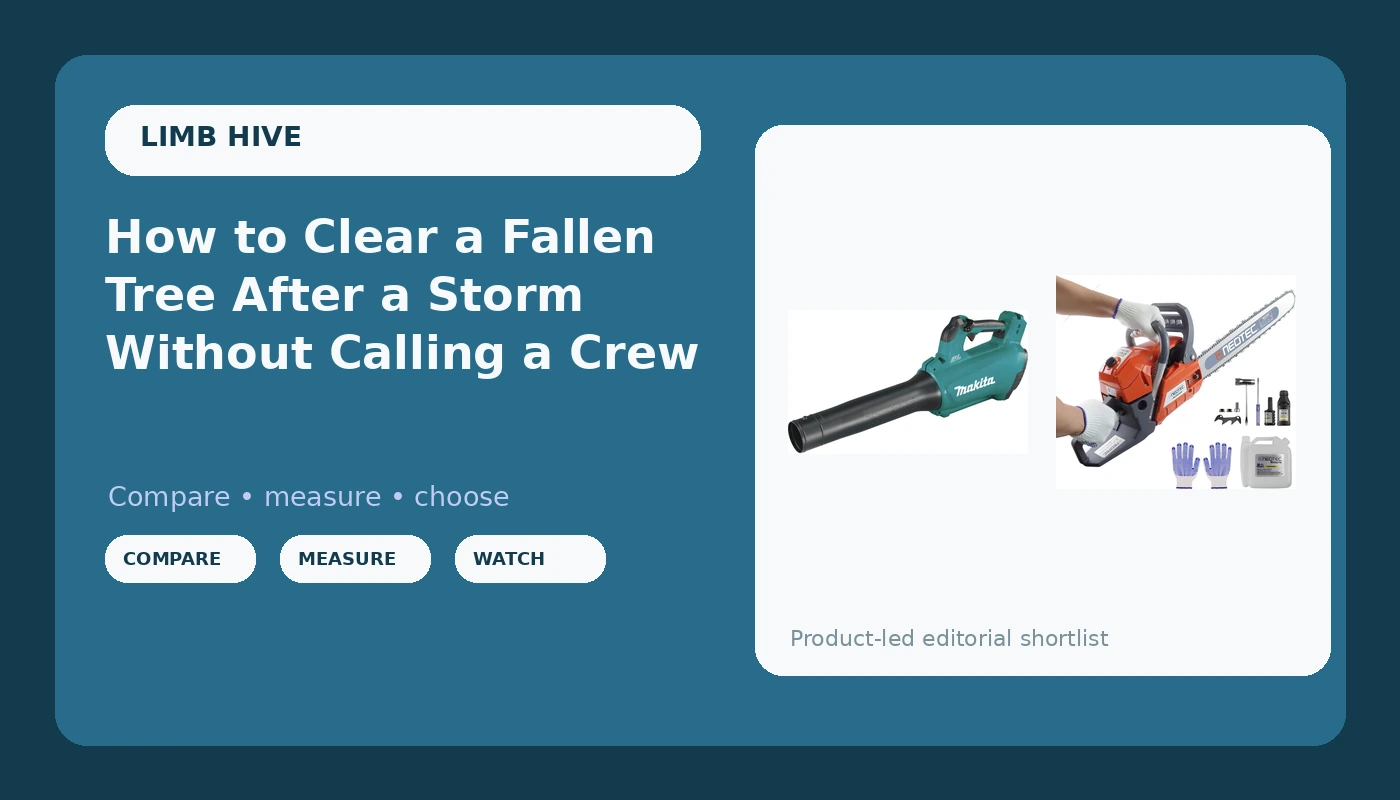
A storm drops a maple across your driveway at 5 a.m., and by six you are standing in the rain deciding whether to call somebody or handle it yourself. Storm debris cleanup is not one job. It is two jobs, and they need different tools. The wood gets cut by something that starts cold and keeps running as long as you feed it. The mess left on the concrete gets moved by airflow, not by a rake and not by a broom.
I ran a tree service crew for 12 years outside Charlotte, and storm season is the busy season here. Hurricane debris rolls up from the coast, ice storms bend maples over driveways, and I have cut trees off two roofs this year alone. What I see over and over is homeowners getting stuck because they bought one tool and asked it to do both halves of the work. A saw will not clear wet leaves off a driveway. A blower will not buck a trunk into rounds.
Here is the order of operations I use on storm calls, the criteria I judge gear by, and the two tools that cover both halves of the job.
Why you should trust me
I started as a ground guy at 19, hauling brush until my back gave out, then learned to run a saw properly and never put one down. Twelve years of crew leading taught me that the tool on the truck at dawn matters more than the tool in the catalog. My truck carries three gas saws for storm calls and a battery trim kit for the easy stuff.
I am skeptical of every spec sheet I read. I have been burned twice by runtime claims that fell apart on the job, so I check the warranty card before I check the price, and I read the fine print on battery platforms before I buy anything. If a tool does not fit a platform I already own, it is a paperweight with a cord or a pull handle.
What I care about is simple: does it start cold in bad weather, does it hold up to wet wood and wet debris, and does it still work next season when I pull it out of the shed.
What I check before I buy either tool
Five questions decide it for me, whether it is a saw or a blower.
Will it start cold, first or second pull, after a night in the truck? A saw that needs fifteen minutes of coaxing in the rain is dead weight. A saw that will not idle right in cold weather usually has a fuel problem, not a brand problem, so start with fresh mix and a clean plug.
Is the bar length honest? A long bar printed on a saw that bogs on a small log is a sticker, not a tool. Match the bar to what you actually cut.
Does the battery fit anything else I own? One tool with a dead-end battery is a trap. Replacement packs cost a serious chunk of a whole new tool, so the platform question is the real price.
CFM, not mph. Airflow moves wet debris. Miles per hour is a number printed on a box to sell blowers to people who have never tried to move wet oak leaves.
Is the warranty card in the box? If the card is missing and there is no email address on the website, that tells you what the support experience will look like.
The two tools that do the work
Two tools cover the whole job, and the split is deliberate. Gas handles the cutting, because cutting is where the clock hurts you. Battery handles the cleanup, because cleanup is short bursts of work spread over the whole job.
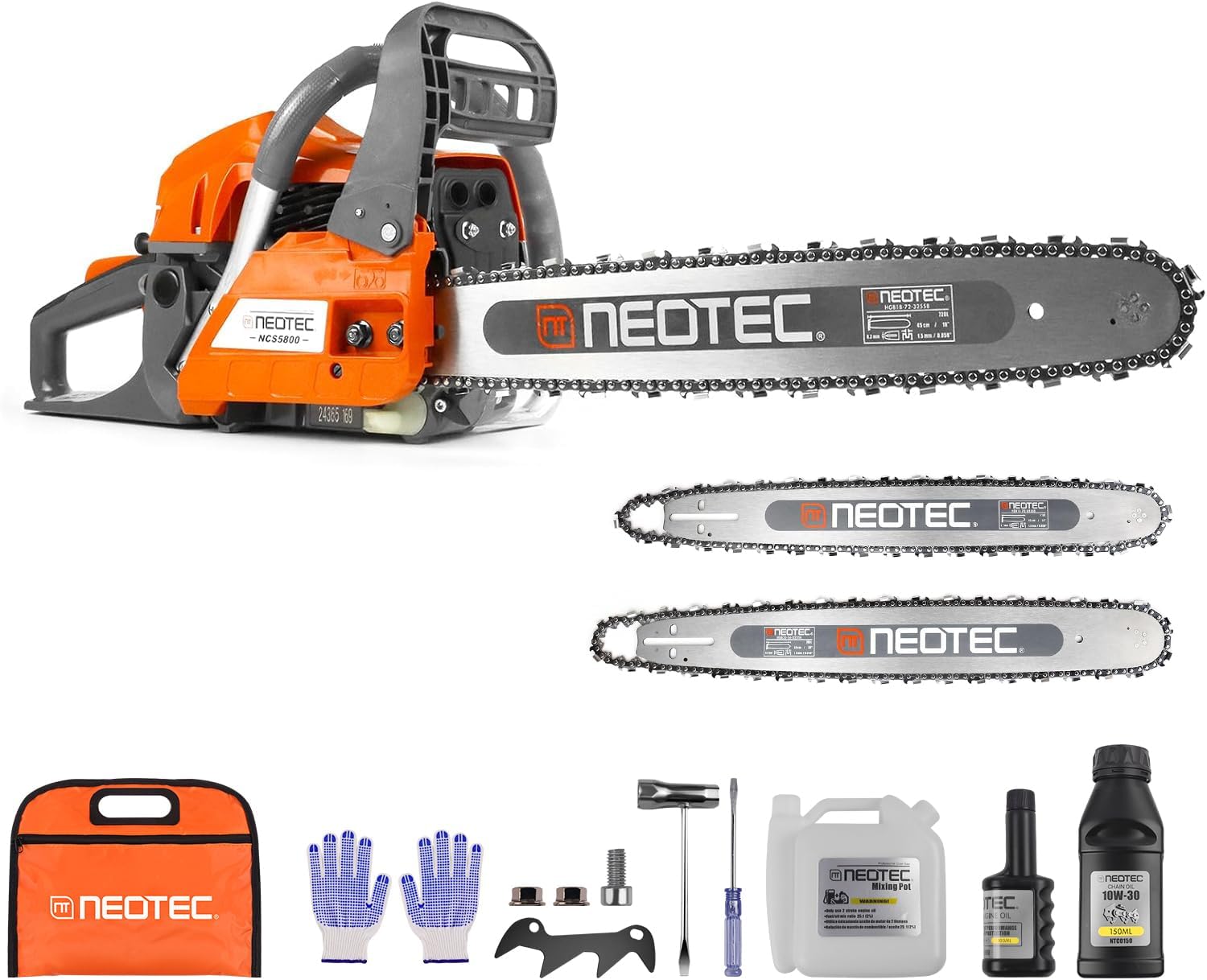
The cutting tool: 58CC Gas Powered Chainsaw 18 20 Inch Bars Chain Ergonomic Chainsaw Chain Brake Anti-Vibration System, 2-Cycle Petrol Motosierra De Gasolina for Tree Cutting Firewood Wood Yard Cleaning
 Visit on Amazon →
Check current Amazon price. This is the gas half of the job, and it is the half you should not compromise on. It is a 58cc two-cycle saw that comes with 18 and 20 inch bar options, which covers everything from limbing a downed maple to bucking a trunk into rounds. It has a chain brake and an anti-vibration system, and both of those matter more than they sound on paper. The brake is the feature you actually use, engaged every single time you move your feet or set the saw down. The anti-vibration handles are what keep your hands from going numb when you are an hour into a storm cleanup and still cutting.
The reason gas wins this half is cold-start reliability and no runtime clock. A battery saw is genuinely good for light trimming, and I run one for that. But when the tree is down at 6 a.m. in the rain and the driveway is blocked, a gas saw starts and keeps going as long as you keep filling it. There is no percent indicator to watch.
What you have to know going in: this saw runs on mixed fuel, it needs bar oil, and it needs the chain tension checked before the first cut and again after the chain warms up. It is loud, it smells like work, and it will not tolerate being left in a shed for two years with old fuel in the tank. Run it dry or use treated fuel if it is going to sit.
Flaws but not dealbreakers: Two-cycle engines want attention. If you are the type who will not mix fuel, will not check bar oil, and will not touch a chain file, this is not your tool. Buy a battery saw and stay on light limbs.
Anyone with real storm wood to cut, meaning anything past a few inches across, should be looking here.
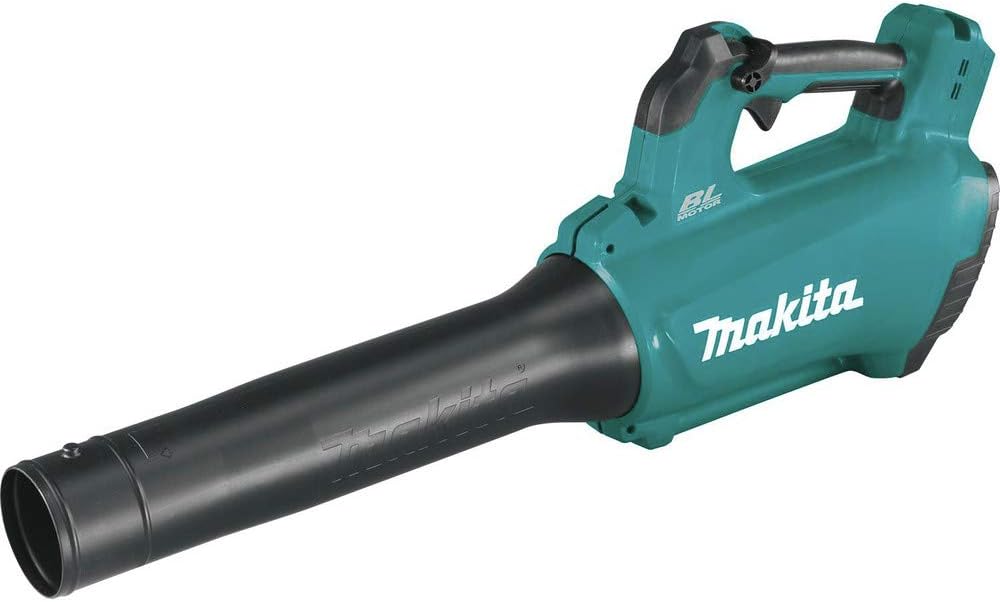
The cleanup tool: Makita XBU03Z 18V LXT® Lithium-Ion Brushless Cordless Blower, Tool Only
 Visit on Amazon →
Check current Amazon price. This is the second half, and it is the part most people skip until they are standing in a driveway full of wet leaves with a rake. It is an 18V LXT cordless blower with a brushless motor, sold as tool only, meaning no battery and no charger in the box.
That tool-only detail is the whole conversation. On the plus side, LXT is one of the platforms that fits a long list of other tools, so if you are already on it, you are buying one more bare tool and sharing the packs you own. That is exactly the platform math I preach. On the minus side, if you are starting from zero, you have to price the battery and the charger into the decision, and you should think about the charger seriously. A wall wart that only charges one pack at a time will leave you waiting while the job sits half done.
Where this blower earns its place is the back end of the cleanup: wet leaves on concrete, bark chips, sawdust, grass clippings, and the pollen strands that carpet driveways every spring. It is light, it starts instantly, and there is no fuel to mix and no pull cord to fight. Full blast down the driveway, then low speed along the edges, around the garage door, and against the foundation.
Flaws but not dealbreakers: It is a handheld, so it will not clear an acre of wet oak leaves, and full-blast runtime is the honest limit of every battery blower. That is exactly why the order below is saw first, blower last, with spare packs charged before you start. Gas still wins on huge yards and heavy storm debris.
Anyone with a driveway, a walkway, a pool deck, or a garage apron and an existing LXT platform should have one of these on the shelf.
The actual cleanup workflow
This is the sequence. It works whether the tree came down last night or last week.
Step one: Read the tree before you touch it. Look for hung limbs, widowmakers, tension in the trunk, the root plate, and the lean. Anything touching a power line means stop and call the utility. No tool changes that rule.
Step two: Pick an escape path. Two directions, about 45 degrees back from where the bar will be, cleared of brush so you can actually move. Decide this before the saw starts, not after.
Step three: Gear up. Chaps, a helmet with a face screen and ear protection, eye protection, gloves, and boots. The chain does not care how many years you have been running one.
Step four: Start the gas saw cold. Full choke, set the brake, bar on the ground, one foot in the rear handle. Once it fires, half choke, blip the throttle, and let it warm before you put it in wood. If it will not idle, fix the fuel first.
Step five: Limb from the outside in. Take the branches off before you touch the trunk. Keep the bar out of the dirt, because dirt dulls a chain faster than any log will. Let the weight of the limb open the cut instead of forcing the bar through it.
Step six: Buck the trunk into rounds you can lift. Cut from the top where the log is under tension and watch for the pinch. A log under pressure will close on the bar and trap it, and that is when people get hurt pulling a saw out.
Step seven: Never refuel a hot saw. Let it cool, move it off the debris pile, and wipe around the cap before you open it. Fuel and a hot muffler is how a bad day turns into a worse one.
Step eight: Switch to the blower. With the wood stacked, the driveway is covered in wet leaves, bark chips, and sawdust. Full blast down the middle, then low speed along the edges and against the garage. Work with the wind, not into it.
Step nine: Sharpen before you put the saw away. Ten strokes on each tooth, file at the angle the chain calls for, and check the rakers every few sharpenings. The chain is the saw. A sharp chain on a modest saw beats a dull chain on an expensive one every single time.
The mistakes that get people hurt or stuck
Trying to do both halves with one tool is the big one. A saw cannot clear wet leaves, and a blower cannot cut wood, so buy for the job instead of for the shelf.
Running a dull chain and blaming the saw is the second. Factory chains ship dull more often than people expect, so touch up the chain before the first cut on any new saw.
Buying a tool-only blower without checking the battery platform is the third. If the packs do not fit anything else you own, you have bought a paperweight with a fan on it.
Cutting with the nose of the bar is the one that sends people to the hospital. That is kickback, and it is the reason you keep both hands on the handles and your body out of the plane of the bar.
Skipping the escape path, skipping chaps, leaving mixed fuel in a saw all winter, and trying to blow wet leaves with a handheld when the job calls for a backpack gas blower all belong on the same list. Every one of them costs more time than it saves.
The real cost of owning both
The gas saw carries ongoing costs: mixed fuel, bar oil, replacement chains, files, a spark plug now and then, and the time you spend on maintenance. That is the price of a tool that starts cold and never runs out of juice mid-cut.
The blower carries a different cost. Because it is tool only, the money question is the battery and the charger, and the answer depends entirely on whether you are already on that platform. If you are, this is a small addition to a kit you already own. If you are not, price the whole kit, not just the bare tool, and remember that replacement packs cost a serious fraction of a new tool. One platform, or it is a paperweight.
For a homeowner cutting fallen limbs twice a year, the math is simple: a gas saw for the wood, a cordless blower for the concrete, and both of them paid for the first time a storm blocks the driveway. Check current Amazon price on each and do the platform math before you click.
That is the job. Cut the wood, blow the mess, sharpen the chain, and put the tools away ready for the next one. Mission accomplished.