Most of the chainsaw questions I get start the same way. Someone has a maple limb down on the lawn, a storm in the forecast, and a browser full of tabs. The argument in their head is always gas vs battery chainsaw, and it usually ends with them buying the wrong tool for the wood they actually cut.
I ran a tree service crew for 12 years outside Charlotte, and storm season is my busy season. Hurricane debris off the coast, ice storms that fold maples over driveways, two trees on roofs this year alone. I've started saws at 6 a.m. in cold rain, and I've watched a battery quit at 80 percent of a job. Both power sources earn their place, but only if the saw matches the work.
Three questions settle it for almost everyone I talk to. Will it start cold, first pull, after a night in the truck? How long does the battery really last on full blast, timed with a stopwatch instead of read off the box? And does that battery fit anything else you own? Answer those and you're done shopping.
Why you should trust me
I started as a ground guy at 19, hauling brush until my back gave out, then learned to run a saw properly and never put one down. Twelve years of running crews taught me a chainsaw has one job: cut wood safely. Everything else printed on the box is marketing.
My first saw was a cheap big-box special that vibrated my hands numb and needed a carburetor rebuild every other season. That saw taught me to read fine print, and so did my first gas blower. Now I time every battery with my phone, full blast, from a full charge, and I check the warranty card before I check the price. The truck carries gas saws for storm calls and a battery kit for the easy stuff. I recommend what I've tested myself or what real owners have tested, and nothing else.
How I picked and how I tested
This is a how-to, not a spec sheet. But you can't teach the workflow without naming the two saws that answer it, one battery and one gas.
Every saw that makes my list goes through the same five checks. Cold start, first pull or first trigger, after a night in the truck in October weather. Timed runtime on a full charge, throttle pinned, cutting wet wood instead of dry pine. Battery platform check: what else does that pack fit, and what does a spare cost. Wet wood test: green maple and wet oak, because dry debris is easy and wet wood is the truth-teller. Then the paperwork check: is the warranty card actually in the box.
The numbers I trust are the ones I write in the crew job book. Not the claimed runtime, not the bar length printed on the side of the box. If a saw bogs on a 10-inch log, the sticker saying 16 inches doesn't matter.
The two saws that cover most of the work
Between these two, a homeowner can handle fallen limbs, firewood, and a driveway full of storm debris. One is battery, one is gas, and that difference matters more than the brand name on the side.
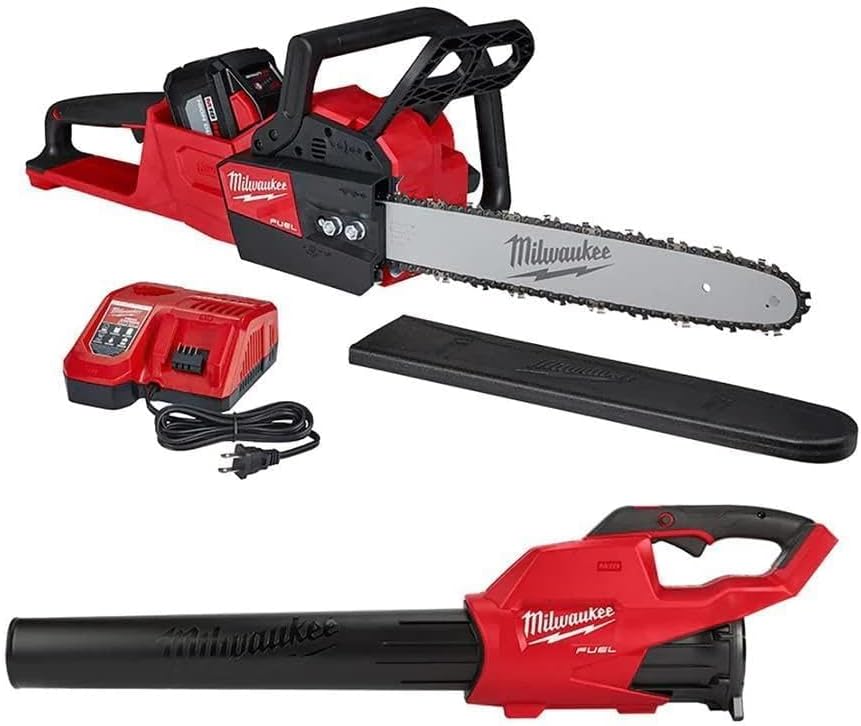
Our pick for battery-first work: Milwaukee 2727-21HDP M18 Fuel 16 in. Chainsaw with Free Blower Kit
 Visit on Amazon →
This is the saw I hand to a homeowner who is done with pull starts. The M18 platform is the reason. That battery also fits drills, impacts, string trimmers, and the blower that comes in this kit, which means you aren't buying a paperweight with a bar bolted to it. One platform, several tools, and that math works.
Cold mornings are where it earns its keep. No choke, no flooding, no priming. Trigger and cut. For limbing, bucking firewood under a foot, and clearing whatever a storm drops on the lawn, a 16-inch bar is honest work, and the blower in the kit handles the driveway afterward without a second purchase.
Flaws but not dealbreakers: Runtime on full blast is the catch, same as every battery saw. Big wood eats the charge faster than you expect, and if you're cutting trunks all afternoon you'll want a second pack. This bar is not the tool for a 20-inch oak.
Check current Amazon price before you commit, and take inventory of the M18 tools you already own, because that is where the value lives.
Anyone with a suburban lot, a few storm limbs a year, and a garage already running that battery line will be happy.
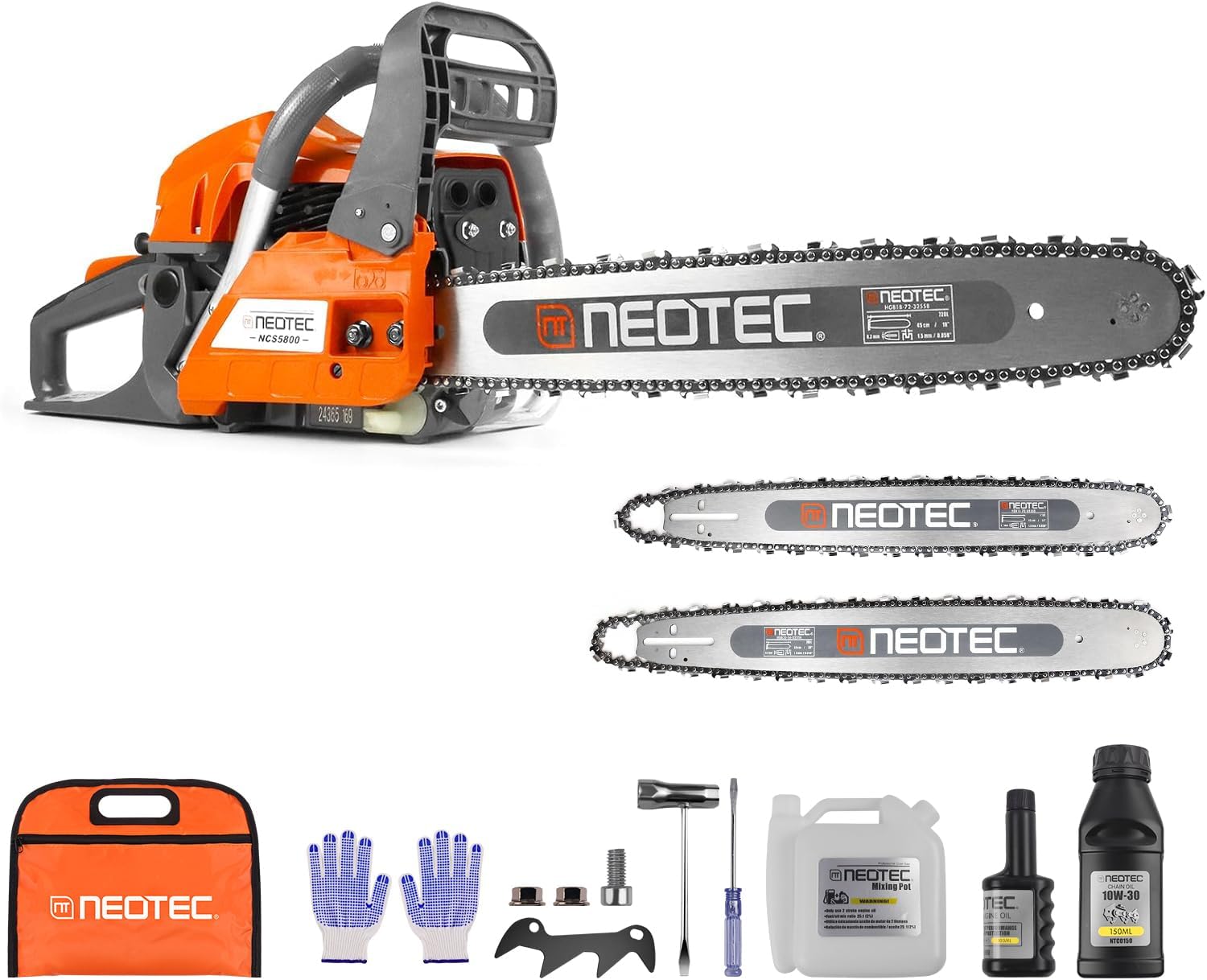
The gas backup for storm calls: 58CC Gas Powered Chainsaw 18 20 Inch Bars Chain Ergonomic Chainsaw Chain Brake Anti-Vibration System, 2-Cycle Petrol Motosierra De Gasolina for Tree Cutting Firewood Wood Yard Cleaning
 Visit on Amazon →
Gas is the backup you never apologize for. A 58cc two-cycle saw in this class swings an 18 or 20 inch bar, which is real wood territory: trunk sections, firewood rounds, a limb thicker than your thigh. The anti-vibration system and the chain brake are the two features I care about most here. Vibration is what kills your hands by hour three, and the brake is what stops the chain when the bar kicks back.
There is no runtime clock on gas. You refuel and keep cutting, which is why a saw like this stays in the truck for storm calls even though I run battery for most of my own trimming.
Flaws but not dealbreakers: You have to do the work. Mix fuel exactly the way the manual says, use fresh gas, and expect a cold-start ritual: choke, prime, a few pulls, then let it idle before you bury the bar in wood. Check the chain out of the box too. Factory chains ship dull more often than people believe, and a dull chain on a 58cc saw cuts worse than a sharp chain on a small one.
Check current Amazon price and read the listing closely on which bar length ships, because the title covers two.
Anyone with acreage, a wood stove, or a driveway that collects storm debris every year should own a gas saw.
The actual workflow
Now the part you came for. This works whether you buy battery or gas.
Step one: Count what you actually cut. Walk your property and look at the biggest thing you'd realistically put a bar to. Limbs under 10 inches are battery territory. Trunks and firewood rounds over 12 inches are gas territory. Most people buy two bar lengths too much saw and then complain about the weight.
Step two: Answer the platform question first. Before you look at a single spec, open your garage and see what batteries you already own. If the saw's pack doesn't fit your trimmer, your drill, or your blower, that battery is a dead end. One platform, or it's a paperweight.
Step three: Time the runtime yourself. Charge the pack full, then cut continuously and watch the clock. Not the marketing number, yours. If you get 25 minutes of real cutting, plan around 25 minutes and buy a second pack when the job runs longer.
Step four: Practice the cold start before you need it. On a gas saw that means choke on, prime, pull until it fires, choke off, let it idle. On a battery saw it means nothing, which is the whole point. Do this once on a cold morning in your own driveway, not at 6 a.m. with a tree on a roof.
Step five: Match the bar to the wood, not the other way around. A short bar on a strong powerhead cuts faster than a long bar on a weak one. Don't run a 20-inch bar on a saw that bogs at 12.
Step six: Sharpen before every session. The chain is the saw. Ten strokes on each tooth with the right file, every cutter the same length, and you'll cut straighter and safer. A sharp chain on a modest saw beats a dull chain on a pro saw every single time.
Step seven: Keep your fuel honest. Fresh gas, the mix ratio the manual calls for, and never leave mix sitting in the tank for months. Bad fuel is why a saw won't idle in cold weather, and it's a fuel problem far more often than it's a brand problem.
Step eight: Gear up like it can bite you. Chaps, eye protection, hearing protection, and both hands on the handles. Kickback happens when the nose of the bar bites. Respect it and it rarely visits you.
Step nine: File the paperwork. Warranty card, receipt, serial number, all of it in one folder. If the card isn't in the box, that's part of the review. No warranty claim without the paperwork.
What I skipped and why
The bargain-bin saws are a lottery ticket. Some cut fine for a season. Most bog on wet wood, and the chain comes dull from the factory. You won't know which one you got until you're mid-cut with a limb under tension, and that's a bad place to find out.
The small homeowner battery saws with a 12-inch bar are fine for pruning and useless for storm work. The proprietary platforms are the trap I warn people about most: a battery that fits one tool and nothing else is a subscription, not a purchase.
And blowers rated in miles per hour are selling you a sticker. The number that moves wet leaves is airflow, not speed.
What this really costs
The sticker on the saw is the smallest number in the equation. Add the second battery if you're going cordless, a spare chain, bar oil, files, and for gas, fuel and mix. The saw that looks cheaper at checkout is often the more expensive tool by year two, because the battery platform is where the money actually lives.
That's why I check current Amazon price on both listings and then do the math on the platform, not the powerhead.
The bottom line
Battery is the future, but the future still runs out of juice mid-job, so gas stays in the truck for storm calls. If your work is limbs, firewood under a foot, and a driveway full of debris, the battery saw and the blower kit that comes with it will handle it with no pull start and no fuel mix. If your work is trunks, acreage, and a wood stove, buy the gas saw and learn its cold-start ritual before the storm hits.
Pick the saw that matches the biggest thing you actually cut. Time the runtime yourself. Check what the battery fits. That's the whole decision.