Storm season is where outdoor power tools either earn a permanent spot in the truck or get left in the garage. I ran a tree crew for twelve years outside Charlotte, and the jobs that decide everything are the ugly ones: a maple bent over a driveway after an ice storm, a fence line buried under wet oak leaves, a limb hanging over a roof at first light. A chainsaw and leaf blower pairing is the core of that work, and the numbers printed on the box rarely tell you which tool will still be running at hour three.
This guide compares six tools that cover both halves of the job: a gas backpack blower, a battery handheld blower, two gas chainsaws, a corded electric saw, and a cordless pole saw. Some of them are built for storm calls and big properties. Some are built for a homeowner who cuts fallen limbs twice a year and blows off a driveway. Both are legitimate jobs, and the right pick depends on which one sounds like your Saturday.
Related: How to Keep a Chainsaw Chain Sharp Between Jobs
Quick answer
The Husqvarna 350BT Gas Leaf Blower is the strongest fit for moving wet storm debris across large yards because its 692 CFM airflow rating and 50.2cc backpack engine are built for long clearing sessions that handheld tools struggle to finish. Choose the Milwaukee M18 FUEL Handheld Blower instead when you want battery convenience, lighter weight, and quick cleanup on driveways and walkways rather than all-day debris work.
Storm-cleanup chainsaws and leaf blowers worth comparing
Six tools, three power sources, and two very different kinds of buyer. Gas still owns storm debris and acreage. Battery owns convenience, instant starts, and quiet. Corded electric owns the middle ground where an outlet is close and the session is short.
Before the cards, here is the short version of what separates them. Airflow and bar size tell you what a tool can actually do. Power source tells you how long it can do it. The platform, meaning the fuel system or the battery system, tells you what it will cost you to keep running for the next five years.
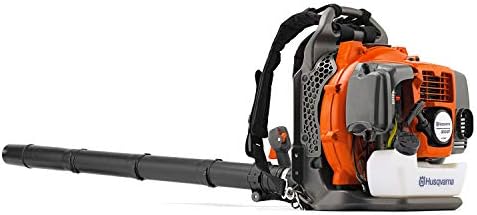
Husqvarna 350BT Gas Leaf Blower, 50.2-cc 2.1-HP 2-Cycle Backpack Leaf Blower with 692-CFM, 180-MPH, 21-N Powerful Clearing Performance and Ergonomic Harness System, Gifts for dad
A 50.2cc two-cycle backpack blower rated at 692 CFM and 180 MPH, with an ergonomic harness system that carries the weight on your shoulders instead of your forearms. Built for long clearing sessions on large properties and wet debris.
Visit on Amazon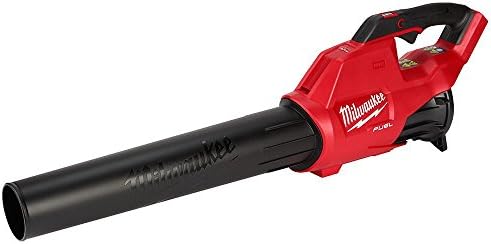
Milwaukee M18 FUEL 120 MPH 450 CFM 18-Volt Lithium Ion Brushless Cordless Handheld Blower (Battery Sold Separately)
A brushless 18-volt handheld blower rated at 120 MPH and 450 CFM, sold as a bare tool without a battery. A fit for owners already invested in the M18 platform who want instant starts and no fuel.
Visit on Amazon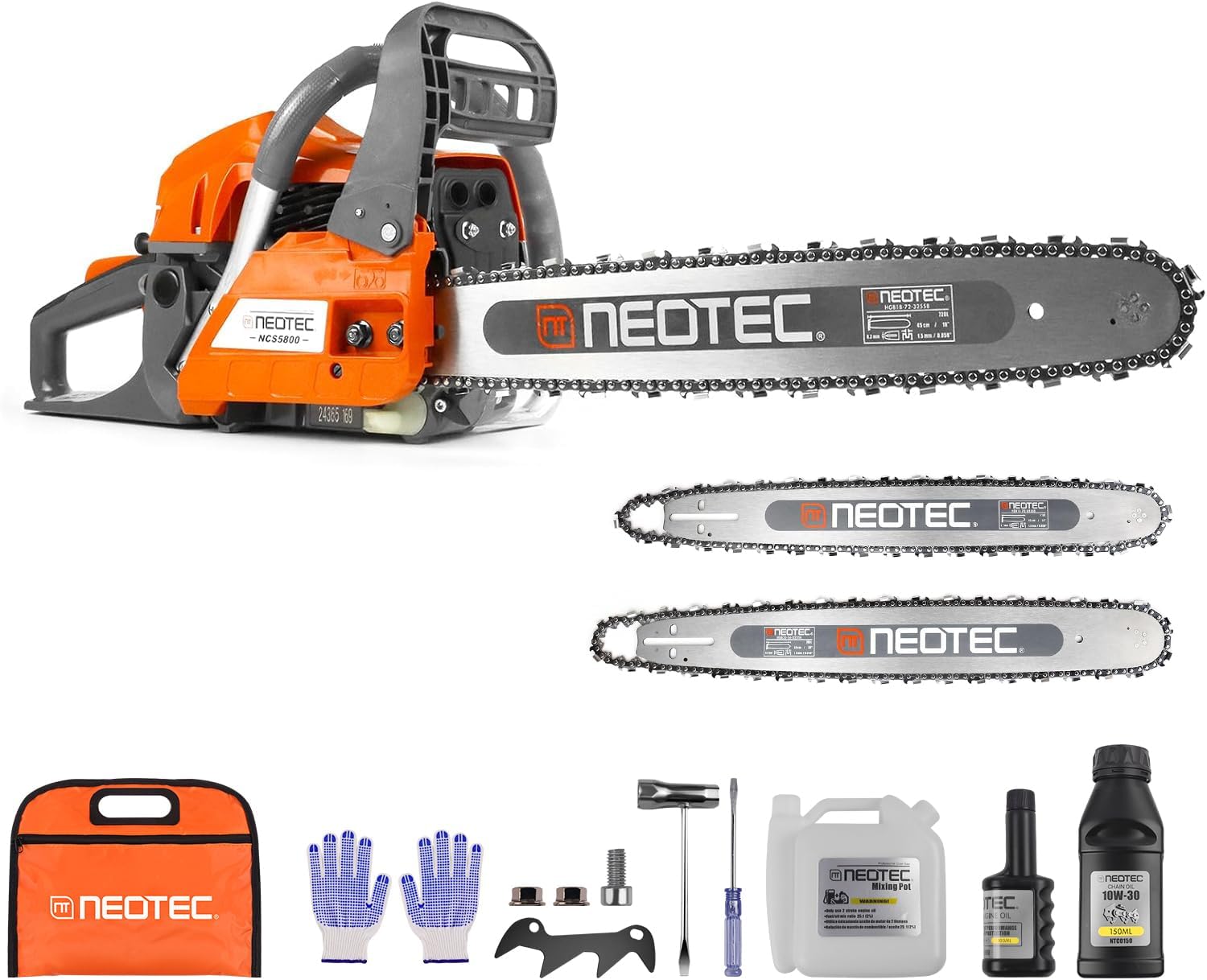
58CC Gas Powered Chainsaw 18 20 Inch Bars Chain Ergonomic Chainsaw Chain Brake Anti-Vibration System, 2-Cycle Petrol Motosierra De Gasolina for Tree Cutting Firewood Wood Yard Cleaning
Check current price
A 58cc two-cycle gas saw offered with 18-inch and 20-inch bar options, a chain brake, and an anti-vibration system. Aimed at tree cutting, firewood, and yard cleanup away from an outlet.
Visit on Amazon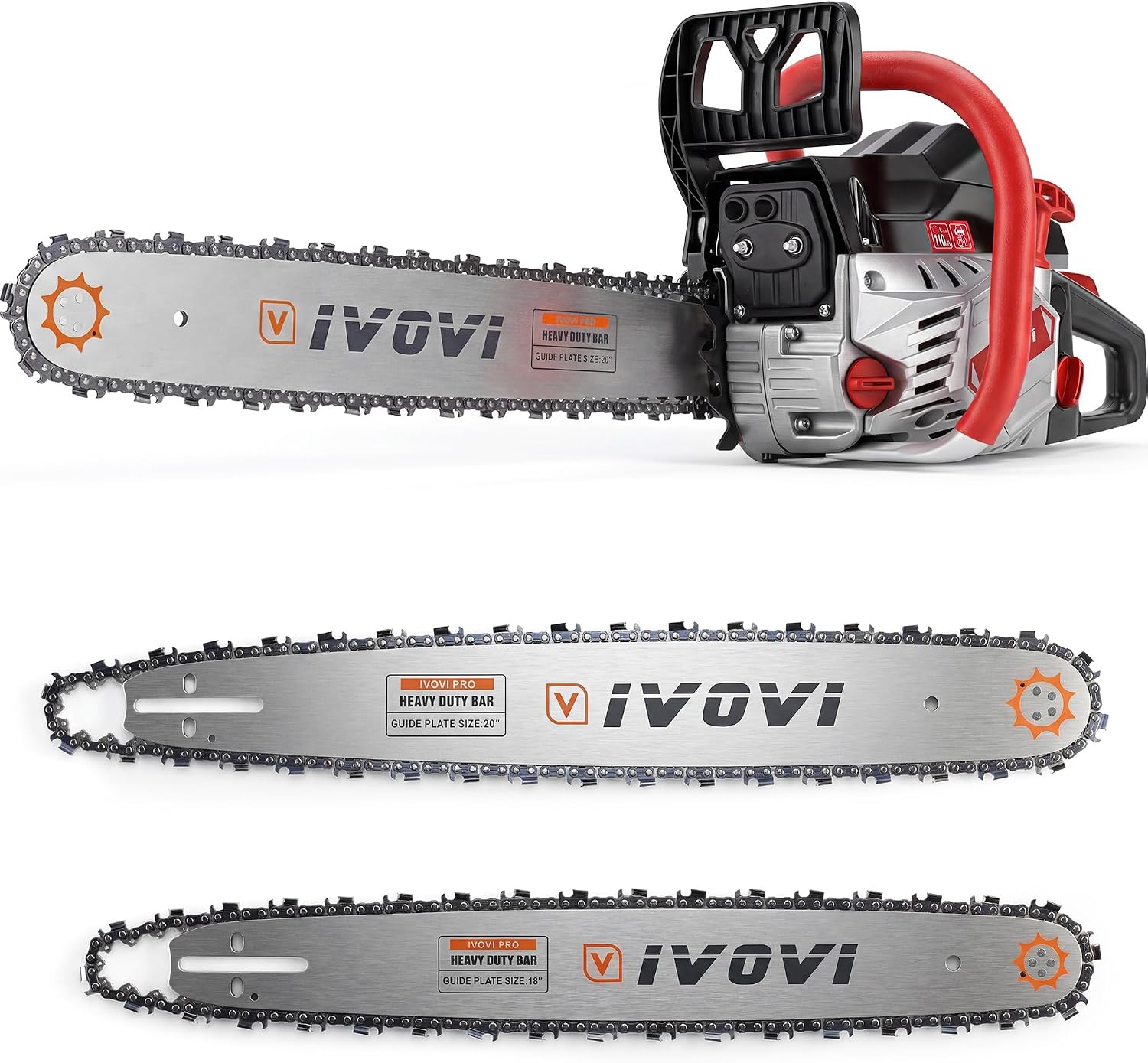
63CC Gas Chainsaw with 20-Inch and 18-Inch Bars
A 63cc gas chainsaw that ships with both a 20-inch and an 18-inch bar, giving you a bigger bar for felling and bucking and a shorter one for limb work. Two-cycle gas power for jobs that run past battery runtime.
Visit on Amazon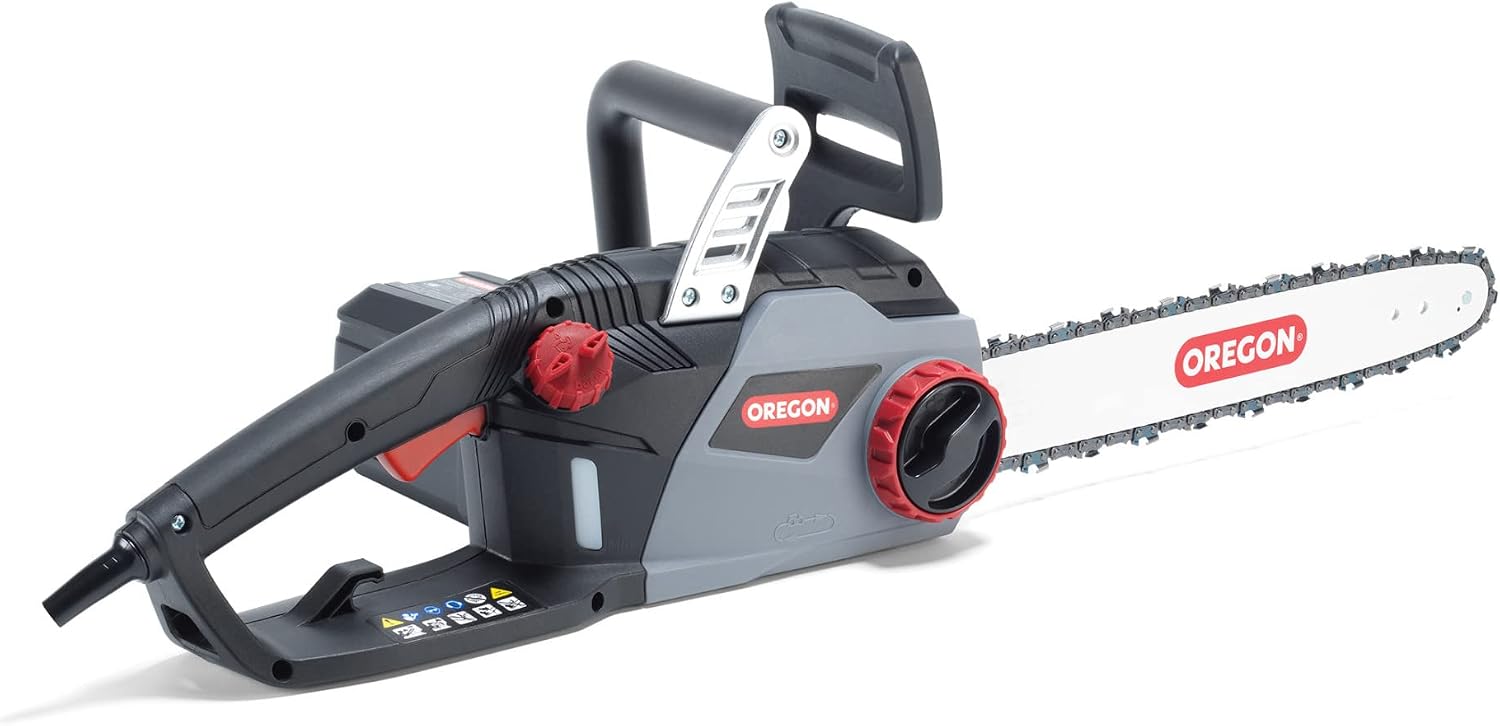
Oregon 2400W Corded Electric Chainsaw with 16" Guide Bar & Saw Chain
A 2400-watt corded electric chainsaw with a 16-inch guide bar and saw chain. No fuel, no battery, no pull start, with runtime limited only by your reach to an outlet.
Visit on Amazon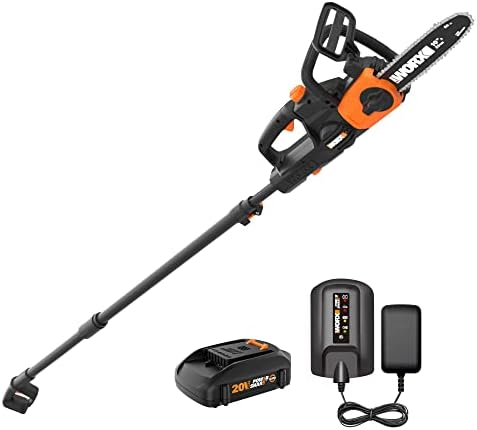
WORX Cordless Chainsaw, 20V 10" 2-in-1 Pole Saw with Auto-Tension, WG323
A 20-volt cordless 2-in-1 pole saw with a 10-inch bar and auto-tension, designed to convert between pole and handheld configurations. Built for reaching overhead limbs rather than ground-level bucking.
Visit on AmazonPrices and availability may change. Check the retailer for current details.
How these products were compared
This guide compares power source, airflow or bar size, the platform each tool locks you into, what comes in the box, and how the tool is meant to be carried and used. Product names, images, and retailer links are matched by the product identifier so that every card points to the exact product shown. No current prices are printed here, so use the retailer link on any card to confirm today's price and availability.
For a saw, the comparison starts with what it will actually cut, not what the box promises. For a blower, it starts with airflow, because cubic feet per minute moves debris and miles per hour is mostly a sticker number. The rest of the comparison is about ownership: fuel mixing, cord reach, battery platform, and whether the tool can be carried for an hour without your arms going dead.
How to choose the right chainsaw or blower
Start with the wood and the debris, not the tool. A 20-inch bar on a saw that bogs in wet hardwood is a downgrade, not an upgrade, and a cordless blower rated on airspeed rather than airflow will leave a mat of wet leaves exactly where it found them. If your normal job is limbing and bucking fallen branches up to about a foot across, an 18-inch or 20-inch bar is plenty, and a smaller, lighter saw you can actually control is safer than a big one you cannot. If your normal job is clearing a large yard after a storm, airflow and carry comfort matter more than handheld convenience.
Power source is the second decision, and it is really a question about your property. Gas tools run as long as you have fuel and a can, which is why they still own storm debris and big acreage. Battery tools start instantly, run quiet, and need no mixing, but the job ends when the charge ends, and a battery that fits nothing else you own is a dead end. Corded electric tools sit in the middle: unlimited runtime within reach of an outlet, with a cord that follows you everywhere. If you want the maintenance side first, chain sharpening basics covers the part that decides how a saw actually cuts.
Husqvarna 350BT Gas Leaf Blower
The Husqvarna 350BT is a 50.2cc, 2.1-horsepower two-cycle backpack blower rated at 692 CFM and 180 MPH, and it ships with an ergonomic harness system designed to carry the weight on your shoulders instead of your forearms. That combination is why it leads this list. For wet debris, packed leaves, and long clearing sessions, airflow and a backpack frame do more work than any handheld design, and a harness is the difference between finishing the job and quitting at hour two. It is a gas two-cycle tool, so it needs mixed fuel, and it is louder and heavier than a battery handheld.
The trade-off is ownership. A backpack gas blower means fuel cans, mixing, seasonal carburetor care, and a machine that takes up real space in a truck bed or garage. If your cleanup is a driveway, a pool deck, and a walkway, that trade is not worth making, and the battery option below is the smarter buy. If your cleanup is a half acre of wet oak leaves after a storm, the harness and the airflow are the reason this tool exists.
Alternatives to consider
The Milwaukee M18 FUEL 120 MPH 450 CFM 18-Volt Lithium Ion Brushless Cordless Handheld Blower (Battery Sold Separately) is better suited to battery-platform owners who want instant starts, no fuel, and a handheld tool for driveways and quick cleanups, while the WORX Cordless Chainsaw, 20V 10" 2-in-1 Pole Saw with Auto-Tension, WG323 is a stronger fit when the job is reaching overhead limbs and light trimming rather than ground-level bucking.
The 58CC Gas Powered Chainsaw and the 63CC Gas Chainsaw with 20-Inch and 18-Inch Bars cover the gas saw lane. One offers 18-inch and 20-inch bar options with a chain brake and an anti-vibration system, and the other ships with both a 20-inch and an 18-inch bar so you can match the bar to the cut. The Oregon 2400W Corded Electric Chainsaw with 16" Guide Bar & Saw Chain covers the homeowner lane, where an outlet is close, the wood is moderate, and instant starts with no fuel and no battery matter more than portability.
Day-to-day use and maintenance
Two-cycle gas tools, both the backpack blower and the gas saws, run on a fuel and oil mix, and the mix ratio and the fuel quality matter more than most owners expect. Stale fuel is the most common reason a gas tool will not start cold, which is why anything that runs on gas should be run dry or treated before it sits for a season. The gas chainsaws also need bar and chain oil checked before every session, and a chain tensioned correctly will cut straighter and last longer than a loose one.
Battery and corded tools have the opposite maintenance profile. A battery blower or pole saw mostly needs clean contacts, sensible storage temperatures, and a charger that is not a single-battery wall unit if you plan to run more than one pack. A corded electric chainsaw needs the cord kept out of the cut path and away from the chips, and its chain still needs the same sharpening attention as any gas saw. The pole saw's auto-tension feature takes some of the guesswork out of chain adjustment, but the chain still needs to be checked before a session.
Safety gear does not change with the power source. Chaps, eye and ear protection, and a clear escape path matter more than the price on the box, and kickback is a property of the bar nose, not of the brand.
Buying checklist
- Measure the largest limb you realistically cut in a normal year, then size the bar to that, not to the biggest tree on the property.
- Choose the power source by distance from an outlet, how long a session runs, and whether you already own batteries in that platform.
- Confirm the exact model includes the bar and chain, the harness, or the batteries you are expecting, because bundles vary within the same product line.
- Read the fuel mix, chain tensioning, and cleaning instructions before the first use, not after the first stall.
- Verify the current retailer price, availability, and return terms before you buy.
Final recommendation
Choose the Husqvarna 350BT Gas Leaf Blower when your cleanup is large, wet, and frequent, and you want airflow and a harness that hold up for hours at a time. Choose the Milwaukee M18 FUEL Handheld Blower when you already own that battery platform and your work is driveways, walkways, and quick touch-ups. On the saw side, pick a gas saw when you are cutting firewood and storm wood away from an outlet, and pick the corded or pole saw when reach, instant starts, and light trimming are the real job.