Related: Chainsaw Chain Sharpening: Ten Strokes a Tooth, Every Morning
I have run a gas chainsaw and leaf blower since I was nineteen, and I spent twelve years as a crew leader on a tree service outside Charlotte before my back told me to find easier work. In that time I learned that the box is a wish list and the job is the judge. Storm season is my busy season: hurricane debris pushed in from the coast, ice storms that bend maples over driveways, and a tree on a roof twice this year.
So when I look at a saw or a blower, I am not reading the sticker. I am asking whether it will start cold at 6 a.m. in the rain, whether it will cut wet wood, whether the battery fits anything else I own, and whether the warranty card is actually in the box. Those four questions decide what earns a spot in the truck and what goes back.
This guide covers four tools that get sold into the same shopping cart but do four different jobs: two Husqvarna 120 Mark III gas saws, a Husqvarna 122LKP gas pole saw, and a 20-volt cordless leaf blower. Buy the wrong one and you will find out mid-cut, with the tree still on the ground.
The 16-Inch Husqvarna 120 Mark III: The General-Purpose Saw
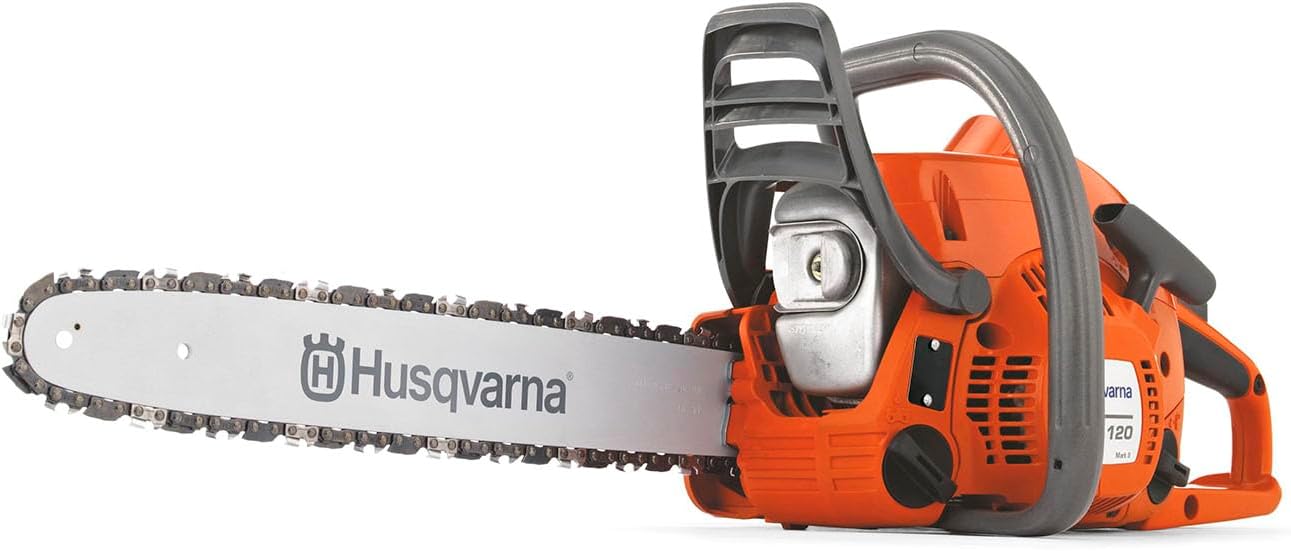
This is the 16-inch configuration of the 120 Mark III, and the listing sells it as garden tools and a gift for men, which tells you exactly who it is aimed at: the homeowner who wants one saw for the woodpile, the limb that came down in the last storm, and the fence line that keeps growing into the driveway.
What 16 inches of bar actually buys you is reach and capacity. A longer bar gets through a decent limb in one pass, and it lets you buck firewood without folding yourself in half over the saw. What it costs you is chain speed. A longer bar takes more power to pull, and a homeowner-class saw with a long bar will bog if you lean on it in wet wood. That is the single most common complaint I hear about saws in this class, and it is almost always the operator, not the saw.
I will be straight with you about where this saw sits. It is not the saw I would send up a tree, and it is not what I hand a crew on a storm call. My storm saw is the Husqvarna 460, and my all-around pick is the Stihl MS 261. But a homeowner cutting fallen limbs twice a year does not need either of those, and paying for one is how people end up with a saw they are scared of. A solid gas saw in this range does the job. Mission accomplished.
Three things to check before the first cut: chain tension, whether the chain is sharp from the factory (they often are not, and that is not a brand problem, it is a shipping problem), and bar oil. If the chain is dull out of the box, file it before you blame the saw.
The 14-Inch Husqvarna 120 Mark III: Same Family, Shorter Bar
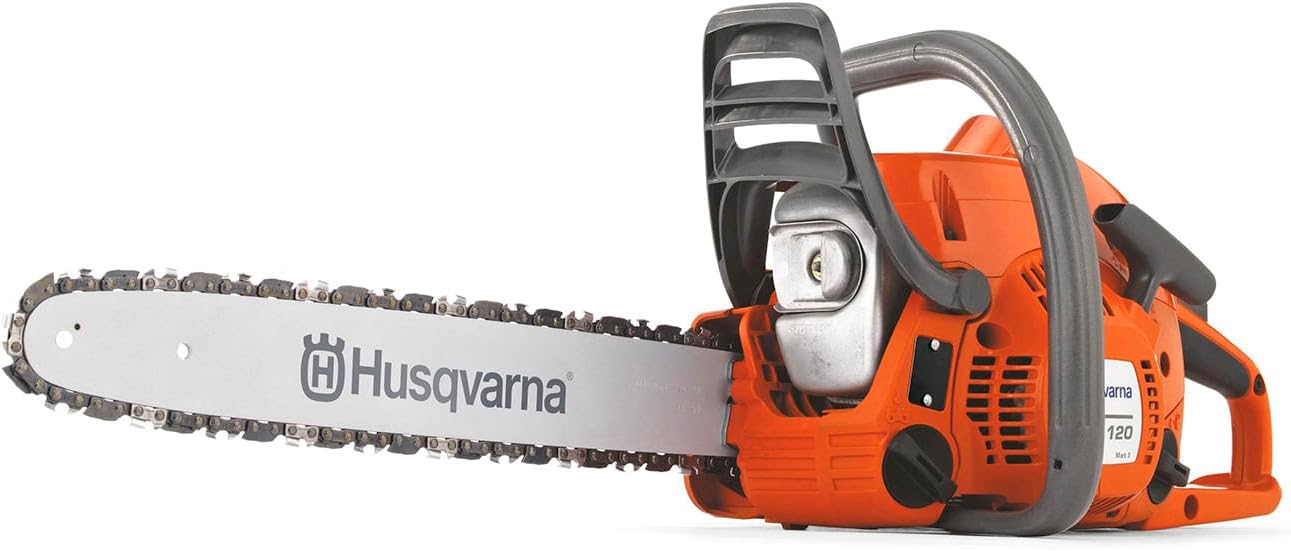
This one carries the full spec in its name: 38-cc, two-cycle X-Torq engine, 14-inch bar, automatic oiler, listed for wood cutting and tree pruning. It is the same 120 Mark III family as the saw above, with a shorter bar and a smaller-displacement engine, and that combination is the pruning configuration.
Here is why the shorter bar matters more than people think. A 14-inch bar takes less power to pull than a 16-inch bar on the same class of engine, so the saw holds chain speed easier in small wood. Chain speed is what cuts. If you are limbing a downed maple or pruning around the yard, a saw that keeps its RPMs in the cut will outwork a bigger saw that keeps stalling.
The automatic oiler is the feature I would not give up. Bar oil goes where it needs to go while you are cutting, and you are not stopping to thumb oil onto the bar every few minutes. You still check the reservoir every time you fill the fuel tank. Run a bar dry and you will be buying a bar and a chain, which is the most avoidable money you can spend on a saw.
Two-cycle means mixed fuel, and it means the saw will tell you when the mix is wrong. If a saw will not idle right in cold weather, that is usually a fuel problem, not a brand problem. Mix it fresh, and mix it in the right ratio. This is a light-duty saw by displacement, and that is fine. It is not built to drop a thirty-inch oak, and it is not priced like it is.
Husqvarna 122LKP Gas Pole Saw: Reach Without a Ladder
A pole saw is the tool that keeps your feet on the ground. Limbs hanging over a driveway, a branch rubbing the roof line, the low stuff you would otherwise attack from a ladder: that is the job this tool exists for. Ladders and chainsaws do not belong in the same sentence, and I say that as someone who has watched a good ground guy take a bad fall.
The 122LKP is a 21.7-cc gas pole saw, and the listing calls it a pole saw attachment. Read the what-is-in-the-box line carefully before you order, so you know whether you are getting a complete unit or a power head that takes attachments. That is not a knock on the tool. It is the difference between a $300 purchase that does what you expected and a return label.
Displacement tells you the mission here. 21.7 cc is small, and small is correct for limbs. This is not a felling saw and it is not a bucking saw. It is for reaching up and taking weight off a tree in controlled pieces, and it does that without putting you in the air. Cut from the underside first on a hanging limb, keep both feet planted, and never stand directly under the piece you are cutting.
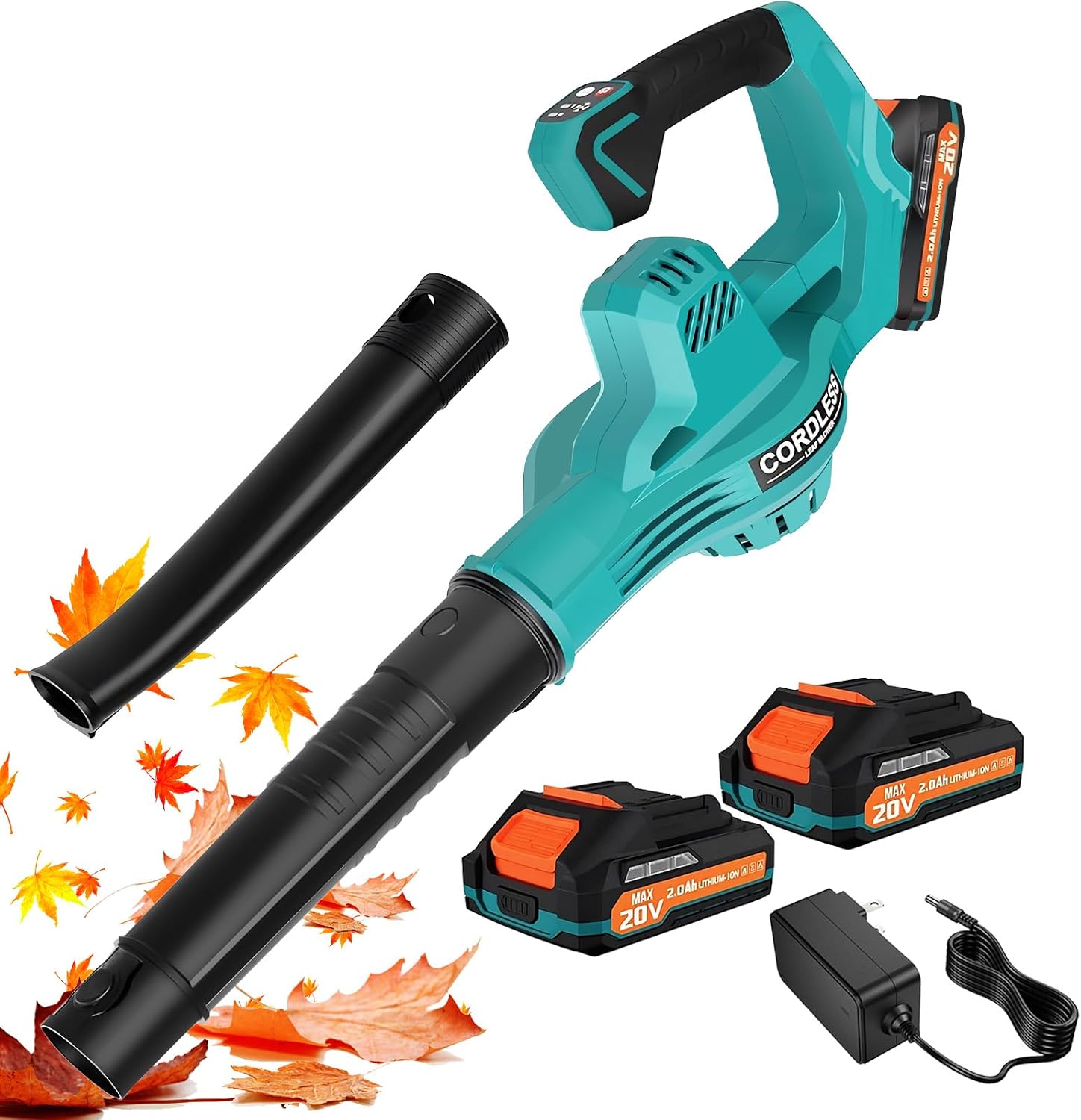
Leaf Blower Cordless, 20V 160 MPH: The Battery Tool for the Driveway
Cordless, 20 volts, 160 mph. Here is my problem with the way this blower is sold: it leads with miles per hour. The number that matters is CFM, cubic feet per minute. Airflow moves leaves. Miles per hour is a sticker, and a narrow nozzle can post a big mph number while moving almost nothing off a wet driveway. The listing does not give you CFM, so that is the first thing to go looking for in the reviews.
What this class of blower is genuinely good at: a driveway, a walkway, a pool deck, the pollen strands that carpet everything in spring, and dry leaves on a lawn. It is light, there is no pull start, no mixed fuel, and no carburetor to rebuild every other season. Three years ago I moved my light-duty kit to battery and I have not looked back. For a quick cleanup before company shows up, a tool like this is the right answer.
What it is not good at: an acre of wet oak leaves. Wet debris is the truth-teller. Any blower moves dry leaves. The good ones move the wet ones, and a 20-volt handheld is not going to outwork a backpack gas blower on a soaked lawn. If that is your yard, this is your second tool, not your first.
The battery is the fine print. Twenty-volt batteries are common, but they are not universal, and a proprietary platform is a trap. Before you buy, check whether the battery fits anything else you own, and check what a replacement battery costs. If the spare battery runs half the price of a whole new blower, that is the real price of the tool. I have been burned by exactly that twice, and now I check the platform before I check the price.
What I check before a tool earns a spot in the truck
Every saw and blower gets run through the same four questions, and none of them come from the spec sheet.
One: will it start cold, first or second pull, after a night in the truck? If a saw will not fire at 6 a.m. in cold rain with a tree on a roof, it is dead weight no matter what the box says. Two: how long does the battery really last on full blast? I time it on my phone, full charge to dead, not the number on the box. Three: does the battery fit anything else I own? One tool with a dead-end battery is a paperweight with a handle. Four: can it cut wet wood or move wet leaves? Dry is easy. Wet is the test.
And one piece of paperwork. I check the warranty card before I check the price. If the card is missing from the box and there is no email address on the website, that is part of the review, and you should know it before you need it.
The four tools, side by side
| Product | Power | Cutting length or reach | Best for | Price |
|---|---|---|---|---|
 Visit on Amazon → Visit on Amazon →Leaf Blower Cordless, 20V 160 MPH |
Cordless, 20V battery | Handheld, 160 mph rated | Driveways, walkways, pool decks, dry leaves, pollen strands | $37.99 |
 Visit on Amazon → Visit on Amazon →Husqvarna 120 Mark III, 16 Inch |
Gas, two-cycle | 16-inch bar | Firewood, storm-dropped limbs, fence line cleanup | $219.99 |
 Visit on Amazon → Visit on Amazon →Husqvarna 120 Mark III, 14 Inch |
Gas, 38-cc two-cycle X-Torq | 14-inch bar, automatic oiler | Pruning, limb work, small firewood | $219.99 |
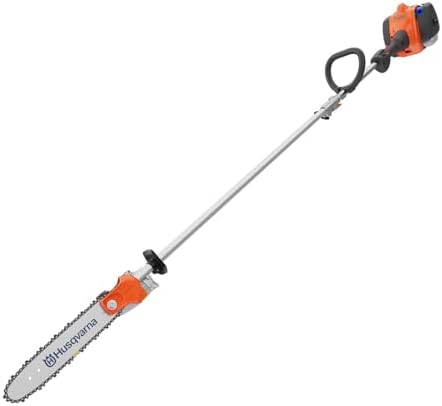 Visit on Amazon → Visit on Amazon →Husqvarna 122LKP Gas Pole Saw |
Gas, 21.7 cc | Pole saw attachment for overhead limbs | Branches over driveways and roof lines, without a ladder | $299.99 |
How these four fit together
The two Husqvarna 120 Mark III saws are the same saw family, and the decision between them is bar length, not brand loyalty. If your cutting is mostly limbing and pruning, take the 14-inch. Less bar to pull means the saw keeps chain speed where it counts, and the automatic oiler keeps you cutting instead of fiddling. If you want one saw for firewood and storm-dropped limbs, take the 16-inch and accept that it will bog if you push it in wet hardwood.
Neither one is a storm saw. When the tree is on the roof and the clock is running, that is a bigger saw and a bigger bar, and there is no battery or homeowner saw that changes that.
The pole saw is not a replacement for either. It is the third tool, for the work that happens above your head. Buy it when you are tired of dragging the ladder out.
The cordless blower is the one tool here that is not gas, and that is deliberate. Light-duty cleanup is where battery already wins: no fuel, no pull start, no carburetor. Just understand what you are buying. A 160 mph handheld is a driveway tool. It is not a backpack gas blower, and no amount of marketing will make it one.
If I were outfitting a homeowner from scratch, I would buy the saw first, in the bar length that matches the actual work, and add the blower when the leaf season arrives.
Should you buy the 16-inch Husqvarna 120 Mark III?
Yes, if the job is firewood, fallen limbs, and keeping the fence line clear. Sixteen inches of bar gives you reach and one-pass capacity, and the saw is aimed at exactly that homeowner. It is a homeowner-class saw, so do not ask it to pull a long bar through wet hardwood all afternoon, and do not skip the chain check out of the box. Buy it as the one saw for the yard, not as storm gear.
Should you buy the 14-inch Husqvarna 120 Mark III?
Yes, if pruning and limb work are what you actually do. The 38-cc two-cycle X-Torq engine with a 14-inch bar and an automatic oiler is the pruning configuration of this family, and the shorter bar is the reason it keeps chain speed in small wood. Same platform, same class, better fit for the work above the woodpile.
Should you buy the Husqvarna 122LKP pole saw?
Yes, if you have limbs over a driveway, a roof line, or a fence and you are tired of ladders. A 21.7-cc pole saw is a limb tool, not a felling saw, so match it to that job. Read the what-is-in-the-box line before ordering so you know whether you are buying a complete unit or an attachment, and keep both feet on the ground while you use it.
Should you buy the 20V cordless leaf blower?
Yes, for a driveway, a walkway, a pool deck, and spring pollen. It is cordless, it is light, and there is no fuel to mix. Two caveats. The listing sells you 160 mph, and miles per hour is not airflow, so look for CFM before you decide. And check the battery platform, because a proprietary battery that costs half the price of a new blower is the real price of the tool. For dry leaves on a small property, it is a sensible buy. For an acre of wet oak leaves, you want gas.