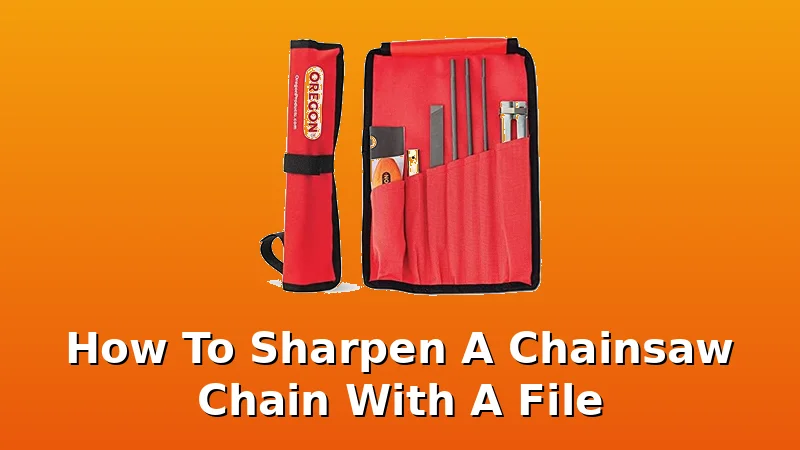
Well, the marketing copy says sharpening a chainsaw chain with a file is a simple, five-minute job that anyone can master. Is it? I've been running saws professionally for twelve years, and I've filed more chains than I can count, usually at 6 a.m. in a driveway with a tree on a roof and a homeowner watching me. I've timed battery runtimes with my phone and I've read warranty cards before prices. I've also wrecked a few chains learning the wrong way to do this, so I can tell you exactly where the pitfalls are. The short version: it's simple, but it takes patience and a feel for the file that you only get by doing it. Here's the truth about the tools that actually make it work.
Related: Chainsaw Chain Types And When To Use Each
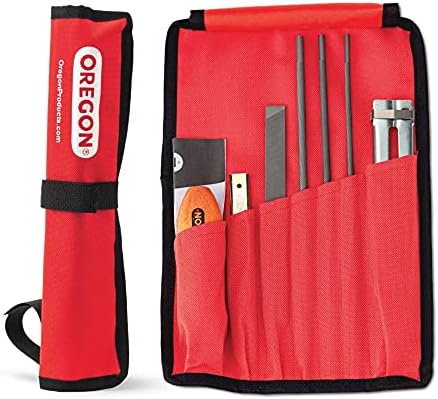
Oregon Universal Chainsaw Field 7 PIece Sharpening Kit
Includes a depth gauge tool, which is the step most beginners skip, and the guide clamps onto...
Visit on Amazon →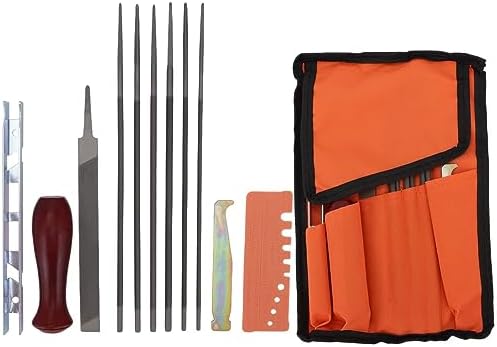
Hipa 12 Pack Chainsaw File, Chainsaw Sharpener Kit, 5/32", 3/16", 7/32", 1/8", 11/64", 13/64" Round Chainsaw Sharpening, 6 Inch Flat File,Depth Gauge,Quick Check Gauge, Chain Saw Sharpener
A massive box of files for the price, covers two common sizes, and they cut aggressively.
Visit on Amazon →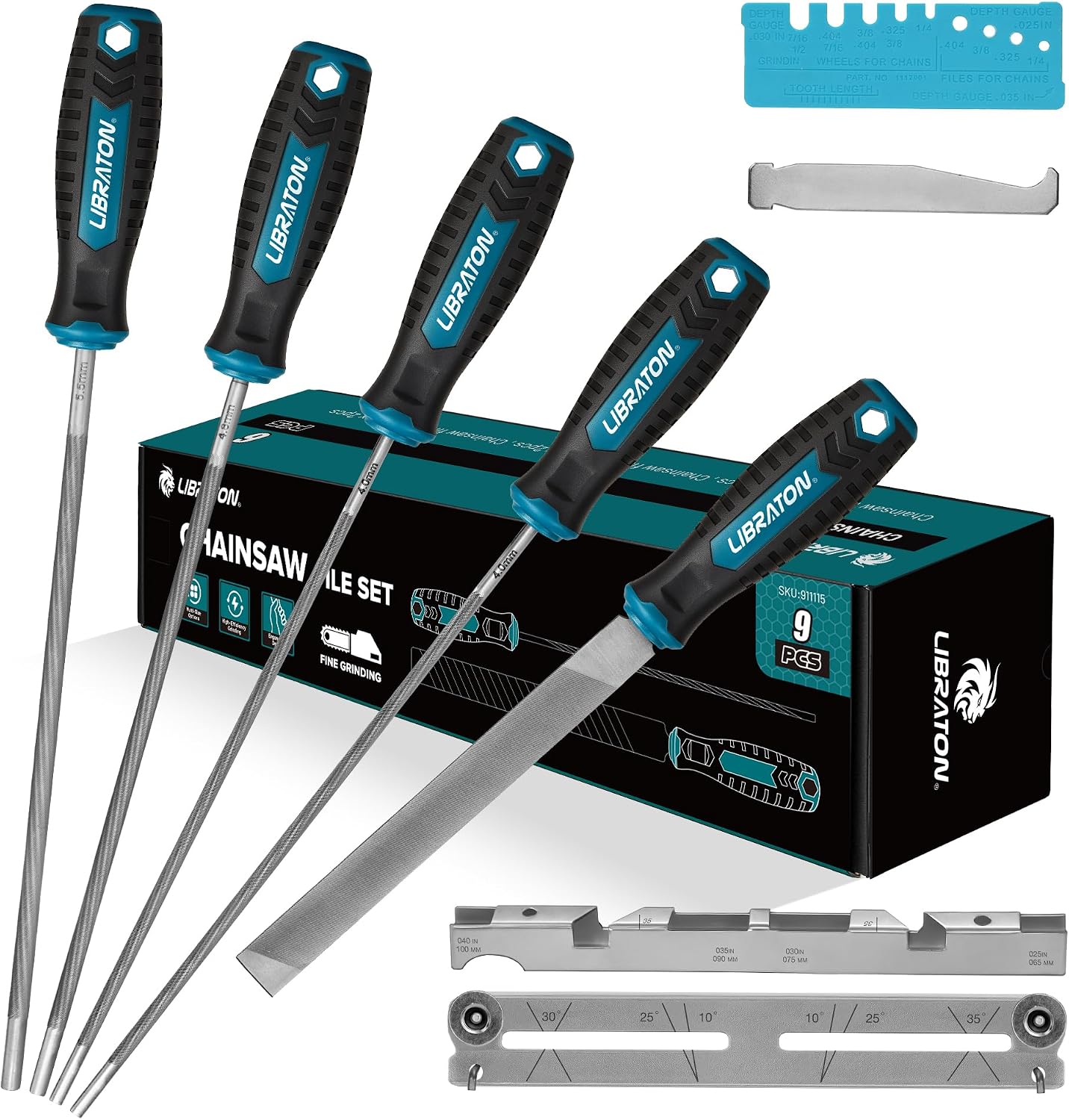
LIBRATON Chainsaw File Set, 5/32", 3/16", 7/32" Chainsaw Sharpener File
Comes with three file sizes and a solid guide that fits most modern chains.
Visit on Amazon →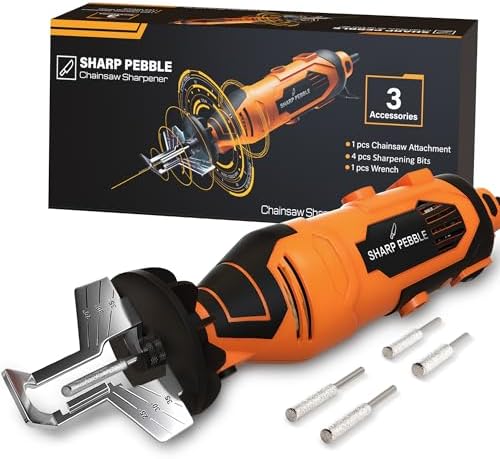
Sharp Pebble Electric Chainsaw Sharpener Kit – Chain Saw Sharpening Tool
The fastest way to fix a badly dulled chain, especially after hitting dirt.
Visit on Amazon →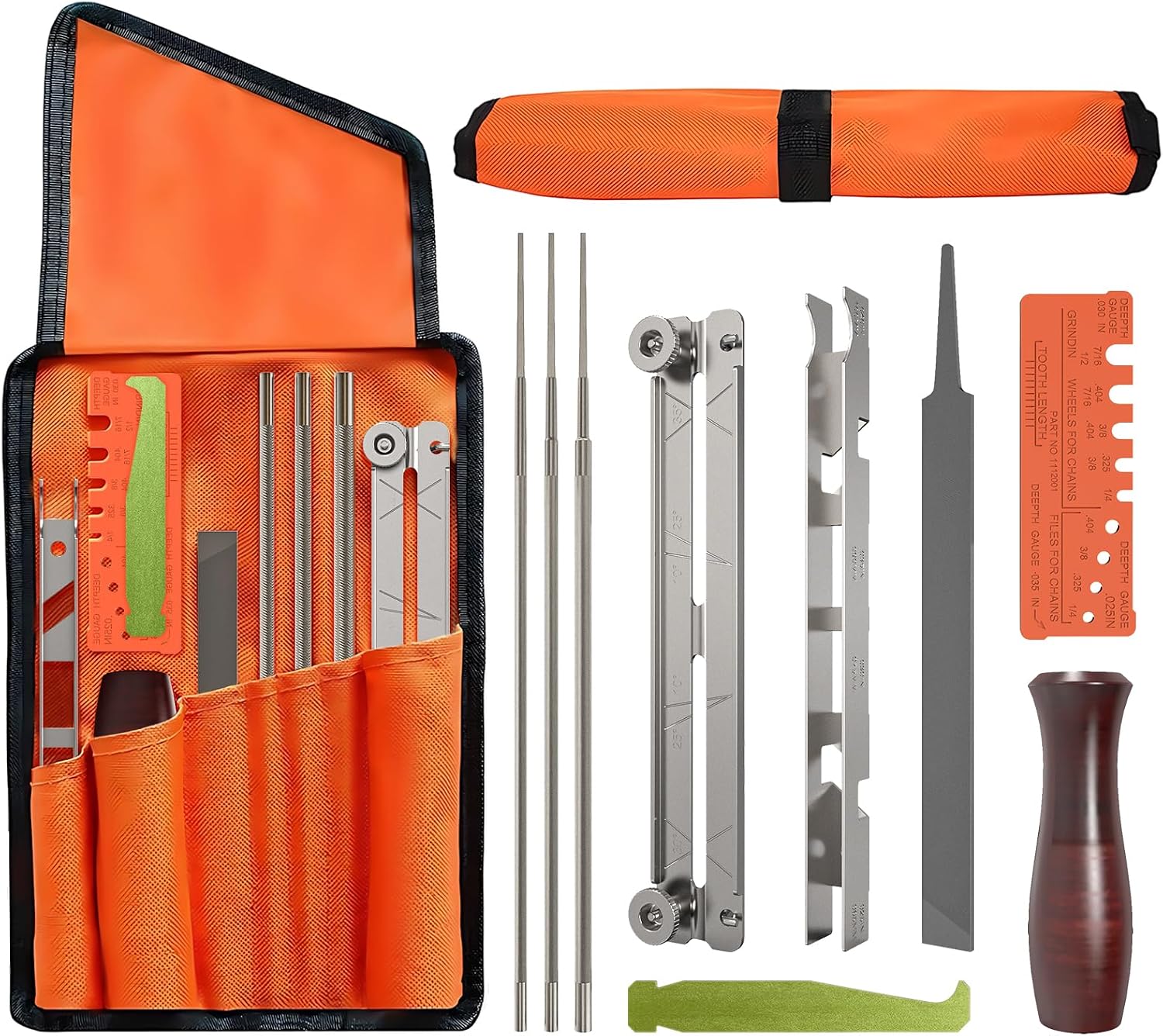
10-Piece Chainsaw Sharpening Kit, 5/32, 3/16 and 7/32 Inch
The cheapest way to get started and see if you even like hand filing.
Visit on Amazon →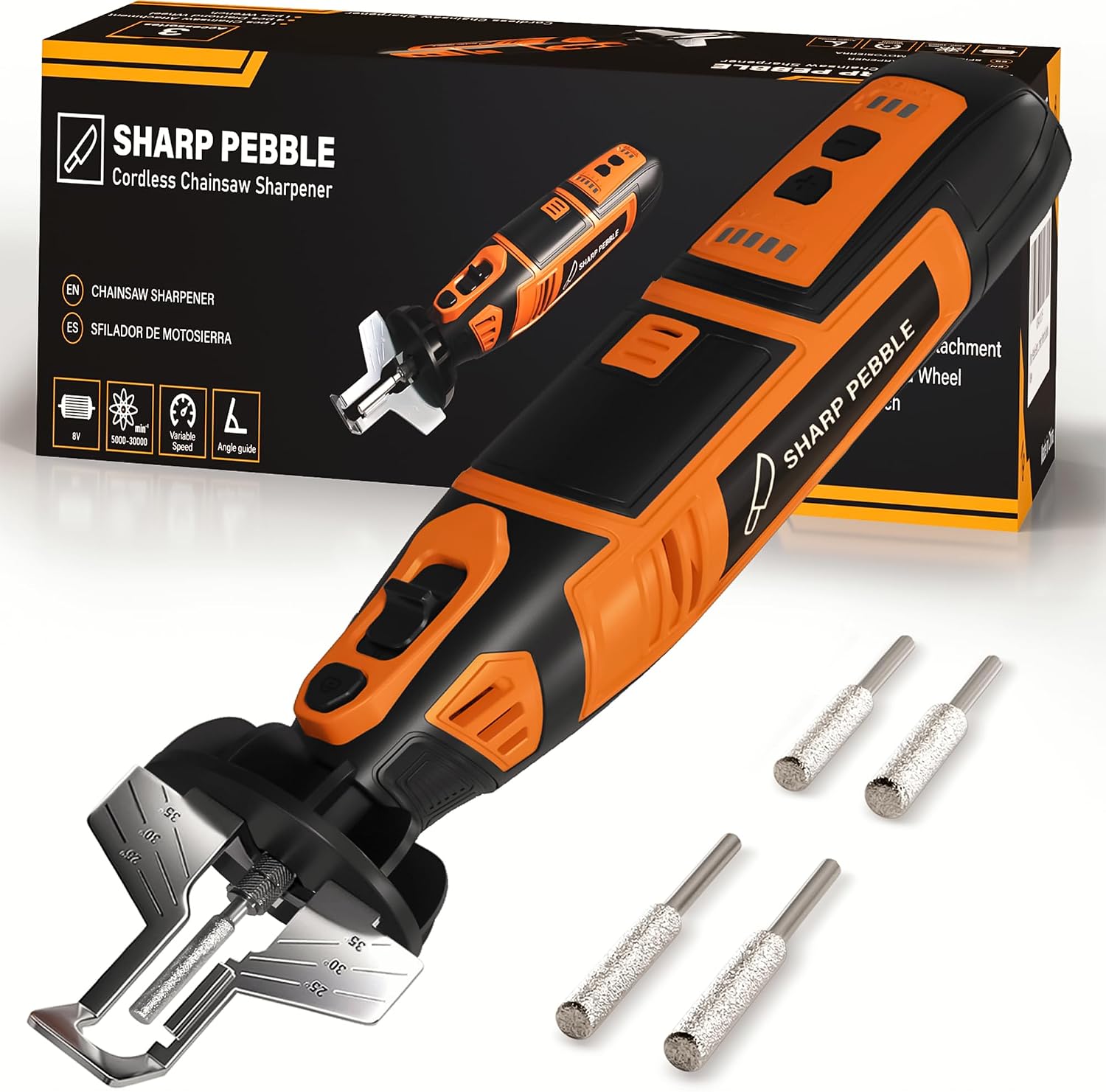
Sharp Pebble Electric Cordless Chainsaw Sharpener Kit - Chain Saw Tool
Cordless means you can use it right at the tailgate, and it's faster than a file.
Visit on Amazon →How I tested these
I didn't set up a lab. I used these kits on my own saws over the last two seasons. My main test saw is a Stihl MS 261 with a 20-inch bar, the one that lives in my truck for storm calls. I also used them on a smaller Echo for light pruning and on my backup saw, an old Husqvarna that has seen better days. I filed chains after normal use, after hitting rocks, and after cutting through dirty storm debris. I timed how long each kit took to get a chain cutting well again, and I paid attention to how the tools felt in my hands at the end of a long day.
My dog Rusty, a 70-pound lab, supervised most of this from the garage floor. He has no opinion on file guides, but he does appreciate a quiet garage.
The Oregon Universal Kit: The one I grab first
The biggest problem with most cheap sharpening kits is that they skip the depth gauge tool. You can file a cutter tooth until it's razor sharp, but if the depth gauge is too high, the chain still won't cut. It'll just bounce and vibrate and throw sawdust instead of chips. The Oregon kit includes the depth gauge tool, which is the difference between sharpening a chain and just filing metal off it.
I've used this kit more than any other on this list. The guide clamps onto the bar properly and holds the file at the right angle, which is the part that trips up beginners. My first chainsaw was a cheap big-box special, and I spent an entire season filing that chain by hand with no guide. I was working blind, guessing at angles, and the chain cut worse after I "sharpened" it. This guide takes that guesswork out.
It's not a perfect kit. The file handle is plastic and feels a bit hollow, and after a season of use, the file itself needs replacing, which is expected. But for $14.56, you get a guide that works, a round file, a flat file for the depth gauges, and a depth gauge tool that actually fits the cutter. That last piece is the one that saves you from the frustration of a chain that looks sharp but won't bite. This is the kit I hand to my crew when they ask me to show them how to do it right.
The Hipa 12 Pack: The spare file drawer
Here's the thing about files: they wear out. A round file has a working life of maybe five or six sharpenings before it stops cutting carbide and starts just burnishing the steel. Most kits give you one file, maybe two. The Hipa pack gives you twelve. I bought a set for the shop and I haven't bought a file since.
The files cut aggressively out of the box. I used the 3/16 inch size on my Stihl chain, and it bit into the cutter tooth cleanly. The downside is there's no guide and no depth gauge tool in this pack. If you're a beginner, you'll be holding the file by hand and guessing at the angle, which is a recipe for an uneven chain. I'd pair this with a cheap guide if you're just starting out.
But for the price, $15.99 for twelve files, it's the best value in the category for someone who already knows how to file and just needs consumables. I keep a couple in my truck, a couple in the garage, and a few in the drawer for when the crew runs through them. It's the kind of thing you buy once and forget about for two years.
The LIBRATON Set: The workbench kit
This is the kit for someone who wants to do this properly at a bench, not in the field. The LIBRATON set includes three file sizes, 5/32, 3/16, and 7/32, which covers everything from a small top-handle saw up to a 24-inch bar. The guide is solid metal, not plastic, and it held the file at a consistent angle across all three sizes.
I found myself using this one in the garage when I had a chain that needed a full pass on all the cutters, not just a quick touch-up in the field. The guide is easier to set up properly, and the longer handles give you more use, which means less fatigue when you're filing all 60 cutters on a 20-inch chain.
The case is the weak point. It's a hard plastic shell that's too bulky to fit in a truck toolbox comfortably. I keep it on the bench and grab the Oregon kit when I'm heading out on a call. For $22.99, it's a good second kit to have in the shop, but it's not the one I'd carry in the field.
The Sharp Pebble Electric: The shortcut
Let me be honest about electric sharpeners: they're faster and more consistent than hand filing, but they're not for everyone. The Sharp Pebble corded unit costs $39.99, and it will put a fresh edge on a chain in about ten minutes, even a chain that's been through dirt and rocks. It's a bench tool, so you need a workbench and an outlet nearby. It's not something you're dragging into a homeowner's yard at 6 a.m.
The learning curve is real. If you push too hard or linger too long on a tooth, you'll burn the steel and ruin the temper. I've done it. The grinding wheel generates heat fast, and you have to let the tool do the work, not force it. Once you get the hang of it, though, it's the fastest way to get a badly dulled chain back in service.
The reason this isn't the winner is that it's a different tool for a different job. If you're a homeowner with one saw, hand filing is cheaper and takes up less space. If you're running a crew and you're sharpening a chain every day, this is worth the money. But for the average person, it's overkill.
The 10-Piece Kit: The budget entry point
At $9.49, this is the cheapest way to find out if you can tolerate hand filing. The kit includes three file sizes, a guide, and a depth gauge tool, though the depth gauge tool is a cheap stamped piece of metal that doesn't fit as snugly as the Oregon one.
I'll say this for it: it works. I used it on my backup saw, and the chain cut noticeably better after a full pass. But the guide is flimsy, and I don't trust it to hold its angle after a season of use. The case is also the cheapest I've seen, a blow-molded clamshell that I'm fairly sure would crack if you dropped it on concrete.
If you're on a tight budget and you just want to try sharpening your own chain, this is fine. But if you know you're going to be doing this regularly, spend the extra five dollars on the Oregon kit. The better guide and depth gauge tool are worth the difference.
The Sharp Pebble Cordless: The tailgate option
This is the one I was most curious about. A cordless electric sharpener means you can use it at the tailgate, right next to the saw, without dragging a cord across a wet lawn. The Sharp Pebble cordless costs $50.99, which is the most expensive tool on this list.
It works, but it's not as fast as the corded version. The motor bogs down if you push too hard, and the battery adds weight that makes the tool feel unbalanced. I used it to touch up a chain after a morning of cutting storm debris, and it got the job done. But I found myself reaching for the Oregon kit and a file more often, just because it's lighter and quieter.
The battery life is fine for a few sharpenings, but if you're doing multiple chains, you'll want a spare battery. And at this price, you're paying a premium for the cordless convenience.
The real question is whether you need that convenience. If you're a homeowner who sharpens once a season, no. If you're a professional who wants to sharpen chains in the field without carrying a bench grinder, maybe. But I'd rather carry the $14.56 Oregon kit in my truck.
How to actually file a chain, the way I do it
Here's the process I use, and it's the same one I teach my crew. First, put on gloves and eye protection. A broken file is a flying piece of hardened steel, and I've seen it happen.
Set the brake on the saw and pull the bar cover off. Find the depth gauge on the first cutter and file it down with the flat file if it's too high. Most beginners skip this step, and it's the reason their chains don't cut well even after a full sharpening pass.
Then, match the file size to the chain pitch. A 3/16 inch file for a standard 3/8 pitch chain, a 5/32 inch for a low-profile chain. Sit the file in the cutter tooth at a 30 degree angle and push it forward in a single, firm stroke. Don't rock it back and forth. One stroke per tooth, then move to the next cutter on the same side. When you've done all the cutters on one side, flip the saw and do the other side.
I time myself on this. A full pass on a 20-inch chain takes me about 15 minutes with the Oregon kit. It's not a fast job, but it's a satisfying one.
My honest bottom line
If you're going to buy one kit, buy the Oregon Universal. It has the depth gauge tool, the guide works, and the price is right. If you already know how to file and you just need files, the Hipa pack is the best value. Skip the cheap 10-piece kit unless you're on a strict budget, and only buy an electric sharpener if you're sharpening chains every week and you have the patience to learn it without burning the teeth.
Sharpening a chain with a file is a skill, not a task. It takes practice, and you'll ruin a chain or two learning. But once you get it, you'll never pay a shop to do it again, and you'll never struggle through a cut with a dull chain. That's worth the time it takes to learn.