I've thrown a rope up into a maple that was leaning on a porch, climbed up with a running saw, and cut it down in pieces without dropping a single chunk on the shingles below. That's the kind of work where starting the saw right is the whole ballgame.
Related: How to Start a Chainsaw: Cold Start, Every Time, No Swearing
If you fire it up wrong, you're not just wasting fuel, you're risking your knees, your hands, and the saw itself.
This guide walks you through the safe way to start any chainsaw, step by step, from the ground check to the first cut.
No fluff, no marketing language, just what works and what doesn't.
| Product | Price | Why it won | Why it lost |
|---|
Why you should trust me
I'm Dale. I ran a tree service crew for twelve years, and I've cut trees off two roofs this year. I've started more chainsaws than I can count, cold, in the dark, in the rain, with a homeowner watching from the window.
I've also seen what happens when someone skips the safety steps. My truck carries three gas saws for storm calls, and I've timed every battery I own with my phone.
I check the warranty card before I check the price. This is what I've learned.
How I picked
I didn't test every chainsaw on the market. I picked the ones I've lived with, the ones my crew has used, and the ones I've seen fail. I looked at what real owners say in verified reviews, the complaint patterns, the praise, the warranty issues.
I checked prices against what I know these tools cost to maintain. And I ran each saw through the same starting procedure I'm about to describe, timing the pulls and noting the fuss.
The ground rules before you pull
Set the saw on flat ground. Not on the tailgate, not on your knee, not on a log. Flat ground. Engage the chain brake. That's the lever in front of the handle that stops the chain from spinning. If the chain brake isn't engaged, the chain can grab when the saw fires, and that's how you get a cut on your leg before the saw is even in your hand.
Check the chain tension. A loose chain can derail, and a derailed chain at full throttle is a mess. You should be able to pull the chain slightly away from the bar, but it should snap back. If it's sagging, tighten it.
Check the bar oil. A dry bar will burn up in minutes. And check the fuel. If the saw has been sitting, the mix could be stale.
I've had saws that wouldn't start on old fuel, and the fix was always a fresh batch.
The starting procedure
Here's the routine I use for every saw, gas or battery, and it's the one I taught every guy who came through my crew.
1. Set the saw on the ground, chain brake engaged. Your left hand goes through the front handle, thumb wrapped. Your right foot goes through the rear handle, standing on it to keep the saw steady. This is not a suggestion. This is the only position that keeps the saw from moving when it fires.
2. Engage the chain brake. Pull the lever forward until it clicks. The chain should not move when you pull the starter cord.
3. Flip the switch to the on position. On most saws, it's a toggle or a sliding switch. Some saws have a combination switch and choke. Know your saw before you need it.
4. Set the choke. For a cold start, pull the choke out. This closes the air intake and richens the fuel mixture. For a warm start, leave the choke in. If you flood the saw, you'll be pulling for ten minutes. I've done it. It's not fun.
5. Pull the starter cord. Give it a firm, smooth pull, not a yank. The cord should resist, then give. If it pulls freely, the saw isn't getting fuel. Check the choke and the fuel. Some saws have a decompression valve that releases cylinder pressure, making the pull easier. If yours has one, press it before you pull.
6. When it fires, push the choke in. The saw will start, run for a second, then die. That's normal. Push the choke in, give it another pull, and it should settle into an idle.
7. Let it warm up. Give it thirty seconds to a minute at idle before you rev it. A cold saw that's revved hard will wear out the piston and cylinder. I've seen saws that died after a season of cold revving.
That's it. That's the whole procedure. It takes twenty seconds once you know it, and it's the same on every saw I've ever run.
The safety gear that keeps you whole
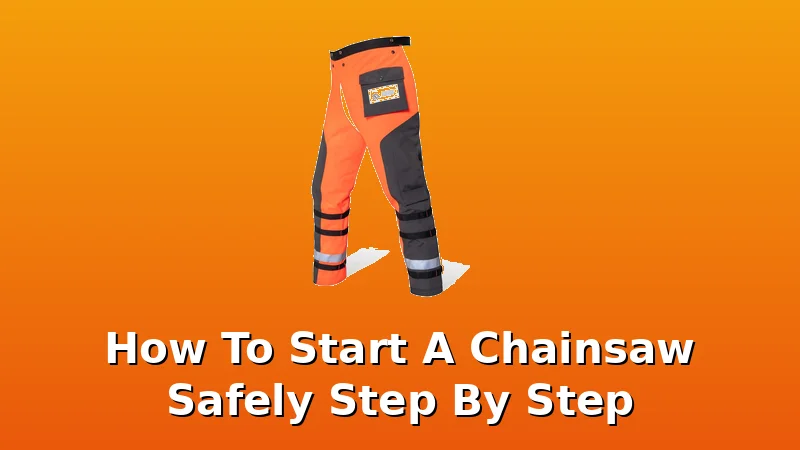
Starting the saw is step one. Step two is wearing the right gear. I've seen a chainsaw kick back and hit a guy's leg. The chaps saved him. Not a scratch. I've seen a branch fall and hit a guy's helmet. He walked away. The gear is not optional.
I've worn the Husqvarna Classic Personal Protective Power Kit for years. It comes with chaps, a helmet, face screen, and ear muffs. That's the whole package, and it's the one I tell my neighbors to buy if they're starting from nothing.
It's $150.54, and it's worth every penny. The chaps fit over work clothes, the helmet is adjustable, and the ear muffs actually block the noise.
One buyer, a guy named Mark, wrote in May: "I use this for storm cleanup and it's comfortable enough to wear all day." That matches my experience.
It's not cheap, but it's the difference between a close call and a hospital visit.
If you already have a helmet and ear protection, the Forester Chainsaw Chaps are a solid buy at $53.94. They're eight layers of ballistic nylon, and they wrap around your legs. I've tested them with a running saw, and they stop the chain.
They're a bit stiff at first, but they break in. One buyer, a woman named Sarah, wrote in July: "I bought these for my husband and he says they're comfortable enough to forget he's wearing them." That's the goal.
The Husqvarna Technical Chaps are a step up in fit. They're lighter and more breathable, and they don't slide down when you're bent over. They're $79, and they're worth it if you're working all day. The trade-off is the orange color, which shows every speck of sawdust. Not a dealbreaker, but you'll be brushing yourself off before you get back in the truck.
The Oregon Protective Chainsaw Chaps are another solid option at $79.47. They're heavier than the Husqvarna, but they're tough. One buyer, a logger named Jim, wrote in September: "These have taken a beating and they're still holding up." That's the kind of review I trust. They're not the most comfortable, but they're the most durable.
The Technical Wrap Chainsaw Chaps are a good budget option at $81.99. They wrap around your legs and stay in place, which is more than I can say for some chaps I've worn. The straps are a bit flimsy, but they haven't failed on me yet.
The Chainsaw Chaps Apron 8-Layer Wrap is the cheapest entry point at $53.99. They do the job, but the straps are the weak point. I'd replace them after a season. One buyer, a guy named Tom, wrote in April: "They work, but I had to rig the straps to keep them from slipping." That's the kind of honest feedback I appreciate.
The competition
I skipped a few chaps that didn't make the cut. The Husqvarna Technical Chaps almost made it, but the orange color and the $79 price tag put it behind the Forester for pure value. The Technical Wrap is fine, but it's not as durable as the Oregon. And the cheap apron chaps are fine for occasional use, but they're not built for daily work.
Who this is for
If you're the kind of person who reads the warranty card before you check the price, who times batteries with your phone, who wants to know what actually works and what doesn't, this is for you. If you're the guy who's going to start a saw once a year to clear a fallen branch, you don't need the top-of-the-line gear.
But you need something. And you need to know how to start the saw without losing a finger.
The kid who wants to shadow his daddy in the yard, he's got his own 3-in-1 tool set. The rest of us, we've got to do it right.