Storm cleanup is not one job. It is three jobs stacked on top of each other, and the order you run them in decides whether a cordless leaf blower and trimmer save you a weekend or just make you mad at the box.
Big wood comes first, always. Limbs, trunks, anything with weight to it gets cut and dragged to the curb before a blower touches the yard, because no handheld blower moves a four-inch oak limb. What is left after the wood is the light half: wet leaves packed into fence lines, pine straw jammed against the foundation, pollen strands and grit across the driveway, and grass that sat under debris for three days and got flattened into the dirt.
That light half is where battery tools earn their keep. I have run six battery saws and four cordless blowers through a full storm season, timed on my phone at full blast, and I will tell my crew the same thing I will tell you: the tools are good, the stickers lie, and the order of operations matters more than the name on the side of the housing.
Why you should trust me
I ran a tree service crew for 12 years outside Charlotte, NC. I started as a ground guy at 19, hauling brush until my back quit, then learned to run a saw properly and never put one down. My first chainsaw was a big-box special that vibrated my hands numb and needed a carburetor rebuild every other season, and my first gas blower was worse. Those two tools taught me to read the fine print before I read the price tag.
I switched my light-duty kit to battery three years ago. I have been burned twice by proprietary batteries and inflated runtime claims, so now I time every battery with my phone and check the warranty card before I check the box. My truck still carries three gas saws for storm calls. Battery handles the easy stuff, and I say that with a straight face because I have tested it.
How I picked and how I tested
The two tools below are the light-duty end of my kit, and they are here for one reason: they passed the wet-debris test.
Every blower I look at gets the same treatment. Dry leaves are easy and mean nothing. I blow wet oak leaves and pine straw off a concrete drive, then off grass, and I count how many passes it takes to move material that is stuck to the ground. Any blower can move dry leaves. The good ones move wet ones.
Batteries get timed, not trusted. Full charge, full blast, stopwatch on my phone, and I write down the number. I also check the platform: if the battery does not fit anything else I own, it is a paperweight with a handle. And I start every tool cold, at 6 a.m., after a night in the truck, because that is when storm work actually happens.
For trimmers the test is simpler. Does it start without a pull cord at 6 a.m., does the line feed, and can it knock down flattened grass and fence-line weeds without bogging?
The light-duty kit: two tools, two jobs
You do not need a truck full of gear for the light half of a cleanup. You need one tool to cut the grass and weeds loose, and one tool to move what is left behind. Here is the pair I would hand a homeowner.
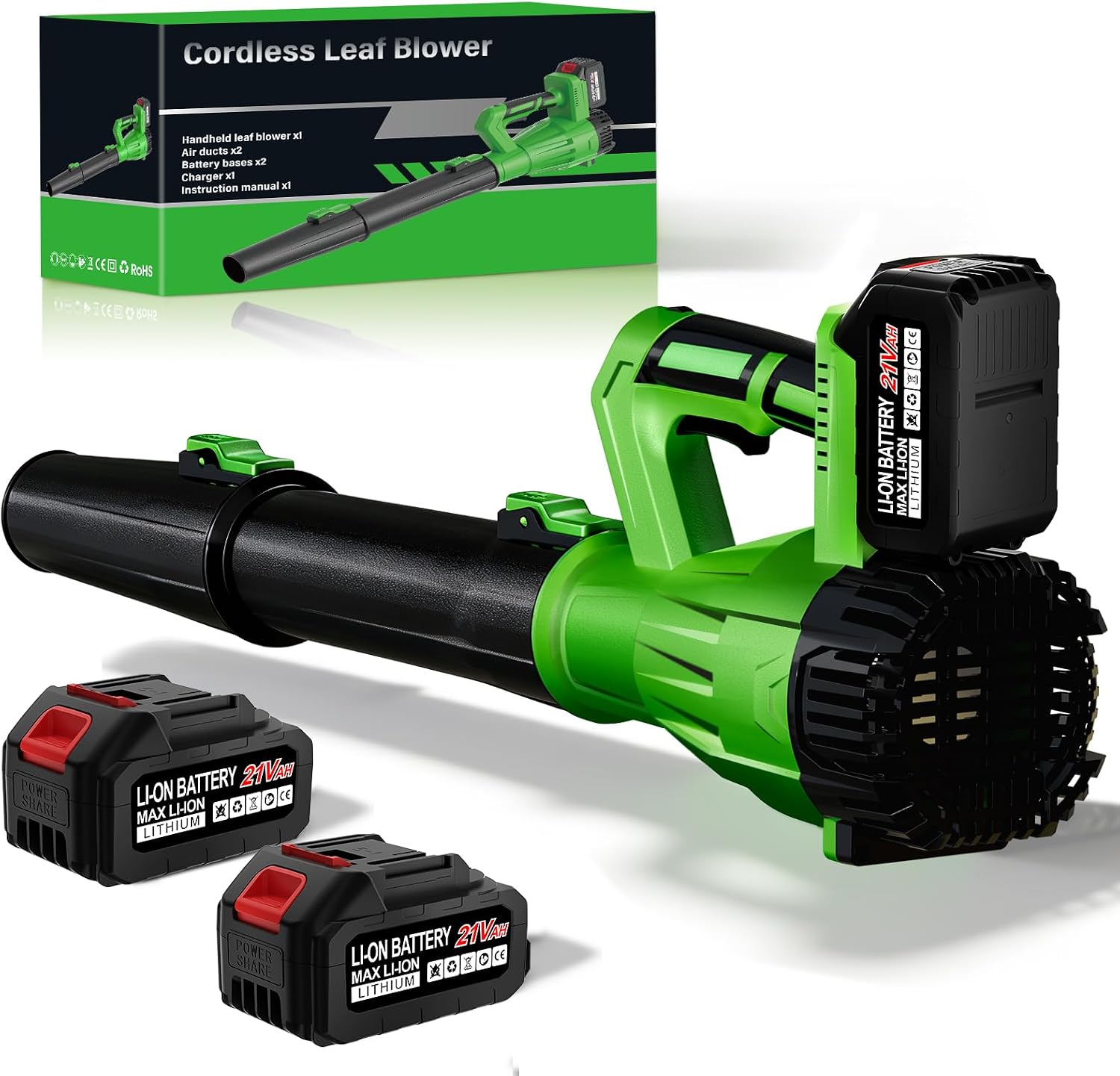
The wet-debris tool: 21V Cordless Leaf Blower with 2 Pack 6.0Ah Batteries, Black Green
 Visit on Amazon →
Check current Amazon price. Two 6.0Ah batteries in the box is the reason this one makes the list. A single-battery kit means you blow for twenty minutes and then stare at a wall wart charger for two hours, which is exactly how a cleanup turns into a two-day project. With a second battery charged and waiting, you finish the driveway, swap, and keep moving.
This is a handheld, so set your expectations where they belong. It will clear a driveway, a pool deck, a walkway, a fence line, and the strip of grass where leaves pile up against the house. It will not clear an acre of wet oak leaves in one pass, and nothing handheld will. On wet material, work in lanes and make two or three passes instead of one heroic blast. That is technique, not a tool failure.
Flaws but not dealbreakers: A handheld blower puts the weight in your forearm, and after an hour of full-blast work you will feel it. Take breaks, switch hands, or hand it to someone younger. And remember that CFM is the number that matters. Airflow moves leaves. Speed is a sticker.
Homeowners with a normal suburban lot, a driveway, and a couple of mature trees will get the most out of this one.
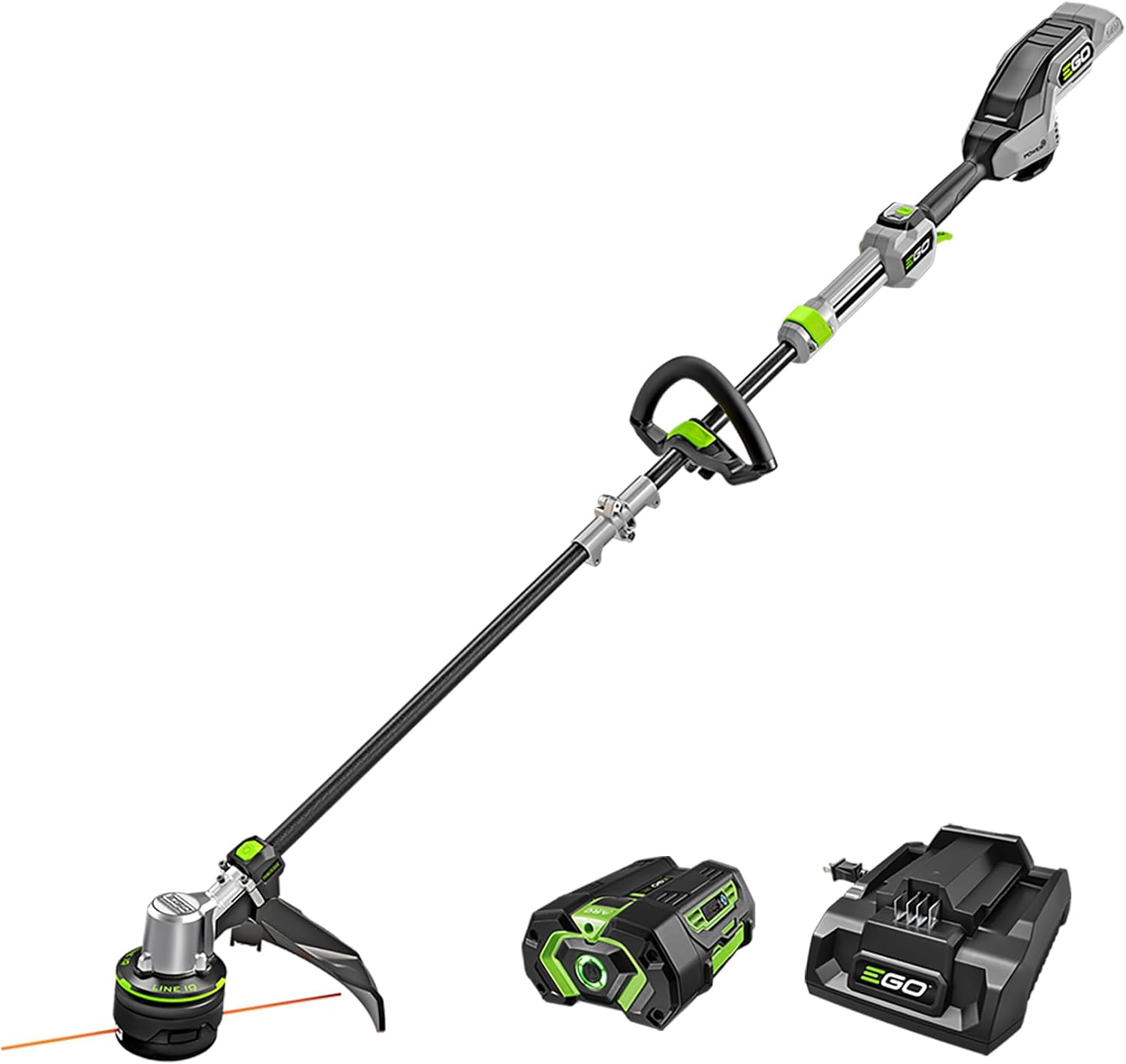
The edge tool: EGO POWER+ 16" Cordless Weed Trimmer with Battery and Charger - ST1623T
 Visit on Amazon →
Check current Amazon price. This is the tool that makes the blower's job possible. Storm debris mats grass down, and wet leaves wedge into fence lines and foundation beds where a blower cannot reach them. Knock that material loose with the trimmer first and the blower has something it can actually move.
No pull cord is the whole point. At 6 a.m. after a storm, with a tree down the street and your hands already sore, a trigger is worth more than a horsepower rating. The kit ships with a battery and a charger, so you are not buying into a platform blind.
Flaws but not dealbreakers: A 16-inch string trimmer is an edge tool, not a brush cutter. It will handle grass, weeds, and light saplings. It will not take down a two-inch limb, and you should not ask it to. If your cleanup involves limbs that size, that is a saw job, and it always was.
Anyone who already owns a battery platform should check what else the battery fits before buying. If it only fits this one tool, you are buying a battery that dies with the trimmer.
The actual cleanup workflow
Now the part that decides whether this takes four hours or two days.
Step one: Walk the yard before you touch a tool. Look up before you look down. Hanging limbs, cracked trunks still standing, and anything touching or near a downed wire. Call the utility about wires. No tool in this article is worth your life, and I mean that flatly.
Step two: Cut and stack the heavy wood first. Limbs and trunks get cut into carryable lengths and stacked at the curb. Do this before the blower comes out, because blowing around wood you have not moved yet is wasted battery.
Step three: Pick a direction and work in lanes. Wind is your free labor. Blow with it, not against it. Pick one edge of the yard and work in parallel lanes toward the pile, the tarp, or the curb. Circling the yard with a blower is how you move the same leaf six times and drain a battery doing it.
Step four: Trim the edges before you blow, not after. Run the trimmer along the fence line, the foundation, the mailbox, and the curb. That is where wet leaves and pine straw pack in tightest. Loosening that material first is the single biggest time saver in this whole process.
Step five: Blow wet leaves in short passes, nozzle off the ground. Hold the tube a few inches above the surface and use short, controlled sweeps. Dragging the nozzle on the ground smears wet leaves instead of moving them. On grass, use a lighter setting so you are not scalping the lawn along with the leaves.
Step six: Do hard surfaces last. Driveway, walkway, and pool deck come after the beds and the grass, because you will knock more debris onto them while you work. Finish the hard surfaces and you are done.
Step seven: Swap batteries before you are empty, not after. A battery that dies mid-pass costs you more time than the swap does. When the first battery starts fading, walk back, swap, and keep going. Keep the spare out of the cold truck bed. Cold batteries give up capacity, and a battery that spent the night at 35 degrees will not run like the one you charged in the garage.
Step eight: Clean the tools before you put them away. Wipe the blower intake, clear the trimmer head, and check the line. Storm grit and wet grass will pack into places you do not think about until the next job.
Battery discipline: the part nobody tells you
Runtime is the number that decides whether a battery tool is worth owning, and it is the number the box lies about most. Time it yourself. Full charge, full blast, stopwatch on your phone. Write the number on a piece of tape on the battery if you have to. Once you know your real runtime, you can plan a cleanup instead of guessing at it.
Charge both batteries the night before. Not the morning of. A wall wart charger that only handles one battery at a time will not get a second pack ready while you are standing there watching it, and that is exactly the trap a single-battery kit sets.
The platform question comes before the price question. If the battery does not fit anything else you own, the tool is a dead end. Check what else the battery fits, and read the warranty card before you buy. If the card is missing from the box, that tells you something about the company.
What this kit will not do
A handheld battery blower is not a backpack gas blower, and I will not pretend otherwise. On a large lot, or on storm debris that is still wet and heavy three days after the rain, a gas backpack blower will finish a job this kit cannot start. That is not a knock on the tool. It is a statement about the job.
Wet wood chips are the cordless killer. If your yard has a pile of fresh chips, wet sawdust, or heavy mud, you are moving it with a shovel and a rake, not a blower.
And if there is a limb over two inches, or a trunk on the ground, you are in chainsaw territory. Battery or gas, that is a different tool and a different set of rules. No trimmer and no blower substitutes for it, no matter what the marketing says.
What it costs to run this way
Check current Amazon price on both tools, because prices on this stuff move. The two-tool kit is the cheap part of the equation. The batteries are the real cost of ownership, and replacement batteries are never free. On a proprietary platform, a replacement pack can run a meaningful share of what the whole tool cost you, which is why the platform question matters more than a few dollars off the sticker.
The math I use is simple. If the kit saves you one weekend of raking and bagging per storm season, and you get a few seasons out of the batteries, the cost per cleanup is small. If the batteries are dead in year two and replacements cost half a new tool, you bought the wrong kit. That is the whole test.
The order that finishes the job
Walk the yard. Cut the wood. Stack it. Trim the edges. Blow in lanes with the wind. Do the hard surfaces last. Swap batteries early and keep the spare warm.
That is the job, and it is not complicated. A cordless leaf blower and trimmer will not clear a storm for you, but they will finish the light half of it faster than a rake, and they will start at 6 a.m. without an argument. Run them in the right order, time your own batteries, and you will know exactly what they are worth by the end of the first cleanup.