A cordless chainsaw and leaf blower kit is not a tree service in a box, and anyone who tells you otherwise has never stood under a leaning maple at 6 a.m. But for the jobs most homeowners actually face, a limb across the driveway, a storm-torn branch in the yard, a patio buried in wet leaves, a small battery kit will finish the work before your coffee goes cold.
I ran a tree service crew for 12 years outside Charlotte. I have cut trees off two roofs this year. What I have learned is that the average homeowner does not need what I carry in the truck, and buying it anyway is how people end up with a $700 saw that sits in the garage until the gas goes bad.
What you need is two tools that share a plan: a small saw for limbs, and a blower that moves wet debris. Here is how to pick them, set them up, and run the job in the right order so you are not fighting the equipment on the day you need it.
Why you should trust me
I started as a ground guy at 19, hauling brush until my back quit, then learned to run a saw properly and never put one down. Storm season is my busy season. Hurricane debris off the coast, ice storms that bend maples over driveways, the calls that come in at dawn when the tree is already down.
My first chainsaw was a big-box special that vibrated my hands numb and needed a carburetor rebuild every other season. My first gas blower was worse. That gear taught me to read fine print before I read the price. I switched my light-duty kit to battery three years ago and I have not looked back, but I have been burned twice by proprietary batteries and inflated runtime claims, so now I time every battery with my phone and I check the warranty card before I check the sticker.
I am going to tell you what these two tools are for, what they are not for, and the order to use them in. Where I have not run a specific unit myself, I will say so instead of pretending.
What this kit does, and what it does not
A two-tool battery kit covers limbing, small bucking, brush cleanup, driveway and patio clearing, and gutter-adjacent debris you can reach from the ground.
It does not cover felling a big tree, bucking a trunk wider than your bar, or clearing an acre of wet oak leaves in one pass. Those jobs want a gas saw and a backpack blower, and no battery marketing will change that. The honest way to size your kit is to walk your property and measure the biggest thing you would realistically cut. If the answer is a 20-inch trunk, this article is not for you yet.
The two tools in this kit
Two tools, two different battery stories. Read both before you buy either one, because the battery question is the one that decides whether this kit saves you money or traps you.
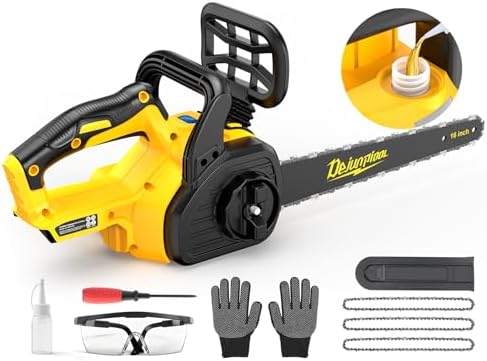
The trim saw: Cordless Mini Chainsaw Compatible with Dewalt 20V MAX Battery, 6 Inch & 8 Inch Small Electric Chainsaw Brushless, Auto Oiler, Handheld Pruning Tree Saw Gift for Men Dad Husband Fathers (Tool Only)
 Visit on Amazon →
This is the tool I would hand a homeowner for limb work. Brushless motor, auto oiler, and two bar sizes in one package, 6 inch and 8 inch. It runs on the DeWalt 20V MAX platform, which is the part that matters most to me. If you already own DeWalt 20V MAX batteries for a drill or an impact driver, you are buying a saw body and nothing else. That is the cheapest way into a cordless saw there is.
The catch is right in the name: tool only. No battery, no charger. If you do not own the platform, add both to your math before you order, and understand that those batteries are not going to run a blower from another brand. The DeWalt 20V MAX platform is one of the few in this class that fits a whole wall of tools, which is exactly why I would rather start here than with a saw that ships its own one-off battery.
A 6-inch bar is a limb saw. It is for branches, saplings, and light bucking where the wood is comfortably smaller than the bar. It is not a felling saw and it is not a firewood saw. Auto oiling takes one chore off your list, but you still have to check the reservoir before every session, because a dry bar will cook itself in a hurry.
Flaws but not dealbreakers: Tool only means tool only. The real cost is the battery and charger if you are starting from nothing. And mini saws are easy to run one-handed, which is exactly the habit that gets people cut. Use both hands, every cut, no exceptions.
Anyone already on the DeWalt 20V MAX platform who needs to take limbs off fallen trees and keep the fence line clear will get their money out of this one.
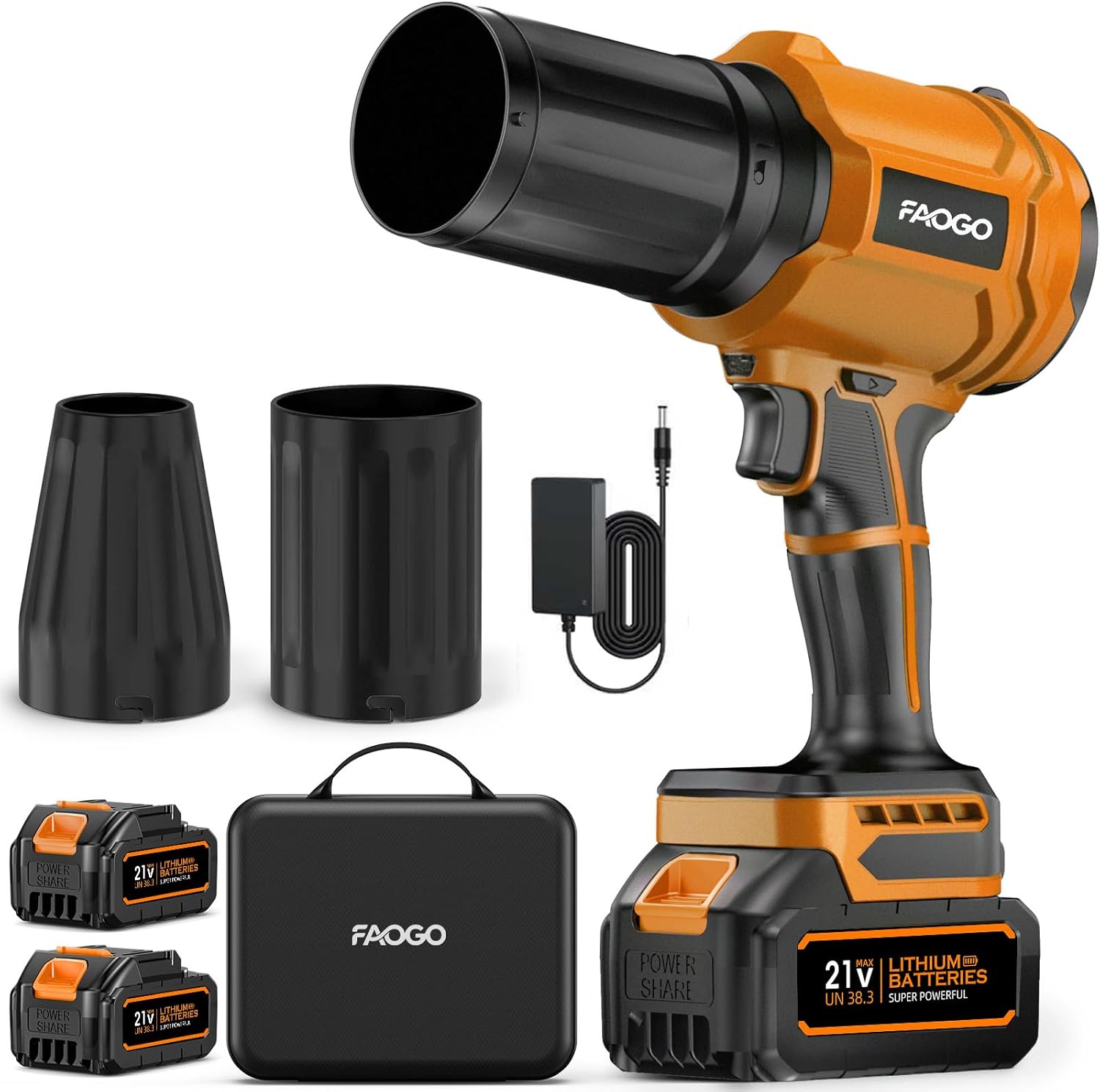
The cleanup blower: Cordless Leaf Blower with 2 Batteries & Charger - 990,000 RPM Electric Handheld Blower, Lightweight for Lawn, Yard, Patio, Garden Care - Orange
 Visit on Amazon →
The opposite battery story. This one ships as a complete kit with two batteries and a charger, which is the right way to sell a blower to someone who does not own a battery platform yet. You open the box, you charge, you clear the driveway. No separate shopping trip, no surprise line item.
It is a handheld, lightweight blower aimed at lawn, yard, patio, and garden cleanup, and that is exactly the job it is built for. Driveway, pool deck, walkway, garage floor, patio furniture, the pollen strands that carpet everything in spring. Two batteries is the honest configuration here, because one battery never lasts a full yard cleanup and you want a charged spare sitting on the tailgate while the first one drains.
Now the number on the box. 990,000 RPM is a motor speed figure. It is not airflow, and airflow is what moves leaves. The number that actually matters is CFM, cubic feet per minute, and the second number that matters is what happens when the debris is wet. Any blower moves dry leaves. Wet oak leaves and wet wood chips are the truth-teller, and I do not trust a blower review that skips that test.
Flaws but not dealbreakers: The batteries are this blower's own platform, so they will not run the mini chainsaw. That is the tradeoff for the complete-kit convenience. Check whether the included charger charges both batteries at once or one at a time, because a single-battery charger means you are waiting all afternoon for the spare.
Anyone who wants one box that clears a driveway and a patio without buying into a whole battery ecosystem should start here.
The battery platform question
Here is where most people get trapped, and it is worth two minutes of your time before you spend anything.
You are buying into a platform, not a tool. Batteries cost a large fraction of what the tool costs, they die on their own schedule, and they only fit their own family. A dead-end battery turns a working tool into a paperweight.
So before you order, answer three questions. What batteries do I already own? What else on my wish list runs on that same platform? And if the answer to the first two is nothing, am I okay with two separate battery families in my garage?
In this kit, the mini chainsaw rides the DeWalt 20V MAX platform, which is broad and easy to expand. The blower brings its own batteries and charger. That is a workable combination, one platform you can grow and one complete kit, but it is two families, not one. If you want a single platform, buy a blower that runs on the same batteries as the saw, and expect to pay for the bare tool plus another battery.
One more fine print item: read the warranty card that comes in the box. If there is no card and no email address on the website, that tells you what a claim will feel like in year two.
The workflow: running a limb job start to finish
Order matters. Most people cut first, clear second, and then wonder why they are exhausted.
Step one: gear up before you touch the saw. Eye protection, hearing protection, gloves, and chainsaw chaps. Chaps are the piece nobody buys and the piece that saves a thigh. Boots with grip, not sneakers. Clear the area of kids, dogs, and helpers standing downhill.
Step two: read the tree before you cut it. Look up. Look for the branch that is hung up in another branch, because that is the one that moves when you cut the wrong thing. Look for tension, the limb bent under load that will snap or pinch your bar when it releases. If a trunk is on a structure or a car, stop and call someone insured. That is not a pride decision.
Step three: check the chain and the oil. Chain tension should be snug enough that you cannot lift the chain out of the bar groove, loose enough that it spins freely by hand. Fill the oil reservoir. A chain shipped from the factory is often less sharp than it should be, so if it is throwing dust instead of chips, file it before you fight it. The chain is the saw. A sharp chain on a small saw beats a dull chain on an expensive one every single time.
Step four: limb from the top of the fallen tree. Work the branches off before you touch the trunk. Cut on the outside of the branch collar, not flush into the trunk, and let the saw come to full speed before the chain touches wood. Keep both hands on the tool. Watch the nose of the bar, because the nose is what kicks back toward your face when it bites.
Step five: buck the trunk into carryable lengths. Start at the top end and work back toward the base. If the trunk is lying flat on the ground, expect the cut to pinch as the wood settles, and be ready to wedge or roll it. Do not cut with the bar tip buried in the dirt. Dirt destroys a chain faster than anything else on the job.
Step six: blow the debris, wet first. This is the step people do backwards. Move the wet, heavy material first, while the blower is on its first battery and you have full power. Wet leaves and wet wood chips are the real test, and they take the most airflow. Then switch to the dry stuff and the pollen strands, where a lower speed setting will do the job without scattering everything into the neighbor's yard.
Step seven: charge both batteries and log the runtime. Start a stopwatch when you begin and note when each battery quits. Do that once and you know exactly how much job one battery covers, instead of guessing from the box. Then charge everything, wipe the bar, and top off the oil reservoir so the saw is ready the next time the weather turns.
Safety gear and the parts nobody budgets for
The saw is the cheap part of this hobby. Budget for chaps, eye and ear protection, a spare chain, bar oil, and a file kit. A second chain means you can swap instead of stopping when you dull one on a dirty log.
Keep a wedge or two around for bucking, and keep a first aid kit in the truck. If you are cutting alone, tell someone where you are and when you expect to be back. That is not drama, that is the same rule I gave my crew for 12 years.
The competition and why it lost
The obvious alternative is gas. Gas saws and backpack blowers still own big wood and big yards, and I keep gas saws in the truck for storm calls for a reason. But gas means mixing fuel, a carburetor that sulks in cold weather, a pull start at 6 a.m. in the rain, and a tool that needs to be run regularly or it will not start when you need it.
For a homeowner cutting limbs twice a year, that trade is bad. Battery starts on the first press every time, needs no fuel, and stores on a shelf.
The other alternative is a bigger battery saw with a longer bar. That is the right answer if your wood is routinely bigger than a limb, and it is a different article. A small trim saw plus a blower is the light-duty kit. It is not a compromise on the small jobs, it is the correct tool for them.
And a pro-grade gas saw at three or four times the cost is a great tool that most homeowners will never sharpen often enough to justify. The saw does not make the cut. The sharp chain does.
What this all costs
I am not going to quote you today's numbers, because they move and you can see them on the listing. Check current Amazon price on both tools before you commit, and add up the real total.
The mini chainsaw is tool only, so add a battery and charger if you are not already on the DeWalt 20V MAX platform. The blower is a complete kit, so its number includes two batteries and a charger and there is nothing else to buy.
Then add the accessories: chaps, eye and ear protection, bar oil, a spare chain, a file kit. Those items are inexpensive individually and they are the difference between a tool that works and a tool that sits.
The way to think about it is cost per job, not cost per box. A kit that clears your driveway after every storm, year after year, on batteries you can replace, is a cheap tool by any honest math. A cheap saw with a battery nobody else makes is expensive the day the battery dies.
FAQ
Do I need to buy a battery for the mini chainsaw? Yes, unless you already own DeWalt 20V MAX batteries. It is sold as tool only, so the battery and charger are a separate purchase if you are starting fresh.
Will one battery clear my whole yard? Time it. Run the blower on full speed from a full charge and note when it dies. That number is your real runtime, and it is the only number worth trusting. It is also why the two-battery kit makes sense.
Can this kit handle a whole fallen tree? Limbs and a small trunk, yes. A big trunk or anything leaning on a structure, no. Call someone insured for that one.
What should I check first in the box? The warranty card and the charger. A missing warranty card and a charger that only fills one battery at a time are both things you want to know on day one, not month six.
That is the kit. Two tools, one plan, and the fine print read before the credit card comes out.