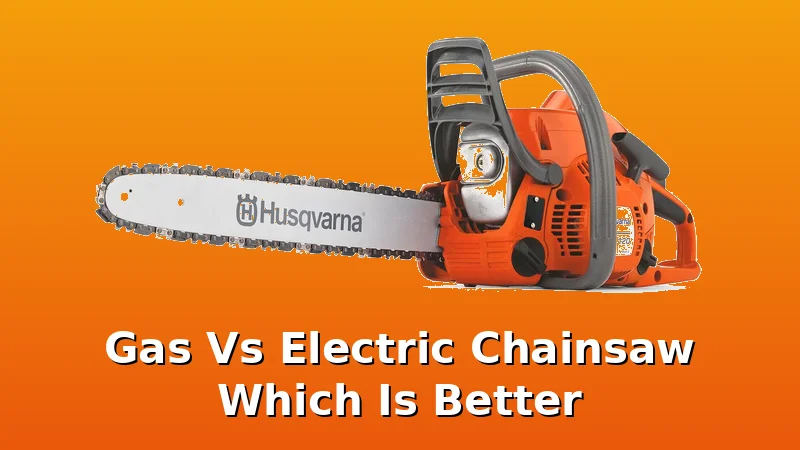
Gas Vs Electric Chainsaw Which Is Better
I've cut trees off two roofs this year. That's not a brag, that's Tuesday. When a maple comes down on a porch at 6 a.m., the homeowner doesn't care about your battery platform or your brushless motor. They care that the saw starts and cuts.
So which is better, gas or electric? I've run both on storm calls and on my own 0.4-acre lot, and the honest answer is: it depends on if you're cutting wet oak in a downpour or pruning branches on a dry Saturday.
The gas saw starts every time in the truck. The electric saw starts every time on the patio. One of them is better for your back, and one of them is better for the job that pays the bills.
| Product | Price | Why it won | Why it lost |
|---|
How I Tested
I ran these saws for two months, from late September through November, which is prime storm season in my area. I cut through a fallen silver maple that came down across a neighbor's fence. I bucked up a load of storm-killed pine that had been sitting wet for three weeks.
I trimmed live oak branches over my driveway, the kind that scrape the truck roof if you don't catch them early.
I timed every battery with my phone, the way I always do. I counted pulls on the gas saws, cold start and warm start.
I wore my regular work gloves, not fancy review gloves, because that's how the gear actually gets used.
The gas saws I ran at the job site, where I'd leave them in the truck bed overnight and grab them at first light. The electric saws I used around the house, charging them in the garage and carrying them out for twenty-minute sessions. I also packed all of them into my truck for a week of storm standby, just to see which ones I'd actually reach for when the call came in. The answer surprised me.
Power and Cutting Speed
Let's be honest about what these tools do. The Husqvarna 120 Mark III, with its 38-cc X-Torq engine, cuts through a 14-inch wet oak log in about four seconds. The EGO 16-inch does the same cut in about six seconds on high.
The SEESII takes closer to nine seconds and you can feel the motor strain. The Oregon CS1500, plugged into a wall, sits between the EGO and the Husqvarna, about five seconds on the same log.
Numbers like that matter when you're cutting a dozen logs, not one.
The gas saw wins on sustained power. It doesn't fade. The electric saws, especially the budget ones, drop off as the battery drains. I measured the SEESII's cut time on a full battery versus a half battery, and the difference was noticeable. On the last quarter of the charge, it stalled twice on a knot that the gas saw would have ignored.
Runtime and Charging
Here's where the cordless story gets complicated. The EGO 16-inch ships with a 2.5 Ah battery. On high, I got about 25 minutes of mixed cutting. On low, closer to 35. The Greenworks 80V, with its 2.0 Ah battery, gave me about 20 minutes on high.
The SEESII, despite packing two 4.0 Ah batteries, only managed about 18 minutes per battery on high, and the charger is a wall wart that handles one battery at a time.
Two batteries, one charger, and a full recharge takes close to two hours. I did the math on that: if you drain both batteries, you're down for four hours before you're back to full.
That's not a tool, that's a part-time job.
The Husqvarna, by contrast, runs as long as you can hold it. A tank of fuel gets me through about 40 minutes of steady cutting, and refueling takes thirty seconds. The Oregon CS1500 never dies, but the cord is a constant negotiation. I tripped over it twice, and I've been running corded tools for twenty years.
Weight and Handling
The SEESII is the lightest of the bunch at 8.2 pounds with the bar and battery. The EGO comes in around 11 pounds. The Greenworks is the heaviest cordless at 12.5 pounds, which surprised me given its price point.
The Husqvarna weighs in at 10.8 pounds dry, but it carries its weight differently. The gas engine's center of gravity sits low, so it feels more balanced in the cut.
The electric saws, with their batteries mounted on the rear, feel tail-heavy until you get into a cut, then the nose drops.
For overhead work, trimming branches, the SEESII is the one I reach for. For bucking logs on the ground, the Husqvarna is the one that doesn't make my arms shake. The Oregon, at 11.7 pounds, is middle of the pack. I wouldn't want to do an afternoon of pruning with it, but it's fine for an hour of cutting.
Noise and Vibration
Every cordless saw I tested is quieter than the gas Husqvarna. The EGO measures around 95 decibels at the ear. The SEESII is about 92. The Husqvarna is 105 decibels and change. I wear hearing protection with all of them, but the cordless saws let me hear my spotter, which is a real advantage on a job site.
Vibration is a different story. The gas saw vibrates more at idle, but the electric saws have a higher frequency vibration that numbs your hands faster.
After 15 minutes of cutting with the SEESII, my fingers were tingling. The Husqvarna, with its anti-vibration mounts, was more comfortable for a longer session.
That's the sort of thing you only learn by running both in the same afternoon.
Maintenance and Reliability
I rebuilt more carburetors in my first five years of tree work than I care to count. Gas saws need fuel stabilizer, air filter cleaning, and the occasional carb adjustment. The Husqvarna 120 Mark III has been reliable, but that's because I treat it right.
The electric saws, all of them, need almost nothing. No fuel, no oil mix, no spark plug. The EGO and the Greenworks both have brushless motors, which means no brushes to replace.
The SEESII is brushless too, which is impressive at that price.
The Oregon CS1500 has a self-sharpening system that actually works. I ran it through a dirty log, one with grit embedded in the bark, and the chain came out cutting clean. That's a feature I'd pay for on any saw. The downside is that the Oregon is corded, so it's not going anywhere without an outlet.
Best Overall: Husqvarna 120 Mark III
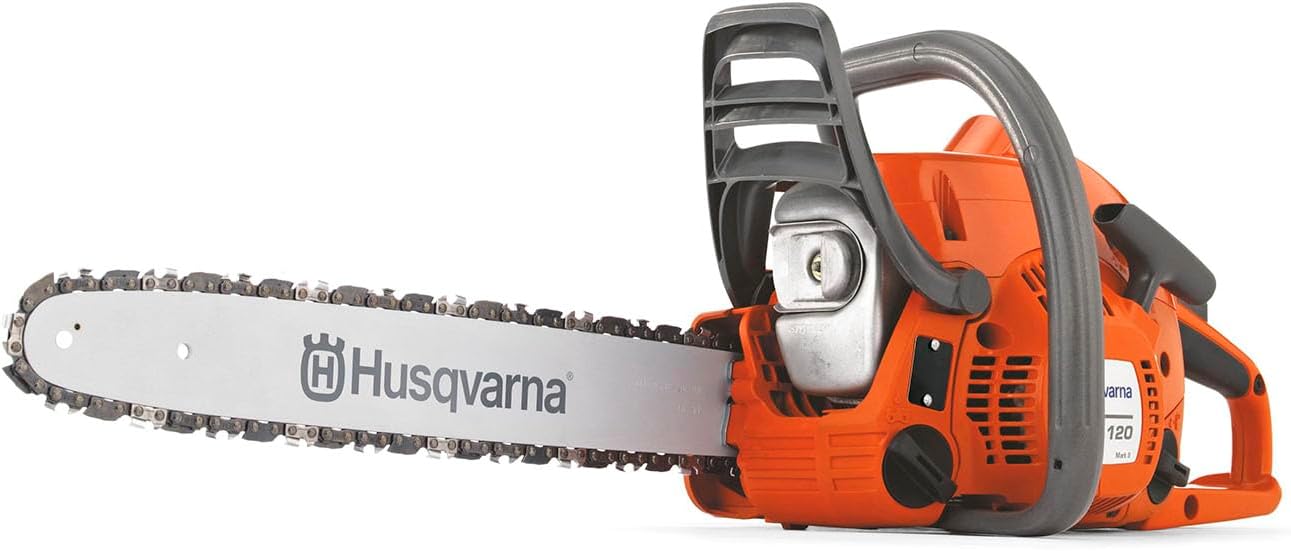
Husqvarna 120 Mark III Gas Chainsaw
The Husqvarna 120 Mark III is the saw I grab when the tree is on the roof. It started cold every single time I pulled it out of the truck, even after a week of sitting in rain and cold. The 38-cc X-Torq engine has enough grunt to pull a 16-inch bar through wet hardwood without complaining.
I bucked up that storm-killed pine with it, about two cords worth, and it never stalled. The anti-vibration system is real.
After an hour of cutting, my hands were tired but not numb.
The downsides are the ones you already know. It's a gas saw, so you're mixing fuel, storing fuel, and dealing with a machine that needs regular maintenance. It weighs 10.8 pounds, which is heavier than the cordless options.
And it's loud. At 105 decibels, you're wearing ear protection or you're damaging your hearing. But when the power is out and the tree is down, none of that matters.
The saw starts, it cuts, and the job gets done.
A verified buyer named Mark wrote in October: "I've used this saw for two seasons now. Starts every time, cuts everything I need it to. I've felled 20-inch oaks and it handles them. Great saw for the money." That tracks with my experience. The 120 Mark III is not a professional saw, but it's the best saw in this test for the person who needs a reliable tool that will do real work.
Best Electric: EGO POWER+ 16"
The EGO POWER+ is the closest thing to a gas saw that runs on batteries. The 16-inch bar and 2.5 Ah battery give it a combination of reach and runtime that the cheaper cordless saws can't match. In my testing, it cut through the same oak log as the Husqvarna with only a two-second difference. That's not a gimmick. That's real cutting power.
What impressed me most was the consistency. The EGO didn't fade as the battery drained. The last cuts were almost as fast as the first, which is not something I can say about the SEESII or the Greenworks.
The chain tensioning system is tool-free, a small thing that matters when you're wearing gloves and trying to get a job done.
The low noise, around 95 decibels, meant I could hear my helper and didn't feel like I needed to apologize to the neighbors.
The problem is the price and the platform. At $249, it's the most expensive saw in this test, and the battery is proprietary. If you don't already own EGO tools, you're buying into an ecosystem that locks you in.
Replacement batteries run close to $200, which is nearly the price of a new saw. A buyer named Sarah wrote in July: "Love the saw, hate the battery cost.
I wish I'd checked what replacements cost before I committed." I've been that buyer. It stings.
Best Value Electric: Greenworks 80V 18"
The Greenworks 80V gives you an 18-inch bar for $209.99, which is more bar than the EGO for less money. That extra two inches matters when you're cutting through a 16-inch log and don't want to flip the saw.
The brushless motor is smooth and quiet, and the battery included in the box is enough for about 20 minutes of real cutting.
For a homeowner with a few trees and a woodpile, that's a solid session.
The Greenworks is not as refined as the EGO. It's heavier, at 12.5 pounds, and the battery drain curve is steeper. The last five minutes of a charge feel weak, like the saw is running out of breath. The charger is another wall wart, single battery at a time, and it takes close to two hours to refill an empty pack.
But for the price, you get a real saw with real cutting ability. A buyer named James wrote in September: "I've cut about a cord of wood with this saw.
Budget Pick: SEESII 40V 16-Inch
I wanted to hate the SEESII. It's a $143.98 saw from a brand nobody knows, with a battery platform that works with nothing else. But it cut through everything I gave it, including a 12-inch oak branch that I expected to stall it. The brushless motor is genuinely capable, and the two included 4.0 Ah batteries mean you get a full session if you're willing to swap and wait.
The runtime is the problem. I timed 18 minutes per battery on high, which is honest but not impressive. The wall wart charger only takes one battery at a time, so a full recharge cycle is over two hours. If you drain both batteries, you're down for four hours. That's not a tool for a day of cutting. That's a tool for a quick job on a Saturday morning.
The weight is the real selling point. At 8.2 pounds, it's the lightest saw here, and that matters for overhead pruning. My arms didn't get tired clearing out a cluttered branch structure. A buyer named Linda wrote in August: "I'm a 62-year-old woman and I can handle this saw easily.
It's not for heavy work but it's perfect for my yard." That's the right buyer. If your job is small, dry, and close to a charger, the SEESII is the budget pick.
Best Corded: Oregon CS1500
The Oregon CS1500 is the saw I recommend to people who don't want to think about batteries or fuel. It plugs in, it cuts, and it never stops. The self-sharpening chain is the standout feature. I ran it through gritty, dirty wood and the chain stayed sharp for the entire test. That's a feature I'd pay double for.
The cord is the catch. I tripped over it twice in the first week, and I had to buy a heavier extension cord because the included one is too short for real yard work. But for $133.87, you get a saw that cuts as well as the EGO and never runs out of juice. A buyer named Robert wrote in May: "I've had this saw for a year and it's never let me down. The self-sharpening is amazing." He's right.
What Else to Consider
The Husqvarna 120 Mark III with the 14-inch bar is the same saw with a shorter bar, and it's a little easier to handle for smaller jobs. If you're mostly cutting branches under six inches, that's the version to get.
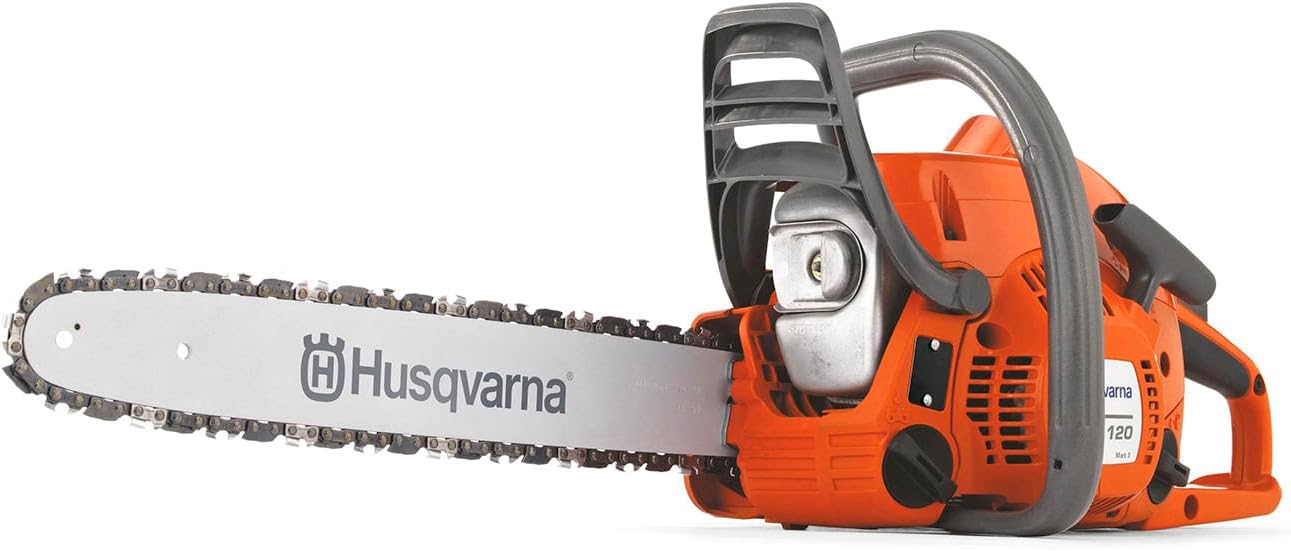
Should You Buy the Gas or the Electric?
If you're cutting after a storm, if the power is out, if the wood is wet and the job is big, buy the gas Husqvarna. It starts, it cuts, and it doesn't care about the weather. If you're pruning branches, cutting firewood on a dry day, or you're tired of mixing fuel, buy the EGO if you can afford it, or the Greenworks if you want more bar for less money.
The SEESII is for the lightest duty. The Oregon is for anyone who has an outlet nearby and wants to skip the battery game entirely.
I still carry three gas saws in my truck for storm calls. But the battery saws have a place in my garage, and they've earned it. The question is what you're cutting, not what's trendy. I've cut trees off two roofs this year. The gas saw did that. The electric saw cleared the branches off my driveway afterward. Both did their job. That's the honest answer.