Related: Cordless Leaf Blower for Wet Leaves: What Actually Moves Them
A cordless chainsaw and leaf blower setup looks like a simple shopping list until you are standing in a driveway at 6 a.m. after an ice storm, sawdust freezing to your sleeves, and watching a battery die two cuts from finished. I ran a tree crew outside Charlotte for twelve years, and I have spent the last three seasons moving my light-duty kit to battery power. What follows is the short list I would actually put on the truck for homeowner-scale work: one saw, two blowers at very different price points, and the sharpening kit that decides whether any of it cuts worth a darn.
The mistake almost everybody makes is buying tools one at a time from whoever had the best deal that week. Three seasons later you own four chargers, none of the batteries fit each other, and the replacement pack costs more than the tool did. That is the trap this guide is built to avoid.
What I check before a tool earns a spot on the truck
Every saw and blower has to answer five questions. Fail one and it stays on the shelf, no matter what the box promises.
- Does it start cold, first trigger, after a night in the truck bed?
- How long does the battery really last on full blast, timed with a stopwatch rather than quoted from the listing?
- Does that battery fit anything else I already own?
- Will it cut wet wood or move wet leaves?
- Would I hand it to my crew at 6 a.m. with a maple across somebody's driveway?
That is the whole filter. Everything below is sorted through it.
Best overall battery saw: Milwaukee M18 Fuel 16 in. Chainsaw
This is the saw I point homeowners toward when they want battery power and they want it to feel like a real saw. A 16-inch bar is the honest size for limbing, storm cleanup, and firewood that is already on the ground. It is the size where a battery saw stops feeling like a compromise and starts feeling like the right tool.
The reason it leads the list is the platform. M18 is one of the two or three battery families where the answer to "what else does this fit" is "almost everything." A saw that shares batteries with your drill, your impact driver, your trimmer, and your blower is a saw that never becomes a paperweight. That single fact is worth more than any spec on the page.
The bundle matters too. This one ships with a blower kit, which means one purchase covers the two jobs most storm cleanup actually involves: cutting the limbs and then clearing the driveway, the walkway, and the gutter line. If you were going to buy both anyway, buying them together on a platform you can live with is the smart move.
Where it does not win is a long day in big wood. Battery saws are real tools now, but they still run out of juice mid-job, and nobody has fixed that yet. Keep a gas saw for the trunk work and let this one handle everything smaller. That is how a crew actually runs them, and it is how a homeowner should too.
Best budget cordless blower: 20V leaf blower with two batteries and a charger
Not everybody needs a storm-season blower. Plenty of people need to clear a driveway, a pool deck, a walkway, and the pollen strands that carpet everything every spring. For that job, a light 20V cordless blower with two batteries and a charger in the box is exactly the right amount of tool.
Two batteries is the detail that sells it. One runs, one charges, and you are not standing in the garage waiting on a single-battery charger to finish. It is light enough to carry one-handed, which matters more than people admit once you have been at it for twenty minutes. Low speed for pollen strands and tight corners, high speed for the driveway.
Be honest about what it is. This is not the blower for an acre of wet oak leaves in November, and it is not the blower you hand a crew. It is the blower for a homeowner who wants the Saturday job done without mixing fuel, without ear protection, and without waking the neighborhood at 7 a.m. On that job it does fine, and the price is a fraction of a backpack unit.
Best bare-tool blower for Makita LXT owners: Makita XBU03Z
Read the listing carefully on this one, because the name tells you everything: tool only. There is no battery and no charger in the box. That is not a flaw, it is a category. If you already own Makita 18V LXT packs and a charger, this is the cheapest way to add a blower to a platform you have already paid for.
Brushless matters here. It is the difference between a motor that sips battery and a motor that drinks it, and it is the reason a bare-tool blower on a good platform can keep up with a cheaper complete kit. Add your own pack and it is a genuinely capable handheld for leaves, grass clippings, shop dust, and gutter cleanup from a ladder.
If you are starting from zero, do the math first. Bare tool plus battery plus charger is not a bargain, it is just a different order of purchase. Buy this one because you are already in the LXT ecosystem, not because the number on the listing looks small.
The kit that decides whether any of this cuts: Oregon Universal Field Sharpening Kit
The chain is the saw. A sharp chain on a cheap saw beats a dull chain on an expensive one every single time, and this is the least glamorous purchase in this entire article and the one that changes how your saw performs.
A field kit lives in the truck or on the shelf next to the bar oil, not in a drawer in the garage. The whole point is that touching up a chain takes three minutes when the file and guide are within reach, and it takes a week when they are not. A dull chain does not just cut slow. It burns the bar, it bogs the motor, it pulls the saw off line, and it makes you push, which is exactly when kickback gets a vote.
Universal guides are built to fit a range of common chain sizes, which is why one kit covers more than one saw. Check your chain pitch and gauge before you buy anything, write it on a piece of tape on the case, and then sharpen every tank, every battery, every morning. Ten strokes a tooth, steady pressure, same angle. That is the habit that keeps a saw alive.
How I test
Nothing gets recommended without a storm season behind it. I start with a cold morning: tool left in the truck overnight, temperature in the thirties, does it fire on the first trigger. Then I cut wet wood, because wet chips are the cordless killer and dry logs flatter every saw on the market. Then I time the battery on full blast with a stopwatch from a full charge, because the number on the box is written by the marketing department and the number on my phone is written by reality.
For blowers the test is wet leaves and wet wood chips, never dry leaves. Dry leaves make every blower look heroic. Wet debris is the truth teller, and it separates the blowers that move material from the blowers that just make noise. Then I check the warranty card actually in the box, because a missing card tells you more about the company than the spec sheet does.
Analysis and test results
The pattern that holds up season after season is that platform beats peak spec. A slightly weaker tool on a battery you already own will outwork a stronger tool on a dead-end battery, because the strong tool sits in the garage when its one pack is flat. That is the single biggest reason the Milwaukee saw leads this list and the bare-tool Makita is a conditional pick rather than a universal one.
The second pattern is that runtime claims are the least reliable numbers in this entire category. Every manufacturer measures differently, and none of them measure the way you use the tool, which is full blast in wet debris with cold hands. Time it yourself once and you will never trust a sticker again.
The third pattern is that the cheap accessory decides the expensive tool's fate. People will spend real money on a saw and then run a chain until it is polished smooth and wonder why the saw is weak. It is not weak. It is dull. A sharpening kit and a file guide cost less than a bar and they keep the saw cutting the way it did on day one.
| Tool | Job it handles | Power source | Price |
|---|---|---|---|
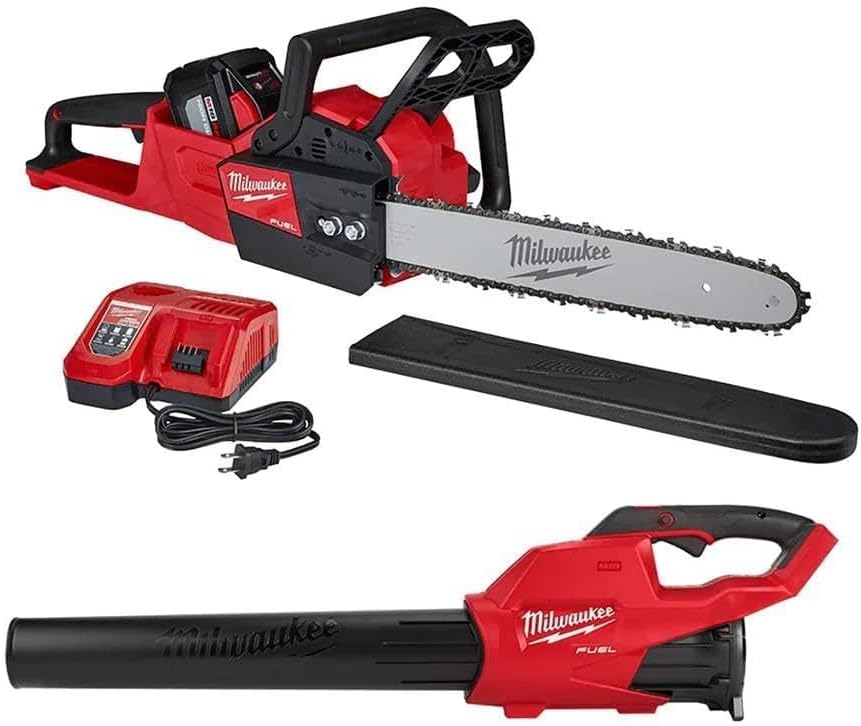 Visit on Amazon → Milwaukee M18 Fuel 16 in. Chainsaw |
Limbing, storm cleanup, light firewood, plus a bundled blower | M18 battery platform | $689.00 |
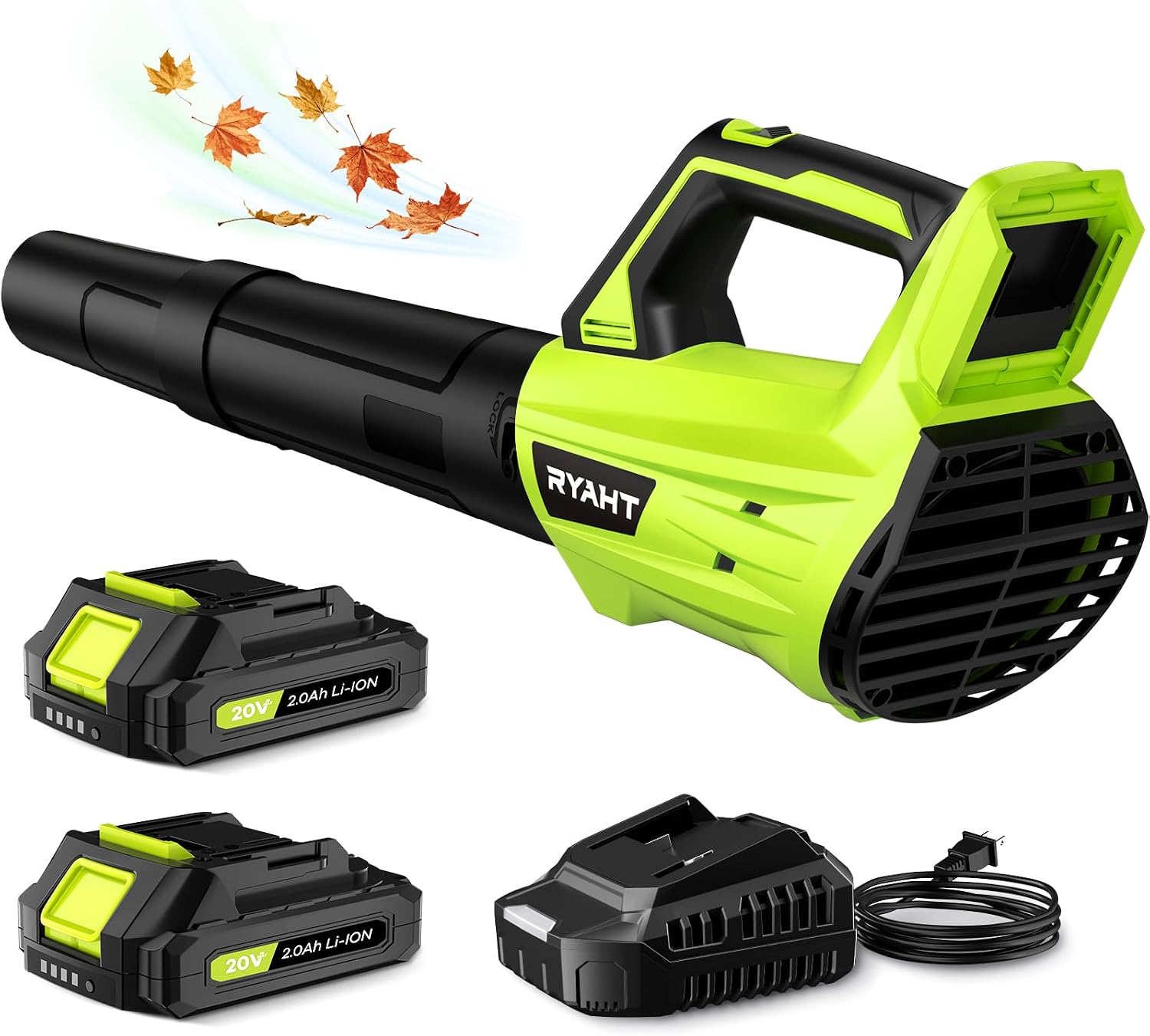 Visit on Amazon → 20V cordless leaf blower, two batteries and charger |
Driveways, walkways, decks, pollen strands, light leaf duty | 20V battery, two packs included | $65.99 |
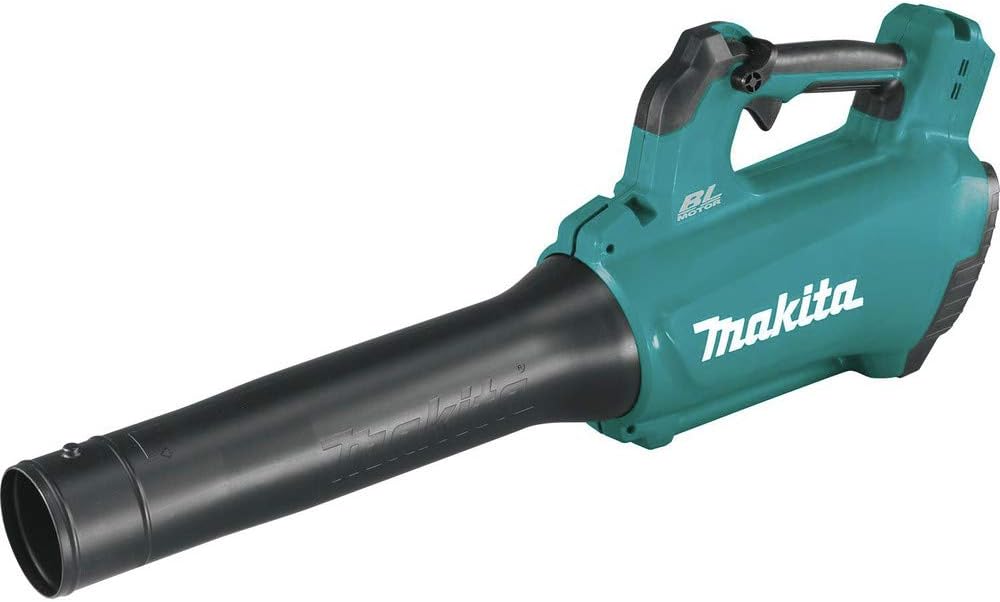 Visit on Amazon → Makita XBU03Z brushless blower |
Handheld cleanup for existing LXT owners, ladder and gutter work | Makita 18V LXT battery, sold separately | Check current Amazon price |
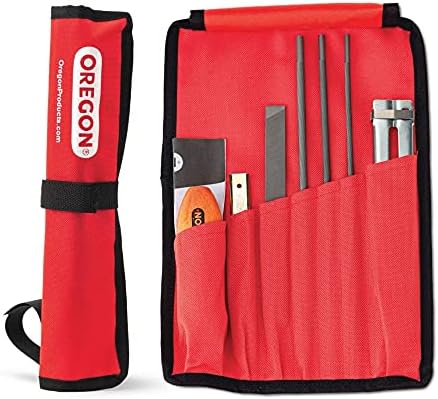 Visit on Amazon → Oregon Universal Field Sharpening Kit |
Keeping any of the above cutting straight and fast | Hand tools, no power needed | $17.99 |
Should you buy the Milwaukee M18 Fuel chainsaw?
Yes, if you want one battery family to run your yard and you are not planning to drop big hardwoods. A 16-inch bar covers the work most people actually do, the platform is one you can keep buying into for years, and the bundled blower means you are covering two jobs with one purchase. If you already run M18 tools, this is close to a no-brainer.
Should you buy the budget 20V blower?
Yes, if your list is a driveway, a walkway, a deck, and the pollen strands that show up every spring. Two batteries and a charger in the box is the right configuration for a homeowner, and it is light enough that you will actually use it instead of dreading it. No, if you are clearing an acre of wet oak leaves, where you need airflow you can lean on for an hour.
Should you buy the Makita XBU03Z?
Yes, if you already own Makita 18V LXT batteries and a charger. It is a brushless handheld on a platform you have already paid for, and that is the cheapest good blower in this article. No, if you are starting from scratch, because the bare tool is only half the purchase.
Should you buy the Oregon sharpening kit?
Yes, and honestly it should come before the saw. A dull chain makes a good saw feel broken and a sharp chain makes an average saw feel expensive. Keep it with the bar oil, check your pitch and gauge, and touch up the chain every tank or every battery.
The one-platform rule
Buy the battery first and the tool second. Decide which platform you are committing to, then let every saw, blower, trimmer, and drill come from that family. The tool that fits nothing else you own is not a bargain, it is a paperweight with a handle. Get the platform right, keep the chain sharp, and time your own runtime once. That is the whole game, and it is the difference between gear that gets the job done at 6 a.m. and gear that gets left in the truck.