I've cut trees off two roofs this year, and both times the saw that mattered was the one that started at 6 a.m. in cold rain. That is the lens I use on every cordless chainsaw and leaf blower I look at now. Storm work is the only test that matters, and it does not care what the box says. So this comparison is not a spec sheet readout. It is the shopping list I would hand a neighbor, sorted by what actually gets used and what sits in the garage.
For most homeowners, the right build is the SEESII 40V 16-inch saw for the cutting that happens on the ground, the SEESII 10-inch 2-in-1 for reach and trim work, and the handheld cordless blower for the driveway, patio, and pollen strands. The Huztl carburetor kit only belongs on your list if you still run a Husqvarna backpack blower, because it is the one item here that has nothing to do with batteries.
That's the short answer. The long answer is about battery platforms, cold starts, wet debris, and the fine print nobody reads until something breaks.
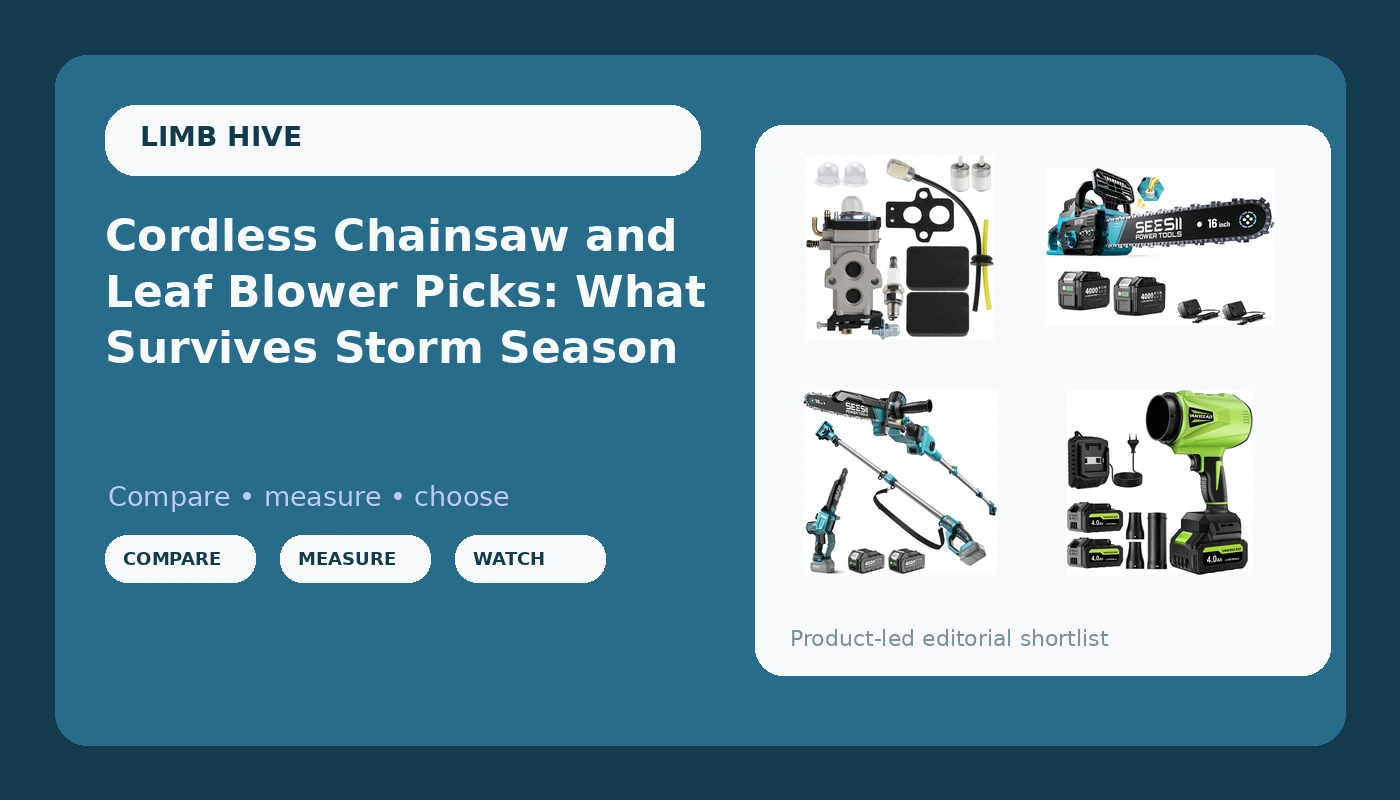
SEESII 40V 16-Inch Cordless Electric Chainsaw, 2000W Brushless Chain Saw
40V platform with a brushless motor and a 16-inch bar, which is the right size for limbing and bucking dropped limbs
It is a light-duty saw, not a storm saw, and factory chains often ship dull
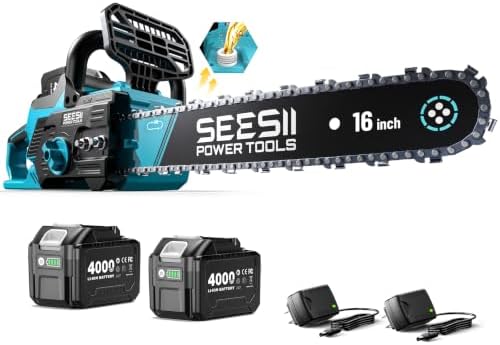
SEESII 10-Inch 2-in-1 Cordless Pole Saw & Mini Chainsaw, 2 x 4.0Ah Batteries
Two tools and two batteries in one box, and most suburban cutting is overhead and under four inches
One-handed cutting demands discipline, and a 10-inch bar will not buck a trunk
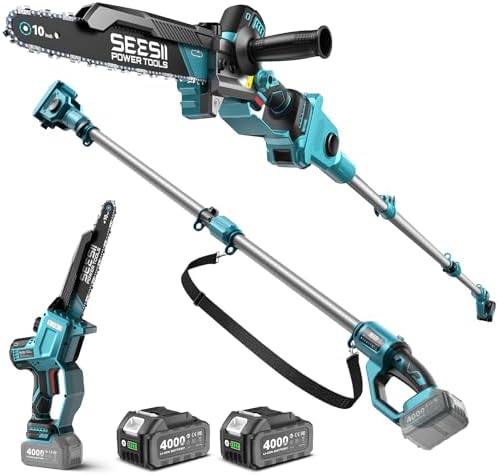
Handheld Cordless Leaf Blower, 980,000 RPM Brushless Motor with 2 x 4.0Ah Battery, Infinite Speed Control, 3 Nozzles
Infinite speed control, three nozzles, and two batteries for a driveway, patio, and garage floor
The listing leads with RPM instead of CFM, and a handheld cannot clear an acre of wet oak leaves
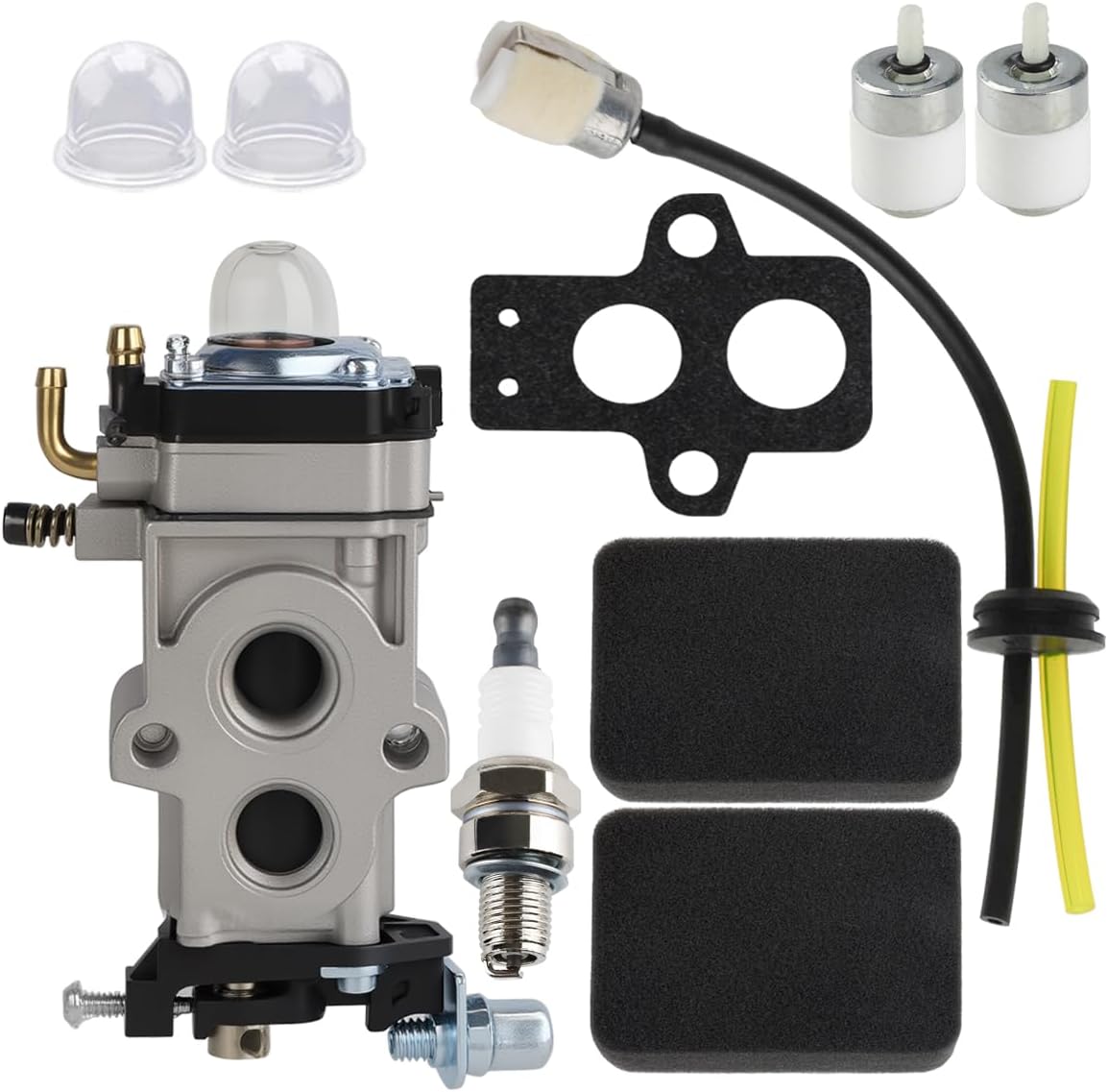
Huztl 150BT Carburetor Air Filter Kit for Husqvarna 350BT, 360BT, 560BTS, 150BF, 350BF, 560BFS (Before 2022) Backpack Leaf Blower Parts
The cheapest way to keep a gas backpack blower running instead of replacing it
Fitment is model-year specific, so you have to read the listing before you order
Prices and availability were captured from Amazon Creators API and may change.
How I judge a battery saw or blower
Five questions, every time.
- Does it start cold, first press, after a night in the truck?
- How long does the battery really run at full blast, timed with my phone instead of read off the box?
- Does that battery fit anything else I own?
- Will it cut wet wood or move wet leaves?
- Would I hand it to my crew at 6 a.m. after a storm?
Notice what is not on the list. Color. Brand prestige. The biggest number on the front of the box. The number that matters on a blower is CFM, cubic feet per minute, because airflow moves leaves. Miles per hour is a sticker. The number that matters on a saw is whether the motor holds torque in wet wood and whether the chain stays sharp, not the wattage printed in the biggest font the designer could get away with.
Wet debris is the truth-teller. Any blower moves dry leaves in October. The good ones move wet leaves in November and wet wood chips after a storm. That is the test I keep coming back to, and it is the one that separates real tools from toys.
SEESII 40V 16-Inch Cordless Electric Chainsaw
This is the saw on the list that does the actual cutting. A 40V platform, a 2000W brushless motor, and a 16-inch bar is a sensible combination for limbing, bucking storm-dropped limbs, and cutting firewood up to a reasonable diameter. Brushless matters more than the marketing suggests: fewer wearing parts, better efficiency per amp, and the difference between a motor that holds speed in a cut and one that bogs the moment the chain bites.
What I would check before judging it: chain tension out of the box, whether the factory chain is sharp (they often are not), bar oil flow, and the cold start after a night in the truck. Then I would time the battery in wet wood chips, not dry pine. Wet wood chips are the cordless killer, and they tell you more about a saw than any bench test.
The honest limit is that this is a homeowner and light-crew saw. It is not a 20-inch storm saw, and it is not going to replace a big gas saw on a trunk. But a sharp chain on a 16-inch battery saw beats a dull chain on a 900-dollar saw every single time, and that is a fact I have proven to myself more than once. Buy a spare chain and a file with the saw. You will get more out of the tool by keeping the chain sharp than by wishing you had bought something bigger.
SEESII 10-Inch 2-in-1 Cordless Pole Saw and Mini Chainsaw
Two tools, one box, two 4.0Ah batteries. The pole saw gives you reach for limbs over a driveway, a fence line, or the branch hanging over the gutter. The mini chainsaw handles one-handed trimming where the pole is awkward. For a suburban lot, this is honestly where most people should start, because the majority of cutting a homeowner does is above shoulder height and under four inches in diameter.
The design details that matter: the pole gets the bar to the limb without a ladder, and the mini saw handles the small stuff without dragging out a full-size saw and its oil and its starting ritual. Two 4.0Ah batteries in the box is the right call, because the runtime on any 10-inch battery saw is measured in cuts, not in hours. The catch is charging. If the included charger only handles one battery at a time, you will spend a lot of the afternoon waiting on a wall wart charger. Budget for a second charger if you plan a full day.
Safety, and I will not soften this: one-handed cutting demands respect. Kickback is the saw's way of telling you to respect it, and the bar comes up toward your face when the nose bites. Keep two hands on the tool whenever the geometry allows, never cut overhead from a ladder, and wear eye and ear protection even on a ten-inch bar.
The limit is obvious. A 10-inch bar will not buck a trunk, and the pole saw will not replace the 16-inch saw for ground work. It complements it.
Handheld Cordless Leaf Blower with Two Batteries
The listing leads with 980,000 RPM. I will be blunt: RPM is not airflow, and a blower sold on RPM is selling you a number, not a leaf-moving machine. What I want to see is CFM, and the second thing I want to see is a real runtime number at full blast. Ask those questions before you buy, because the box will not answer them for you.
What this tool does have going for it is the feature set. Infinite speed control is more useful than people expect: full blast for wet oak leaves on concrete, low speed for pollen strands on a walkway and for not blowing mulch into the street. Three nozzles cover the same range: wide for a patio or garage floor, narrow for gutters and between shrubs. Two 4.0Ah batteries means you can finish a cleanup without a charging break, as long as you keep one on the charger while you work.
The honest limit: a handheld battery blower is not a backpack gas blower. On a big yard in late fall with wet leaves, a backpack will finish a job this tool cannot start. For a driveway, a pool deck, a walkway, a garage floor, and spring pollen strands, this is the right tool and the right size. Mission accomplished, no drama, no pull cord.
One question to answer before you order: whether the batteries in this kit fit the saws you already own. The listing does not promise cross-compatibility, and if it does not fit anything else you have, that is the real price of the tool.
Huztl Carburetor and Air Filter Kit: keeping the gas backup alive
Every battery conversation ends the same way at my house. Battery is the future, but the future still runs out of juice mid-job, and gas is the backup you never apologize for. That is why a carburetor kit belongs on a comparison list next to two battery saws and a battery blower.
This kit is built for the Husqvarna backpack blowers: 350BT, 360BT, 560BTS, 150BF, 350BF, and 560BFS, plus the 150 BT. The listing says before 2022, and that phrase is the whole review. Check your model year and your serial number before you order. Fitment is where parts purchases go wrong, and a carburetor that does not match your blower is a paperweight.
Why repair instead of replace: a blower that will not idle right in cold weather is usually a fuel problem, not a brand problem. That is what the dealer tech told me years ago and it has held up every season since. If your backpack blower is coughing, surging, or quitting at idle, the carburetor and air filter are the first place to look, not the last. A kit like this is the cheapest path back to a working blower, and a working gas backpack is still the tool that clears a big yard when the leaves are wet and heavy.
What to check when it arrives: gaskets, the air filter itself, the metering diaphragm, and whether the kit includes the housing pieces your model needs. If the box is missing gaskets, that goes in the review. No warranty claim without the paperwork actually in the box.
The battery platform question
Two SEESII tools on this list means one platform, and that is the point. If the 16-inch saw and the 10-inch 2-in-1 run the same batteries, you are buying into a system instead of a single tool, and that is how battery kits should be built. One platform, or it is a paperweight.
The blower is the wildcard. It ships with two 4.0Ah batteries, and 4.0Ah is a sensible size for a handheld blower, but the listing does not say those batteries are the same platform as the SEESII saws. That is a question worth answering before you buy, because replacement batteries cost half the price of a whole new tool. If the battery is proprietary and fits nothing else you own, you have not bought a blower, you have bought a subscription.
So my rule stands: before you commit to any of these, check what else the battery fits. If the answer is nothing, factor that into the decision, because in three years the battery will be the expensive part.
What I would buy, and what I would skip
For a first battery kit on a suburban lot, start with the 10-inch 2-in-1 combo. Two batteries, two tools, and it handles the overhead trimming that is most of the work. Add the 16-inch saw when you start bucking limbs on the ground. Add the handheld blower third, for the driveway, the patio, and the pollen strands in spring.
For a homeowner with a bigger yard and a real storm history, the 16-inch saw plus a gas backpack blower is the combination that finishes jobs. Keep a carburetor kit on the shelf so the gas blower does not become a project in the middle of November. Use the handheld battery blower for quick cleanups when you do not want to mix fuel.
Skip the idea that any handheld battery blower clears an acre of wet oak leaves. Skip buying a saw without a spare chain and a file. Skip ordering a carburetor kit without checking your model year. And skip trusting a runtime number that was not measured with a stopwatch.
What I am watching next
Three things. Whether the two SEESII tools in this list genuinely share batteries in the real world, not just on the product page. Whether the handheld blower's runtime at full blast matches anything close to the claim, timed from a full charge. And whether the 16-inch saw holds torque once the chain has a few sharpenings on it, because that is when cheap saws show their hand.
Those are the questions that decide what stays in the truck and what goes to the back of the garage. Everything else is marketing.