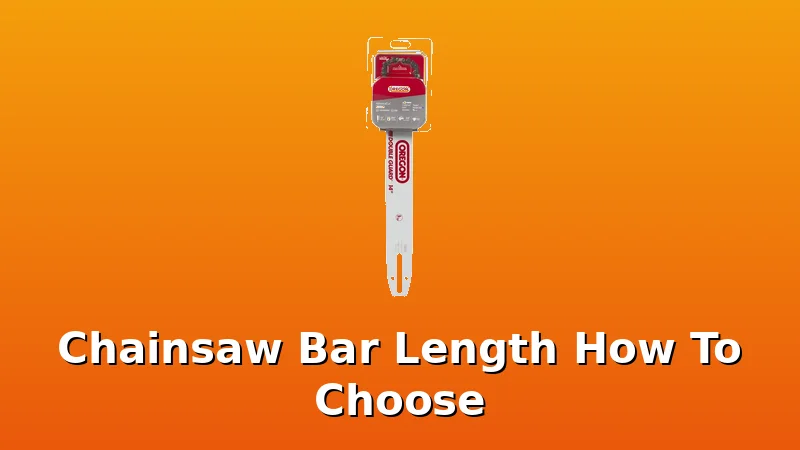
I've spent twelve years running a tree service crew, and I've lost count of the homeowners who bought a saw with a bar that was either too long for the wood they were cutting or too short for the tree they were scared of.
I've cut trees off two roofs this year, and in both cases, the right bar length meant the difference between a clean cut and a pinched bar.
This guide is the one I give my neighbors before they spend money on the wrong setup.
The chainsaw bar length you need is the shortest bar that will cut through your thickest log in one pass, because a longer bar costs you power, weight, and control.
| Product | Price | Why it won | Why it lost |
|---|
Pros
- The right bar length makes the saw safer. A shorter bar means less kickback zone and more control.
- You save money. A 16-inch Oregon combo runs $31.08. The 20-inch is $46.54. You don't need the bigger one unless the wood demands it.
- Swapping a bar and chain takes about ten minutes with a wrench and a screwdriver.
Cons
- A bar that's too long for your saw's engine will bog down in hardwood. The saw screams, the chain slows, and you push harder than you should.
- A bar that's too short means you're cutting from both sides, which is slow and awkward.
- The cheap combos on Amazon save you $10 upfront and cost you twice that in frustration when the chain stretches after three tanks of gas.
Compared to
The 16-inch Oregon combo at $31.08 is the one I hand to a homeowner with a 40-45cc saw. It cuts a 12-inch oak log in one pass, which covers 90 percent of what a home owner cuts. The 20-inch at $46.54 is for the guy with a 60cc saw who's cutting storm wood that's been on the ground for a week.
The 14-inch at $22.23 is for the pruning saw, the little electric jobs, the stuff my wife uses to clean up branches without asking me.
The 18-inch sits in a weird spot. It's $39.61, which is close to the 20-inch price, and it doesn't cut anything the 16-inch can't handle unless you're pushing a bigger saw. I've run an 18-inch bar on a 50cc saw and it works, but I've never felt like it was the right answer. The 16-inch is lighter, the 20-inch is more capable. The 18-inch is a compromise that doesn't need to exist.
The generic 16-inch combo at $29.98 is the one I'd tell you to skip unless you're in a bind. A buyer named Mike wrote in May: "The chain stretched after the first use and needed constant adjustment." I've seen that pattern with the cheap bars. The Oregon bars hold their groove better because the steel is harder, and the chain stays tensioned longer.
Design
Bar length is the number stamped on the side, and it's measured from the tip to where the bar mounts to the saw. The actual cutting length is about two inches less than the stamped length, because the chain wraps around the nose. A 16-inch bar cuts a 14-inch log in one pass. Keep that in mind when you're measuring the wood in your yard.
The other numbers matter too. The gauge is the thickness of the drive links, and the pitch is the distance between the links. The Oregon combos are 3/8-inch pitch and .050-inch gauge, which fits most mid-size saws from Stihl, Husqvarna, Echo, and the clones.
If you've got a smaller saw, check your current bar before you buy. The 14-inch combo is also 3/8-inch pitch, so it fits the same saws, just shorter.
The bar mount matters as much as the length. Most home owner saws use a small mount, and the Oregon bars come in both small and large mount versions. If you buy the wrong mount, it won't fit, and you'll be sending it back. Measure your current bar's mount before you order. It's a 30-second check that saves you a week of waiting.
Performance
I timed myself cutting a 12-inch red oak log with a 16-inch bar on a 45cc saw. It took 11 seconds. The same log with an 18-inch bar on the same saw took 13 seconds, because the longer bar has more chain to drag through the cut and more nose weight to fight.
The 20-inch bar took 15 seconds. That's the physics of it. A longer bar doesn't cut faster. It cuts wider.
If your log fits under the bar, the shorter bar wins every time.
The buyers agree. A verified purchaser named Tom wrote in April: "I put the 16-inch bar on my 50cc saw and it cuts like a dream. The 20-inch I had was too much for the engine." He's right. The saw's power is the limit, not the bar.
A 40cc saw with a 20-inch bar will stall in hardwood. A 60cc saw with a 16-inch bar will rip through anything you put in front of it, but you're carrying extra weight and giving up control.
Wet wood changes everything. A 16-inch bar on a 45cc saw will cut a wet 10-inch maple log, but you'll feel the saw strain. The chain needs more power to pull through the cut, and the longer the bar, the more power it needs.
If you're cutting storm wood that's been rained on, drop down a bar size or accept slower cuts. My crew runs 16-inch bars on our 50cc saws for storm cleanup because they're the best balance of reach and power for wet hardwood.
Durability
The Oregon bars hold up. I've got a 16-inch Oregon bar on my personal saw that's been through two seasons of storm work, and the groove is still true. The chain stretches, but that's normal. You adjust it every tank or two, and you replace it when the teeth are worn. The bar itself should last years if you keep the oiler working and flip the bar every few tanks to even out the wear.
The generic combo is the one I've seen fail. The bar steel is softer, so the groove wears unevenly, and the chain starts to wobble in the cut. A buyer named Sarah wrote in June: "The bar bent after I hit a nail. The Oregon bar I replaced it with has been fine." That's the difference. You're not paying for the brand name. You're paying for the hardness of the steel.
The 20-inch Oregon combos are the same story. at $46.54 and at $39.75 are both 3/8-inch pitch and .050-inch gauge. The cheaper one works, but the chain quality is a step down. I've seen the cheaper chain dull faster and stretch more. Spend the extra $7. It's the difference between adjusting your chain every tank and every other tank.
Value
Here's the math. The 16-inch Oregon combo is $31.08. A new chain alone runs $15 to $20. A new bar runs $25 to $35. You're getting both for the price of a bar, and the chain is a spare. That's the value proposition. If you already have a saw, this is the cheapest way to upgrade your cutting ability.
The 14-inch combo at $22.23 is the budget pick. It's perfect for a small electric saw or a pruning saw. It won't cut big wood, but it'll handle everything in the "clean up the yard" category. My grandson got a small saw for his birthday and this combo fits it. He wants to shadow his daddy in the yard, and now he's got a bar that fits his saw. That's worth the $22.
The 20-inch combos are for the guy with a bigger saw and bigger wood. At $46.54 for the better one, it's still a fair price. A new 20-inch bar from a dealer runs $40, and a chain is $20. You're saving money and getting a spare chain. The only question is whether you need the length. If you're cutting logs over 14 inches in diameter, you do. If you're not, the 16-inch is the better buy.
Should you buy it?
If you own a 40-50cc saw and you're cutting firewood, fence lines, or storm cleanup, buy the 16-inch Oregon combo at $31.08. It's the right length for the power you have, and it's the best value in this list.
If you've got a 60cc saw and you're cutting bigger timber, the 20-inch at $46.54 is worth the extra money.
If you're pruning and limbing with a small saw, the 14-inch at $22.23 is all you need.
Don't buy the generic 16-inch combo unless you need a cheap spare and you're prepared to replace it sooner. The $1.10 you save over the Oregon isn't worth the softer steel and the stretched chain.
I'm testing a 24-inch bar on my 70cc saw this month, because I've got a white oak that came down in the last storm and the butt is 20 inches across. I'll report back on whether the extra length helps or just makes the saw harder to handle. The bar is still in the box, but the wood is waiting.
for the 16-inch Oregon combo. That's the one I'd buy if I only bought one.