I ran a tree service crew for twelve years, and the question I still get from neighbors has never changed: gas or battery, and how big. That is the whole gas chainsaw and leaf blower argument in one sentence, and most of the answers online come from people who have never started a saw at 6 a.m. in cold rain with a tree sitting on somebody's roof. So here is the version I give at the tailgate. Two gas saws, one gas backpack blower, and one 18V cordless blower, sorted by what they actually do and who should own them.
Related: Gas Vs Battery Chainsaws For Storm Cleanup
The short answer: for firewood, storm limbs, and anything past about six inches, a 58cc to 63cc gas saw is still the tool that finishes the job. For a driveway, a pool deck, and a walkway, the 18V cordless blower is the one you will actually reach for. The 692 CFM backpack blower is for acre-plus lots and the wet oak leaves that laugh at a handheld.
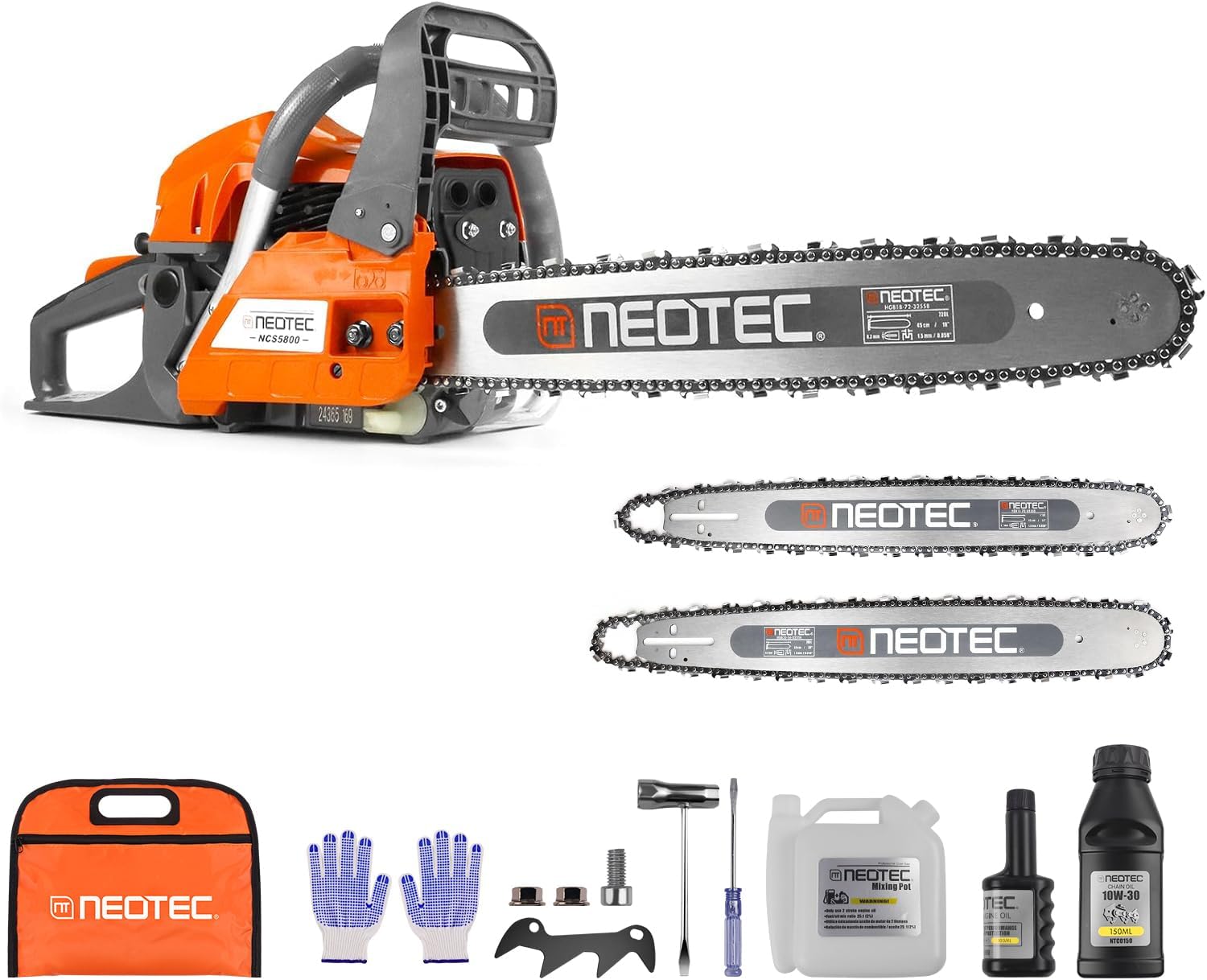
58CC Gas Powered Chainsaw, 18 and 20 Inch Bars
Two bar lengths in one box, chain brake, anti-vibration handles, the displacement class that handles most homeowner wood
2-cycle fuel mixing, pull start, and a big-box price point that means you should read the warranty card before the first tank
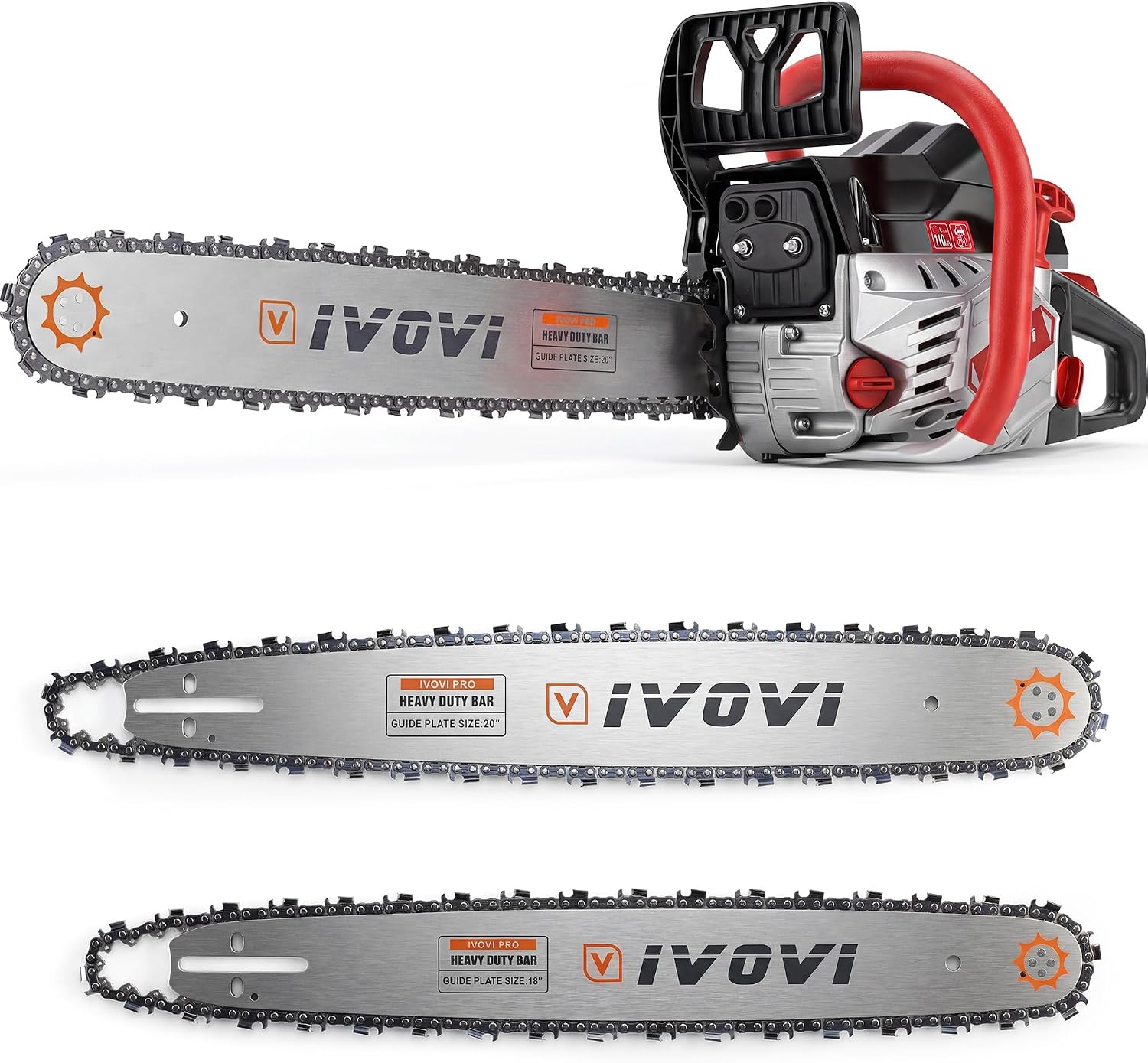
63CC Gas Chainsaw with 20-Inch and 18-Inch Bars
More displacement for bigger wood, two bars included, the class I would want on a downed trunk
Heavier than the 58cc saw, more fuel burned, and more saw than a twice-a-year firewood cutter needs
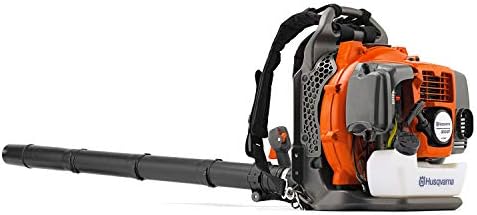
Husqvarna 350BT Gas Leaf Blower, 692 CFM Backpack
692 CFM of real airflow, a harness system that saves your arms, no runtime clock to beat
Gas and mix to haul, noise, and a backpack that gets warm on a July afternoon
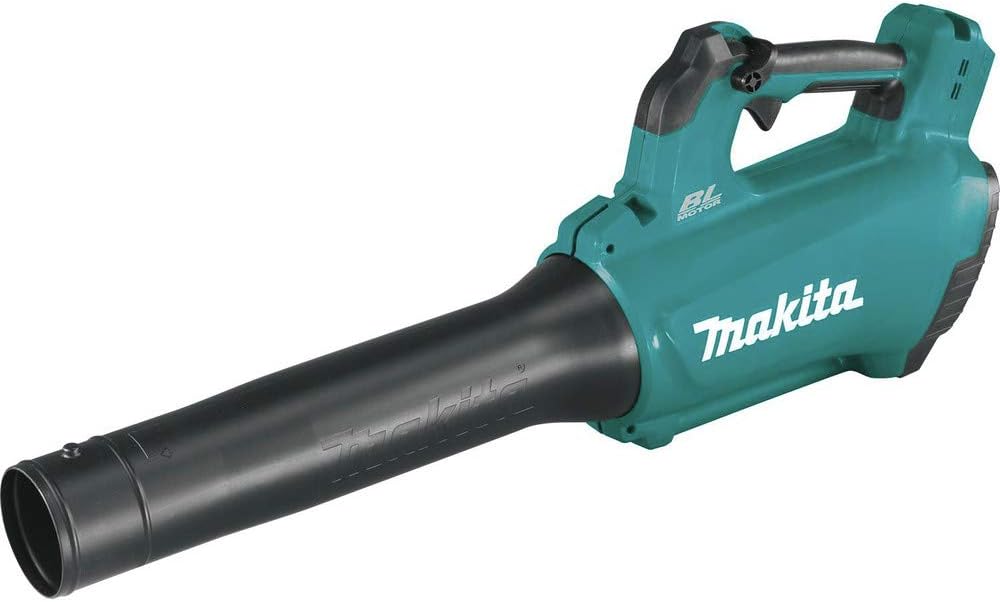
Makita XBU03Z 18V LXT Brushless Cordless Blower, Tool Only
No fuel, no pull start, no fumes, brushless motor, and it shares a battery platform with a long line of tools
Sold as tool only, so battery and charger are a separate purchase, and full-blast runtime is the honest catch
Prices and availability were captured from Amazon Creators API and may change.
How I judge a saw or a blower before it earns space
Five things, in this order.
- Cold start. First pull, after a night in the truck bed, in the rain. If it takes twenty pulls and a can of starting fluid, it is dead weight no matter what the box says.
- Timed runtime, if it is battery. Stopwatch, full blast, from a full charge, on my phone. Not the number printed on the packaging.
- What else the battery fits. If the battery does not run anything else I own, that is the real price of the tool, not the sticker.
- Wet debris. Wet leaves for a blower, wet wood for a saw. Dry debris is easy and it flatters bad tools.
- Paperwork. Warranty card in the box and a real support email on the website. If the card is missing, that is part of the review.
Nothing on that list is about horsepower. Horsepower sells saws; airflow and reliability finish jobs.
The 58cc saw: the middleweight that covers most homeowner work
This is the saw I would hand to a homeowner with a woodstove, a few storm limbs a year, and a fence line that needs clearing. The displacement is the important number here, not the bar length. A 58cc two-cycle powerhead is in the range where a gas saw stops feeling like a toy and starts pulling a chain through wet hardwood without stalling every cut.
What I like about how this one is set up: it ships with both an 18-inch and a 20-inch bar, and that matters more than people think. The 18-inch bar is the one you want for limbing and brush, because a shorter bar is lighter at the tip and easier to control. The 20-inch goes on when you are bucking trunk wood on the ground. Owning both means you are not forcing one bar to do two jobs.
The chain brake is non-negotiable, and it is here. That is the paddle in front of your left hand that stops the chain when kickback throws the bar up toward your face. Every pro wears chaps, and every saw worth owning has a working brake. Anti-vibration handles are the other feature I check, because a saw that buzzes your hands numb is a saw you will stop using after an hour. My first cheap saw vibrated so hard my fingers went white, and it needed a carburetor rebuild every other season. That is the gear that taught me to read fine print.
The honest drawbacks: two-cycle fuel means mixing gas and oil, a pull start means your shoulder does the work, and this price class is where the quality lottery lives. Some of these saws cut fine for years. Some bog on wet wood and show up with a dull chain from the factory. Buy it, check the chain, file it before the first cut, and keep the warranty card.
The 63cc saw: more displacement, two bars, more weight
Same idea, bigger engine, and the trade-off is the one you would expect. The 63cc class gives you more torque in big wood, which means fewer stalls and less time fighting a pinched bar when you are bucking a downed trunk. It also ships with a 20-inch and an 18-inch bar, so you get the same flexibility.
Here is where displacement stops being free. More cubic centimeters means more weight in your hands, more fuel burned, and a powerhead that is genuinely tiring to run overhead or on a ladder. If you are cutting a few limbs off a maple twice a year, the 63cc saw is more tool than the job. If you are dropping and bucking full trunks, or you heat with wood and process several cords a season, the extra torque pays you back in time and fewer stalls.
My rule for anyone standing in the aisle trying to decide between these two: buy displacement for the wood you actually cut, not the wood you imagine cutting. Measure the biggest trunk you touched last year. Under a foot, the 58cc class is enough. Over that, step up.
One more thing on both saws. The chain is the saw. A sharp chain on a modest powerhead beats a dull chain on a big one every single time, and no amount of displacement fixes a chain that has been dragging through dirt. File every morning on storm work, and touch up mid-job when you feel the saw start to push instead of cut.
The backpack gas blower: 692 CFM and a harness
The number that matters on a blower is CFM, cubic feet per minute, because airflow is what moves leaves. Miles per hour is a sticker number, and a blower rated in mph is selling you a marketing figure, not a pile of debris. This one is rated 692 CFM at 180 MPH with a 50.2cc engine and 2.1 HP, and that CFM figure is squarely in the range where wet leaves and wet wood chips actually move instead of smearing.
The harness system is the other half of the story. A backpack blower puts the weight on your shoulders and hips instead of your forearms, and that is the difference between clearing a big yard in one pass and quitting at hour two with dead arms. Twenty-one newtons of blowing force sounds abstract until you are pushing a mat of wet oak leaves off a driveway, and then it is the only spec you care about.
Gas is still the boss on large properties and storm debris. There is no runtime clock, no battery to swap, no charger to wait on. You fill the tank and you work. The cost is the fuel and oil mix, the noise, the fumes, and a cold-start ritual that you either learn or you hate. A backpack gas blower will finish a job a handheld battery blower cannot even start, and that is not brand loyalty talking. It is airflow and run time.
The 18V cordless blower: light, clean, and honest about runtime
This is the tool that changed my light-duty kit. The XBU03Z is an 18V LXT brushless cordless blower sold as tool only, which means no battery and no charger in the box. Brushless matters because fewer wearing parts and better efficiency out of every amp-hour. Cordless matters because there is no fuel to mix, no pull cord, and no exhaust in your face while you work along a house.
The catch, and it is a real one: runtime on full blast. That is true of every cordless blower ever built, and it is why I time batteries with a stopwatch instead of trusting the box. On a driveway, a pool deck, a walkway, and the pollen strands that carpet everything in spring, this class of blower is more than enough, and the low-speed setting stretches the charge while it works. On an acre of wet oak leaves, it is the wrong tool and you will know it in ten minutes.
Tool only is also the fine print people miss. If you already run the 18V LXT platform, this is close to a no-brainer, because the batteries you own already fit. If you do not, you are buying into a platform, and the real cost is the batteries and charger on top of the bare tool. Check what else that battery runs before you commit. One tool with a dead-end battery is a trap, and replacement batteries cost half the price of a whole new blower.
The trade-offs nobody prints on the box
Platform lock-in. The cordless blower only makes financial sense if the battery is shared. Otherwise you are paying for a battery that runs exactly one tool.
Charger speed. The brick-style wall wart that charges one battery at a time is the hidden tax on battery tools. Two batteries and one slow charger means you wait, and waiting is the job not getting done.
Fuel handling. Gas tools mean mix, stabilizer, and ethanol headaches. Two-cycle equipment that sits with old fuel is two-cycle equipment that will not start when you need it. Fresh mix, every season.
Weight versus power. The 63cc saw and the backpack blower both ask your body to pay for their output. Shoulders and hips for the blower, hands and forearms for the big saw.
Maintenance and paperwork. A gas saw wants a clean air filter, a sharp chain, and a spark plug now and then. A battery tool wants nothing until the battery dies, and then it wants a receipt. Keep the warranty card.
Matching the tool to the job
The half-acre homeowner with trees and a driveway. The 58cc saw and the 18V cordless blower. Gas for the limbs, battery for the pavement, no fuel mixing for the weekly cleanup.
The rural property with a woodstove and long gravel drive. The 63cc saw and the 692 CFM backpack. Big wood and big debris, and gas on both because the work is measured in hours, not minutes.
The storm-season household that gets hit once or twice a year. The 58cc saw first, because the saw is the tool that clears a driveway blocked by a downed maple. Add the backpack blower later if the property is big enough to justify it.
What I would buy first
If you can only buy one thing on this list and you live around trees, buy a gas saw. It is the tool that gets you out of a blocked driveway at 6 a.m., and the 58cc class with both bars covers the widest range of real homeowner work. Step up to the 63cc only if the trunks you cut are genuinely bigger than a foot across.
If your problem is leaves, not wood, start with the cordless blower if you already own that battery platform, and step to the backpack gas blower the moment your yard is measured in acres or your leaves come down wet. That is the split I would hand to my own crew, and it has not changed in twelve years of storm calls.