Storm season outside Charlotte starts in June and doesn't really quit until the ice storms stop in January. After twelve years of running a crew, my gear list comes down to two questions: what cuts the wood, and what moves the mess afterward. That's the whole reason this gas chainsaw and backpack blower comparison exists. I'm not ranking these four tools by what the box promises. I'm ranking them by what decides a job at 6 a.m. in cold rain: will it start, will it cut wet wood, will it move wet debris, and can the fuel or the battery keep up for an hour of real work.
For most homeowners, the 58cc gas chainsaw with the 18-inch bar and the Husqvarna 350BT backpack blower are the two safest buys here, because they cover the widest range of real jobs without locking you into a battery platform. The 63cc saw is the one you want when the wood is bigger than your patience, and the DeWalt 60V blower is the one you want if you already run DeWalt batteries and your yard is measured in driveways, not acres.
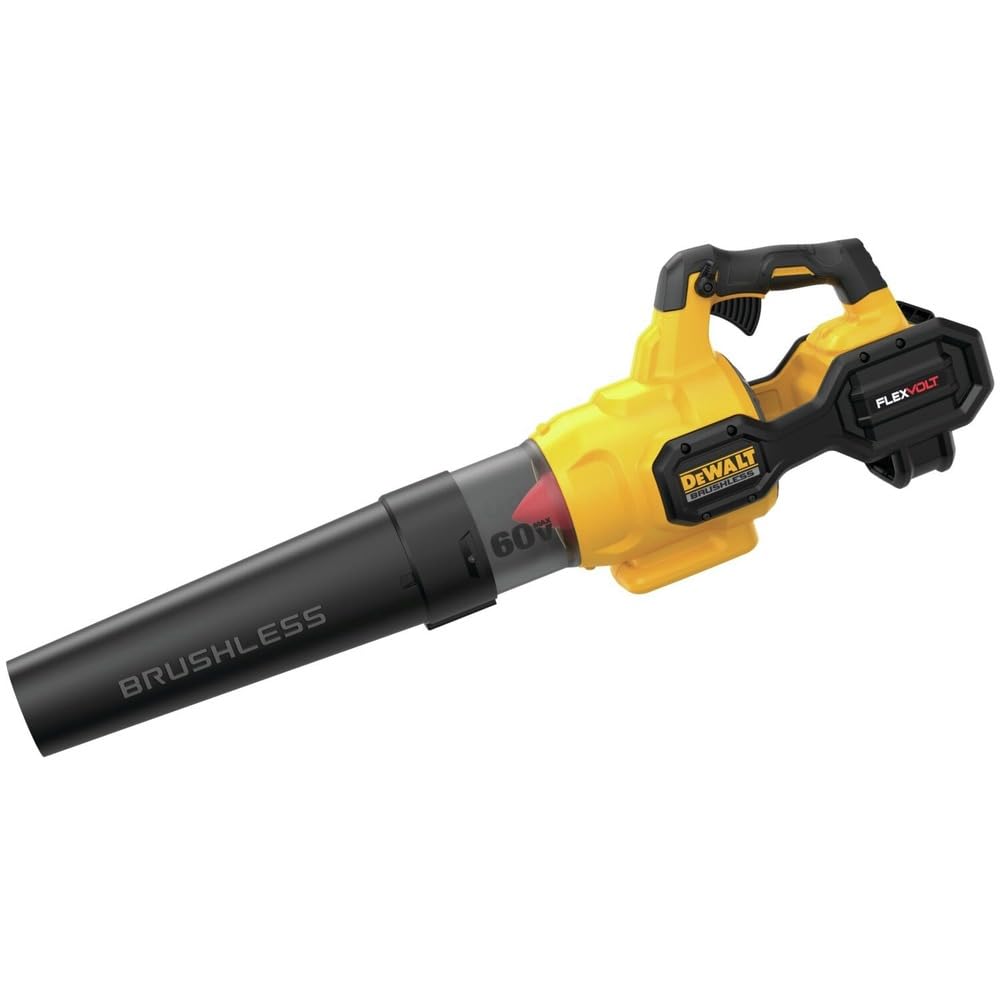
Dewalt Blower AXIAL HNDHLD 60V 600CFM DCBL772B
600 CFM from a handheld that runs on a 60V pack, with no pull cord, no exhaust, and nothing to mix
Runtime is the whole story with any battery blower, and the pack and charger are a separate line item if you don't already own the platform
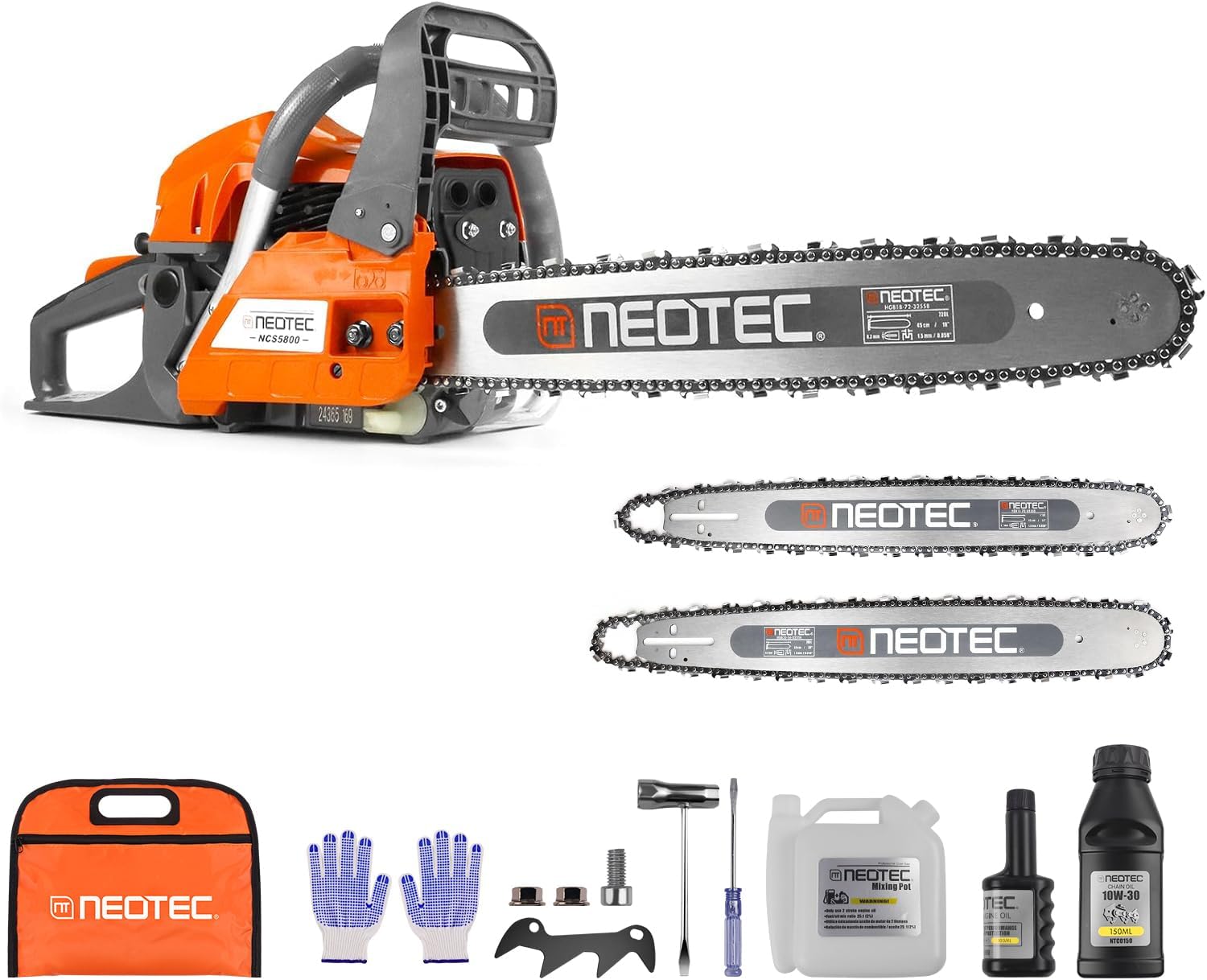
58CC Gas Powered Chainsaw 18 20 Inch Bars Chain Ergonomic Chainsaw Chain Brake Anti-Vibration System, 2-Cycle Petrol Motosierra De Gasolina for Tree Cutting Firewood Wood Yard Cleaning
Big enough to pull a 20-inch bar, with an 18-inch option for lighter work, plus the two features that actually matter on a long day: a chain brake and anti-vibration handles
Two-cycle means mixing fuel and a cold-start routine, and a saw in this class lives or dies on how the carburetor holds up
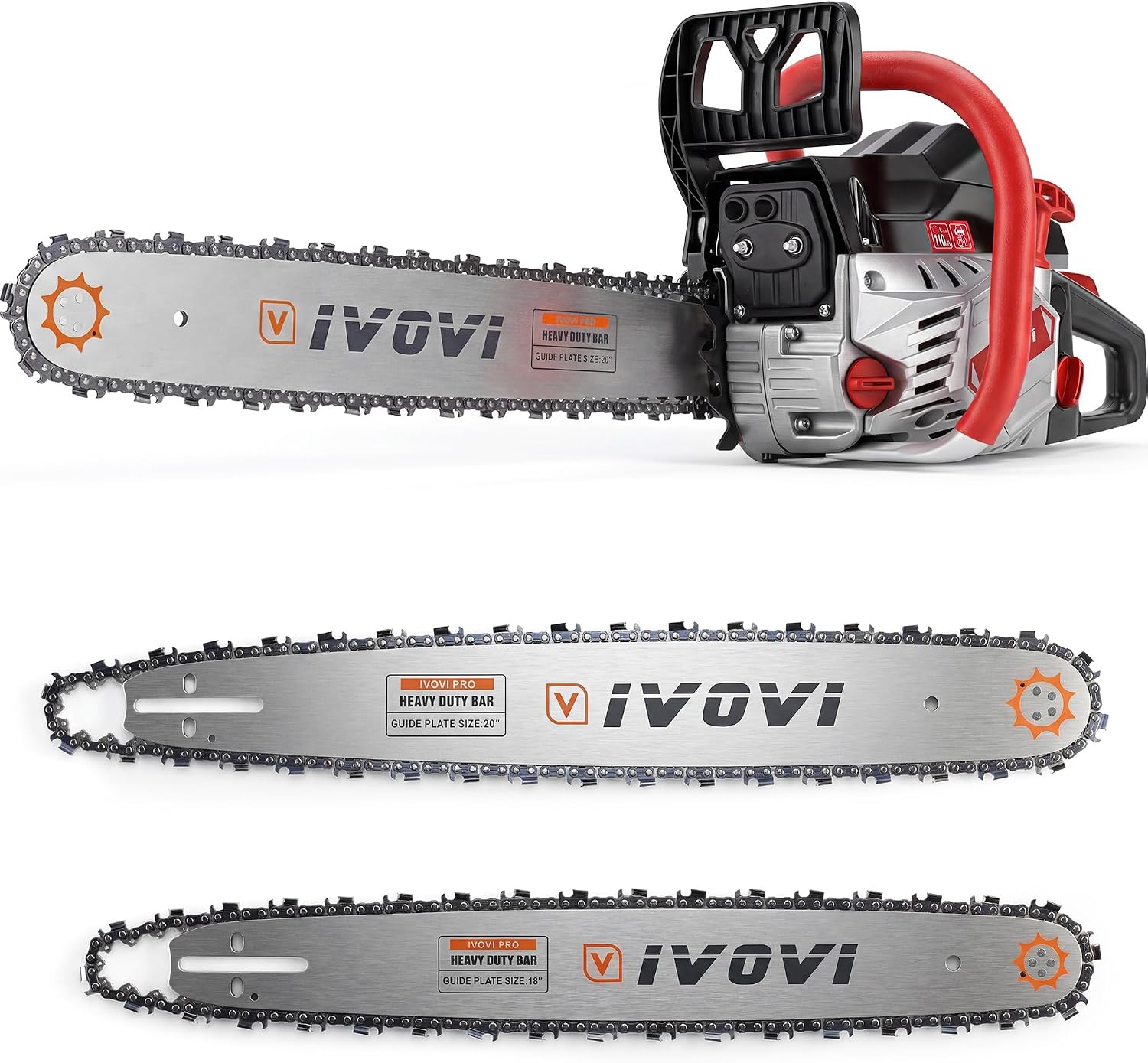
63CC Gas Chainsaw with 20-Inch and 18-Inch Bars
The most displacement on this list, so it holds rpm in hardwood instead of bogging with the bar buried, and it ships with both bar lengths
Weight and fuel appetite, plus it's more saw than someone trimming two fallen limbs a year will ever need
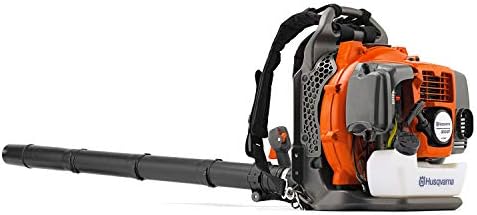
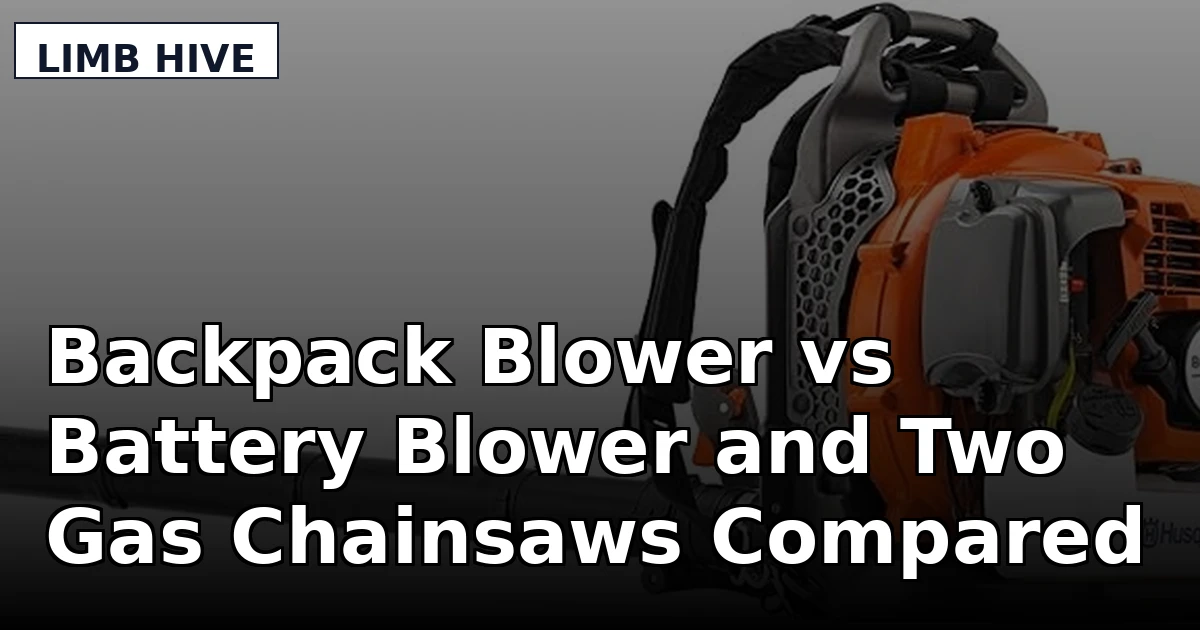
Husqvarna 350BT Gas Leaf Blower, 50.2-cc 2.1-HP 2-Cycle Backpack Leaf Blower with 692-CFM, 180-MPH, 21-N Powerful Clearing Performance and Ergonomic Harness System, Gifts for dad
692 CFM and 180 MPH behind a 50.2cc engine on a backpack harness, which is the combination that actually clears wet leaves
Gas, noise, weight, and a two-stroke engine that wants fresh fuel and a real maintenance routine
Prices and availability were captured from Amazon Creators API and may change.
How I judge a saw and a blower
Twelve years of storm calls taught me that spec sheets are written by people who have never pulled a starter cord in the rain. So I judge gear on four things.
First, cold start. A saw that needs eight pulls at dawn is a saw that gets left in the truck. Second, wet wood and wet debris, because dry leaves are easy and dry pine is a lie. Third, whether the tool holds up for an hour of continuous work without a breakdown, which is exactly where cheap saws and small battery packs both quit. Fourth, the paperwork: a warranty card in the box and a real email address behind it.
For blowers, the number I care about is CFM, cubic feet per minute. That's airflow, and airflow moves leaves. Miles per hour is a sticker number, and a blower sold on mph is selling you a velocity figure that says almost nothing about how wide a path it clears. For saws, displacement and bar length tell you the class of work, and the chain tells you the rest. The chain is the saw. A sharp chain on a cheap saw beats a dull chain on an expensive one every single time.
The 58cc gas chainsaw: the middle of the road, which is where most people live
This one is a 58cc two-cycle saw that ships with 18-inch and 20-inch bar options, a chain brake, and an anti-vibration handle system. That's the correct feature list for a homeowner or landowner who cuts firewood and clears the occasional storm-dropped limb.
Displacement is the honest spec. 58cc is enough engine to pull a 20-inch bar through green hardwood if the chain is sharp and the rakers are set right, and it's light enough to carry around a property for an afternoon without your arms quitting. Run the 18-inch bar and it feels noticeably stronger in the cut, because the engine isn't dragging as much bar and chain. If your material is mostly 8 to 14 inches, the 18 is the smarter setup, and you can step up to the 20 when the trunk gets bigger.
The anti-vibration system matters more than people think. Vibration is what numbs your hands after an hour, and numb hands are how people drop saws and get hurt. A chain brake is non-negotiable on anything you'd hand to a homeowner, because it's the feature that stops the chain fast when the bar kicks back toward you. Wear chaps regardless.
What you give up with a gas saw in this class: you mix fuel, you learn a cold-start routine, and you'll be pulling a cord in the cold. If you already own a gas saw and know how to tune a carburetor, that's a non-event. If you don't, spend an afternoon learning the starting drill before you need the saw in an emergency.
The 63cc gas chainsaw: more saw, more weight, more appetite
The 63cc saw, with both a 20-inch and an 18-inch bar, is the biggest engine on this list. Five extra cc doesn't sound like much on paper. In the cut, it's the difference between a saw that keeps its rpm when the bar is buried and one that bogs while you wait for it to catch back up.
This is the saw for bucking big trunks, cutting rounds off a decent oak, and dealing with storm wood where you don't get to pick the diameter. Two bars in the box is a real convenience: run the 20-inch for felling and heavy bucking, drop to the 18-inch when you want the saw to feel quicker in smaller material.
The trade-off is honest and predictable. More displacement means more weight on your arms and more fuel burned per hour. A 63cc saw is not the tool for trimming a few branches around the yard, and it's not the tool I'd hand to someone who has never run a saw. The extra power is only useful if the wood demands it. If your cutting is mostly limbs and small trunks, the 58cc saw does the job with less fatigue, and fatigue is a safety issue, not a comfort issue.
Husqvarna 350BT: the backpack that moves wet leaves
The 350BT is a 50.2cc, 2.1-horsepower backpack blower rated at 692 CFM and 180 MPH, with a harness system that puts the weight on your shoulders and hips instead of your forearms. Backpack versus handheld is the single biggest decision in blowers, and it isn't close. A handheld tires your arm out in twenty minutes. A backpack lets you work for hours because the engine rides your back and the tube does the pointing.
692 CFM is real airflow. That's the number that lets you push a mat of wet oak leaves across asphalt instead of chasing dry ones around a pool deck. The mph figure matters a little for scooting gravel and pine straw out of beds, but CFM is what clears a lawn.
What you accept with the 350BT: it's gas, so it's loud, it's heavy, it needs mixed fuel, and it wants the same cold-start discipline as a saw. Two-stroke equipment also hates stale fuel. Fill a can in April and use it again in November and you'll be cleaning a carburetor. Fresh fuel, stabilizer, and a real starting routine solve almost every complaint people have about gas blowers.
DeWalt 60V cordless blower: the one that earns a spot on the truck
The DeWalt 60V axial handheld is rated at 600 CFM, which is genuinely in backpack territory for airflow. That's the surprise about 60-volt cordless blowers: the airflow caught up before the runtime did.
What it wins on is convenience. No pull cord, no exhaust, no mixing fuel, no fuel can in the truck bed. For a driveway, a walkway, a pool deck, a garage floor, and the pollen strands that carpet everything in spring, it's faster to grab and put away than any gas blower ever built. It also doesn't wake the neighborhood at 7 a.m., which matters more the closer your neighbors live.
What it loses on is runtime. Full blast on any battery blower is a countdown, and the honest way to shop is to check the pack size and think in minutes of full-throttle work, not in square feet of lawn. There's also the platform question. If you don't already own 60V DeWalt batteries and a charger, you're buying into a system, and you should price that in before comparing it against a gas blower. If you already run DeWalt 60V on a trimmer or a drill, the math flips hard in its favor, because the battery you own is the battery you already paid for.
That's the rule I use with my own kit: if the battery doesn't fit anything else I own, I'm not buying it. One tool with a dead-end battery is a trap, and replacement packs cost enough that a proprietary platform is really a subscription.
Gas versus battery, without the sales pitch
Battery is the future, and I've moved my light-duty trimming over to it. Gas is still the backup you never apologize for.
Here's the split I'd give a neighbor. If your work is measured in minutes, in a suburban yard, and you already own a battery platform, the DeWalt 60V blower handles it and you'll never miss the fuel can. If your work is measured in hours, in wet debris, on a property with a lot of trees, gas still finishes jobs battery tools can't start. Same logic on saws: a battery saw is fine for limbs and light trimming, and a gas saw is what you want when the tree is on the roof and the clock is running.
What to check before you order
The chain ships dull more often than anyone admits. Buy a file and a guide, learn to touch up the cutters, and check chain tension before every session. A dull chain turns a good saw into a bad one, and that's the most common reason people decide a saw is underpowered.
Check what's in the box. Some listings are tool only, some include a battery and charger, and the photos can look identical. On the 60V blower, confirm whether you're buying the bare tool or a kit, and if it's bare, confirm your existing packs fit.
Read the warranty card before the return window closes. If the card isn't in the box and there's no email address on the website, that's information you can use.
Match the bar to the job. An 18-inch bar on a 58cc engine cuts faster than a 20-inch bar on the same engine in small wood, because there's less chain to pull. Don't buy bar length for the spec sheet. Buy it for the trunks you actually have.
Who should buy which
The 58cc saw with the 18-inch bar is the pick for a homeowner clearing storm limbs and cutting a couple of cords of firewood a year. It's the one saw that does most things.
The 63cc saw is for bigger wood and people who already know how to run a saw. If you're bucking trunks over 16 inches regularly, the extra displacement pays you back in time.
The Husqvarna 350BT is for large yards, wet leaves, and anyone who has already figured out that a handheld blower is a toy. It's the gas blower here that clears an acre without a break.
The DeWalt 60V blower is for the person who already owns the batteries, wants zero maintenance, and has a driveway-sized job. It's the tool you grab for ten minutes of cleanup, not the tool you plan an afternoon around.