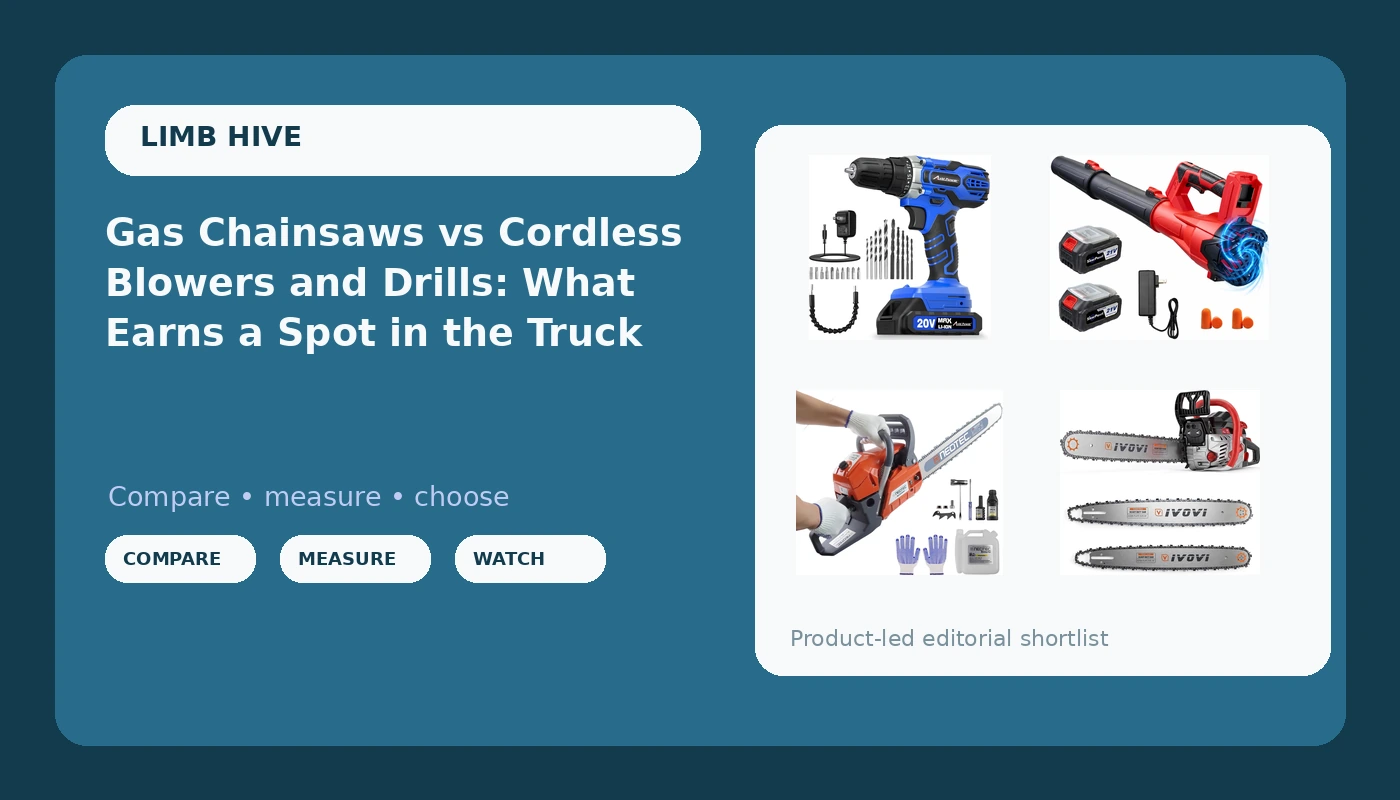
Storm season outside Charlotte does not care what the box promised. I ran a tree crew for 12 years and I still keep three gas saws in the truck, because a battery that quits at hour two with a maple leaning on a driveway is not a plan. So when neighbors ask me to settle the gas chainsaw vs cordless leaf blower argument, I tell them they are not having the same argument. One is a cutting tool that has to start cold at 6 a.m. in the rain. The other is a cleanup tool that has to move wet debris off concrete without making your arms quit first. This comparison puts four tools through the questions I put everything through: two gas saws with 18 and 20 inch bars, a 21V cordless blower with two batteries in the box, and a 20V cordless drill set that lives in a different lane entirely.
To be straight with you: none of these four have been through a full storm season on my bench. What follows is spec-sheet reading, years of category experience, and the exact questions I would answer before I handed over money. That is the honest version.
The short answer: the 58cc and 63cc gas saws are for wood that has to come down, the 21V blower is for driveways, decks, and garages, and the 20V drill set is the one that quietly gets used every week. Buy the saw by displacement and the blower by CFM, not by the sticker.
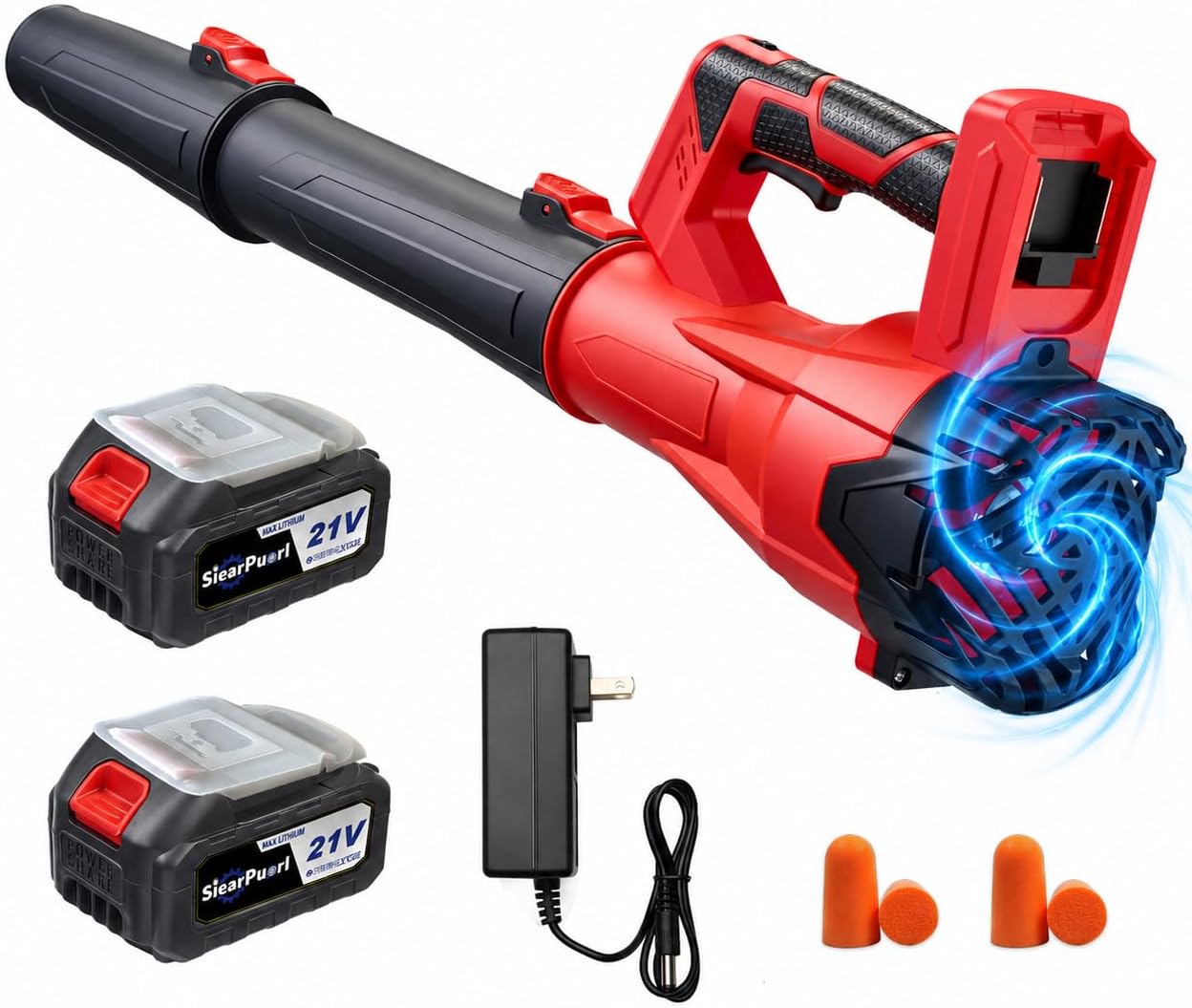
6-Speed Modes Cordless Leaf Blower 21V, 200MPH, two 2600mAh batteries
Two batteries in the box is the real feature, and six speeds let you feather dry debris without scattering it into the neighbor's yard
200MPH is a sticker, not airflow; the runtime on full blast is the catch, and the charger only does one battery at a time
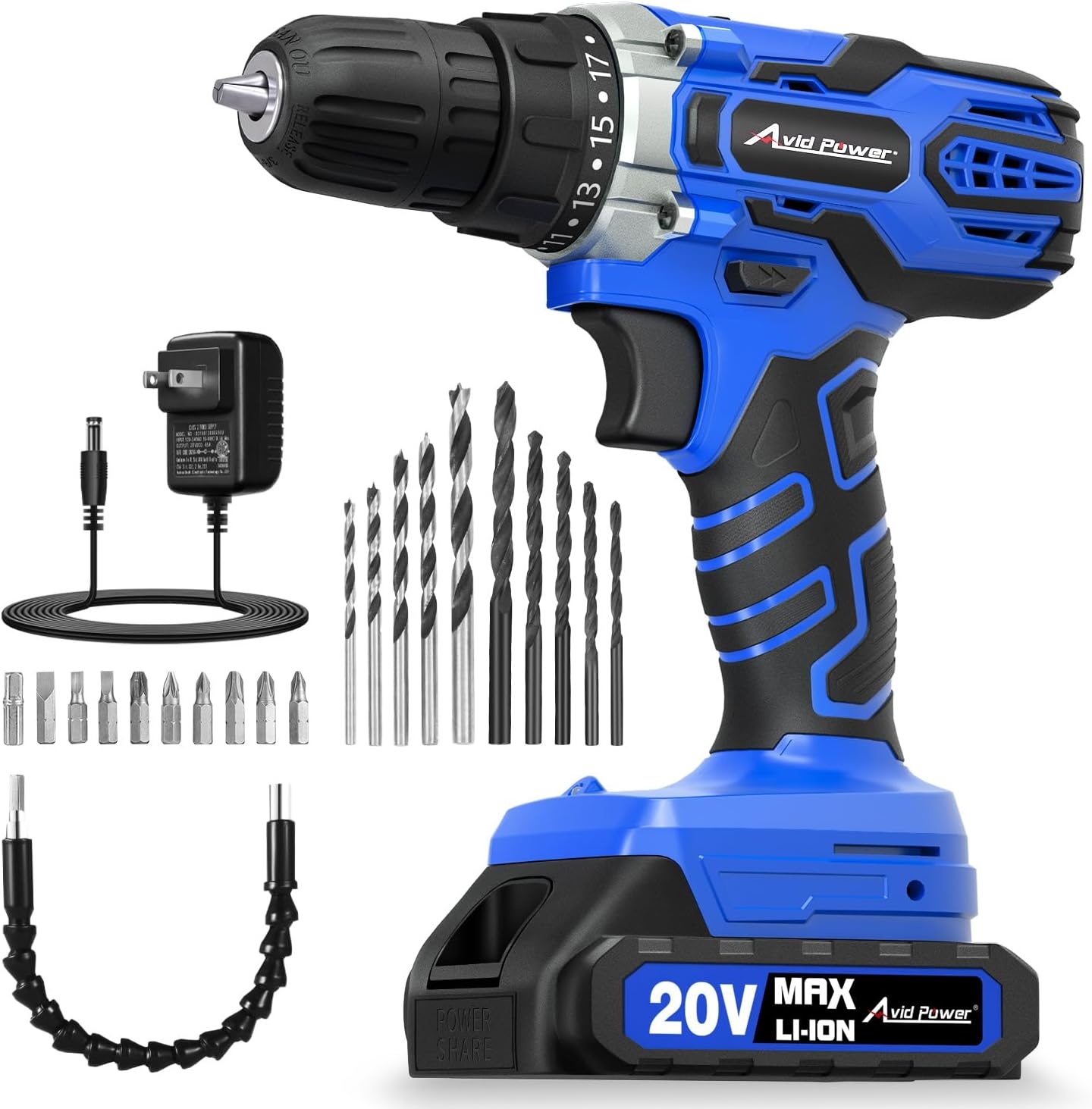
AVID POWER 20V Cordless Drill Set with Battery and Charger for Home DIY, Blue
Cheap entry into a cordless platform, battery and charger included, does gate hinges and deck screws without a cord
It is not a saw and should never be compared to one; 20V does not share batteries with the 21V blower
58CC Gas Powered Chainsaw, 18 and 20 Inch Bars, Chain Brake, Anti-Vibration
Lighter than the big-bore saw, easier on the hands for limbing and bucking, and the anti-vibration and chain brake are the right priorities
2-cycle means mixing fuel, and a 20 inch bar on 58cc is a claim that only wet wood can verify
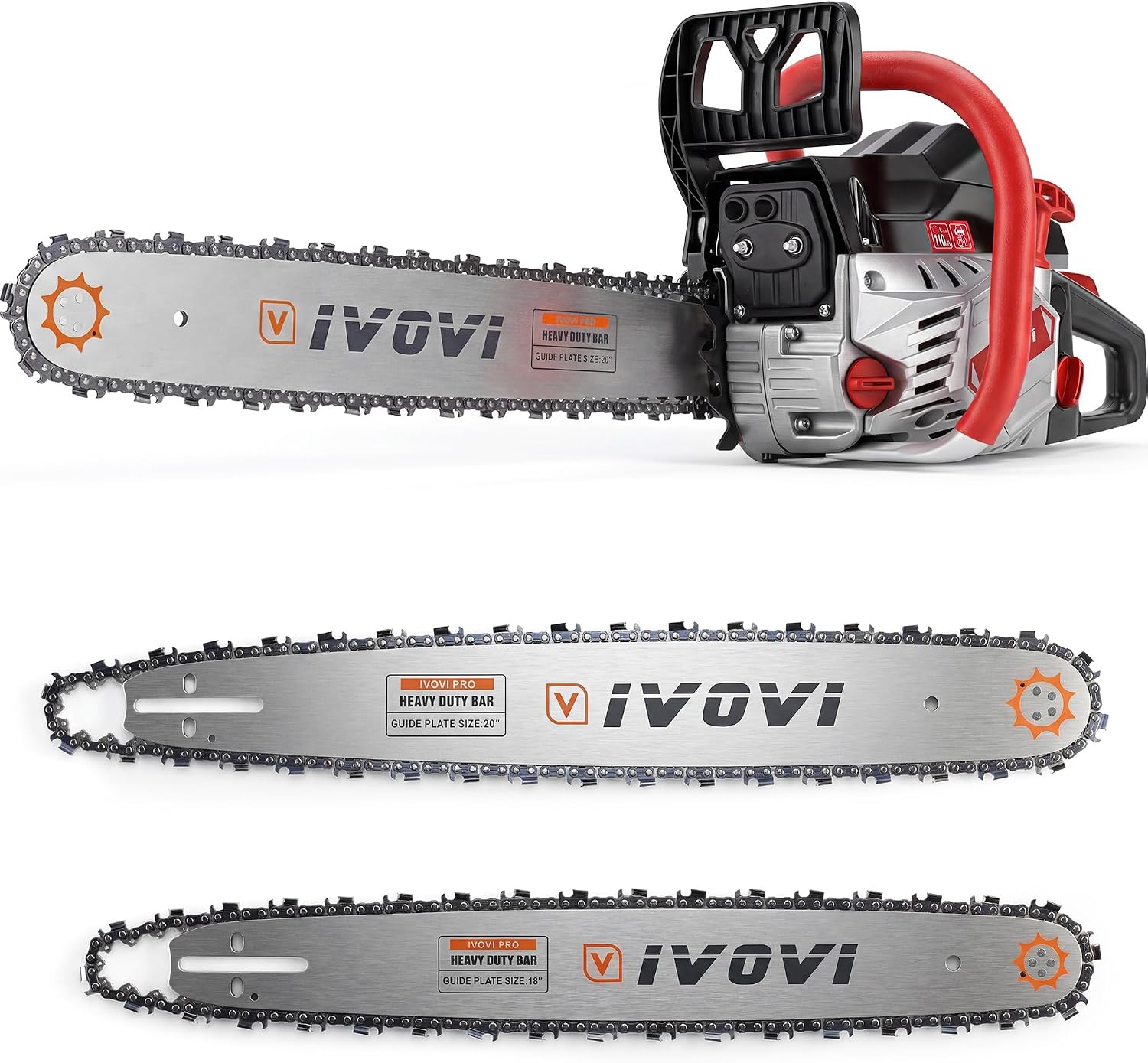
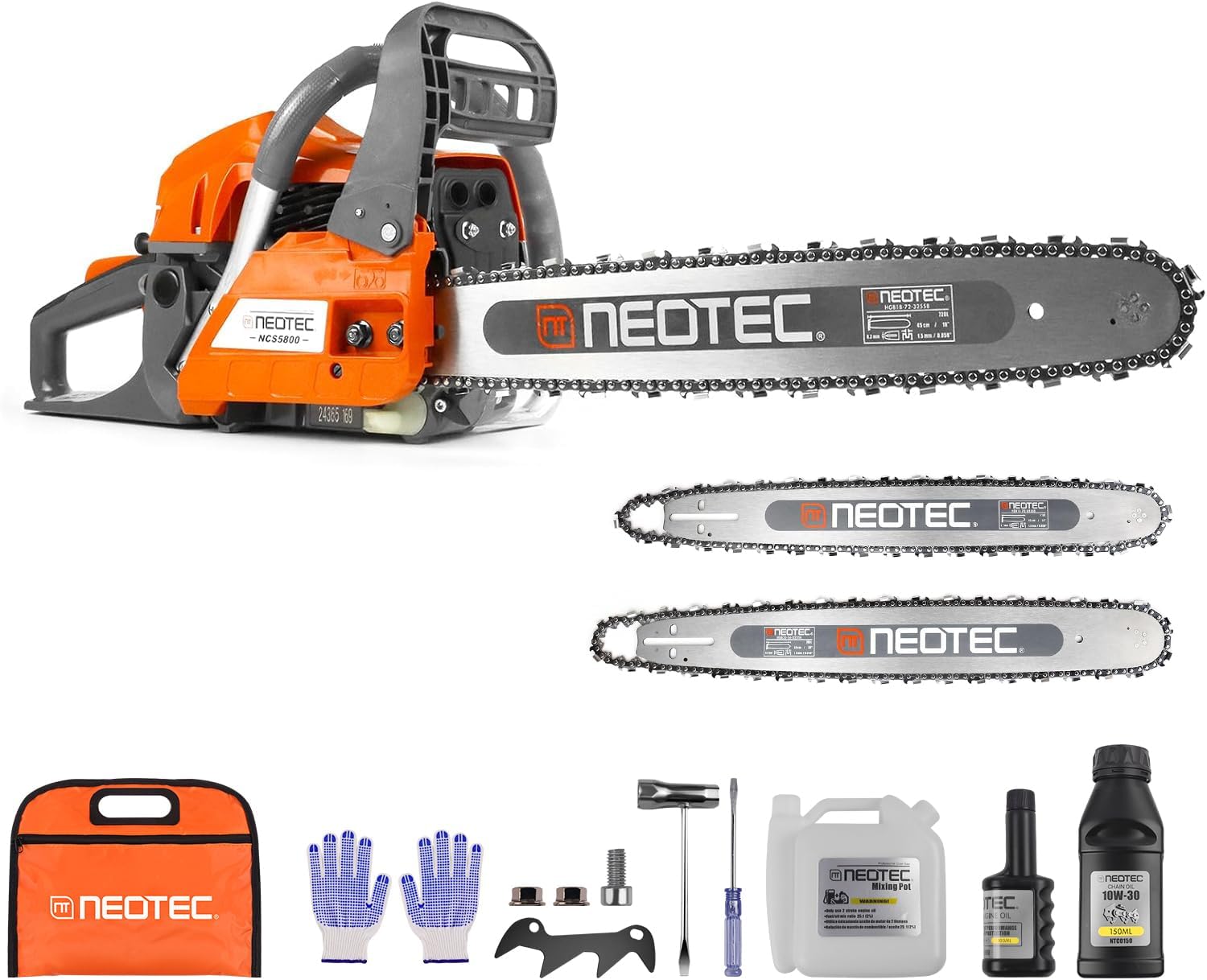
63CC Gas Chainsaw with 20-Inch and 18-Inch Bars
More displacement means more torque in big wood, and two bars cover both felling and limbing without swapping chains
Heavier, thirstier, and still a pull start; displacement does not fix a dull chain
Prices and availability were captured from Amazon Creators API and may change.
How I judge a tool that has to work at 6 a.m.
Five questions, every time. Will it start cold, first or second pull, after a night in the truck bed? How long does the battery really last on full blast, timed on my phone instead of read off the box? Does the battery fit anything else I own, or am I buying a paperweight with a handle? Can it cut wet wood or move wet leaves? And would I hand it to my crew at 6 a.m. after a storm, or would I hand them the saw I already trust?
Notice that none of those questions involve horsepower figures or marketing copy. A chainsaw has one job, which is to cut wood safely. Everything past that is a sales pitch. The same goes for blowers. Wet debris is the truth-teller, and the number that matters is CFM, not miles per hour. A blower rated in mph is selling you a number, not airflow.
The gas saws: 58cc and 63cc, both with two bars
Both of these are 2-cycle petrol saws, and both ship with an 18 inch and a 20 inch bar. The difference that matters is displacement. The 58cc saw carries a chain brake and an anti-vibration system as named features. The 63cc saw carries the bigger engine and the same two bar lengths.
Here is why anti-vibration is not a luxury line item. My first saw was a cheap big-box special that vibrated my hands numb and needed a carburetor rebuild every other season. Numb hands at hour three are a real injury path, not a comfort complaint, and that is why the anti-vibration spec on the 58cc saw is one of the first things I look at. The chain brake is the other one. It is not a feature, it is the reason you still have all your fingers when the nose of the bar bites and the saw kicks back toward your face.
Displacement is the honest number on the spec sheet. A 63cc saw has more torque in big wood, which is what you want when the trunk is wider than the bar is long and the clock is running. A 58cc saw is lighter and easier to carry all day, and lighter matters more than people admit when you are limbing a downed oak at the end of a long shift.
What neither saw fixes is the chain. The chain is the saw. A sharp chain on a cheap saw beats a dull chain on an expensive one every single time, and factory chains ship dull more often than they should. Budget for a file and a spare chain on day one, not month three.
The trade-offs on gas are real and I will not paper over them. You are mixing 2-cycle fuel. You are dealing with ethanol in pump gas. You are doing plugs, air filters, and the occasional carburetor work. You are pulling a cord in the cold. And you are storing fuel, which means stabilizer and a plan. What you get back is a saw that eats wet wood all day and refuels in 30 seconds. That is the entire reason three gas saws live in my truck.
One thing worth knowing: a saw that will not idle right in cold weather is usually a fuel problem, not a brand problem. The dealer tech who explained that to me saved me from returning two perfectly good saws.
The cordless pair: a 21V blower and a 20V drill
The blower is a 21V cordless unit rated at 200MPH, with six speed modes, two 2600mAh batteries, and a lightweight body aimed at dry and wet leaves, lawn debris, garages, and driveways.
Two batteries in the box is the feature I care about most, and it has nothing to do with the airflow rating. It has to do with the charger. If the charger is the brick style that only charges one battery at a time, then the second battery is what keeps you working while the first one refills. Without it, you are standing in the driveway watching a light blink.
Six speeds sounds like marketing until you use a blower on a real property. Pollen strands and dry leaves on a garage floor want low speed, or you just relocate the mess onto the car. Wet oak leaves on a driveway want everything the tool has. Being able to pick between those two is worth more than another 10 mph on the box.
Which brings me to the number that is not on the label. CFM is the number that actually matters, and 200MPH tells you how fast the air leaves the tube, not how much of it there is. A narrow high-speed stream moves a small pile fast. Airflow moves the whole driveway. Nobody buying a $40 blower should expect it to clear an acre of wet oak leaves, because it will not. It will clear a driveway, a pool deck, a walkway, a garage floor, and the gutters you can reach from a ladder. For a suburban lot, that is mission accomplished. Runtime on full blast is the catch, and cold mornings shave lithium capacity, so plan the job around the batteries you have.
The drill is a 20V cordless set with a battery and charger included, aimed at home DIY. It does not belong in the same sentence as the saws. It hangs a gate, drives deck screws, runs a paddle bit through a fence rail, and gets used four times more often than anything else on this list. Its value in this comparison is as the second tool on a battery platform question, which is the next section.
You can Visit on Amazon → to see what the kit includes before you commit.
The battery platform problem nobody checks before checkout
If the battery does not fit anything else I own, I am not buying it. One tool with a dead-end battery is a trap, and I have been burned twice by proprietary packs and inflated runtime claims.
Look at the two cordless tools here. One is 21V, one is 20V. Those are different platforms with different chargers and different replacement batteries, even though the numbers look like they belong to the same family. That is not a defect in either tool, but it is the fine print that decides whether you are buying a system or buying a one-off.
Replacement batteries cost half the price of a whole new tool. That is the real price of a cordless blower, and it is the number I want to know before I get attached to the sticker price. Check three things: what else the platform fits, whether the charger handles one battery or two, and what a spare pack costs. If the answers are bad, the tool is a paperweight with a handle.
Who should buy which
Storm cleanup and firewood, big wood on a regular basis: the 63cc saw, with the 20 inch bar for felling and the 18 for limbing. It is heavier and thirstier, and you will not care when the trunk is wide.
Storm cleanup and firewood, mostly under 16 inches, plus limbing all day: the 58cc saw. The anti-vibration and chain brake are the right priorities, and your arms will thank you at hour four.
Suburban lot, driveway, pool deck, garage floor, and pollen season: the 21V blower. Two batteries and six speeds are what you are actually paying for.
Home DIY with an eye on a battery platform: the drill set. It is the cheap entry point, and it will out-work everything else here in terms of hours used per year.
What I check before I click buy
The warranty card in the box. If the card is missing and there is no email address on the website, that is part of the review, not a footnote.
The chain out of the box. Sharp or dull, that tells you a lot about the rest of the tool.
The spare battery price, and whether that pack fits anything else you own.
The bar length claim. A 20 inch bar on a saw that bogs is a 20 inch bar that teaches bad habits.
The return window. Buy a hot-swap return policy before you buy the tool, especially on anything cordless.
And the safety kit, every time: chaps, eye protection, hearing protection, and a sharp chain. A gas saw is a tool that demands respect, and a battery saw is not a toy because it is quiet.
What I am testing next
The 63cc and 58cc saws are on my list for a cold-start morning at 6 a.m. and an hour of cutting in wet wood, because that is the only test that matters for a storm saw. The 21V blower gets the wet-leaf test on a driveway and a stopwatch on full blast, from a full charge, timed on my phone. The drill gets the boring test: how many deck screws before the pack quits. Full report when the job book has real numbers in it.
Until then, buy the tool that matches the debris you actually have, check what the battery fits, and read the warranty card before you read the price.