A limb comes down across the driveway, and the gutter line fills with wet oak leaves the same weekend. Those are two different problems, and the gear that solves them is different too, which is why chainsaws and leaf blowers end up in the same shopping cart and then get separated in the garage. This guide covers six tools spanning gas, corded electric, and battery power, from a 63 cc gas saw that ships with two bars to a 450 CFM handheld blower that runs on a battery you may already own. The goal is simple: match the tool to the work in front of you instead of the sticker on the box.
Related: Chain Sharpening by Hand: The Ten Strokes That Beat a Dull Factory Chain
Quick answer
The Husqvarna 350BT Gas Leaf Blower is the strongest fit for large yards and wet storm debris because its 692 CFM airflow rating and backpack harness system are aimed at long clearing sessions rather than quick touch-ups. Choose the Milwaukee M18 FUEL Handheld Blower instead when you already run M18 batteries and want a light, grab-and-go tool for driveways, walkways, and pool decks.
Chainsaws and leaf blowers worth comparing
These six tools split across three power sources and two very different jobs. A gas backpack blower and a battery handheld blower solve the same task with different compromises, just as a 63 cc gas saw and a 20 volt pole saw do.
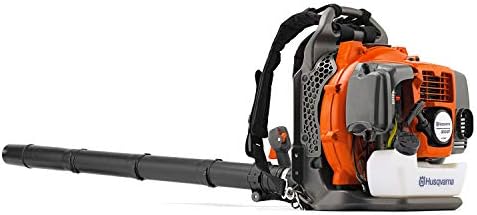
Husqvarna 350BT Gas Leaf Blower, 50.2-cc 2.1-HP 2-Cycle Backpack Leaf Blower with 692-CFM, 180-MPH, 21-N Powerful Clearing Performance and Ergonomic Harness System, Gifts for dad
A 50.2 cc two-cycle backpack blower rated at 692 CFM and 180 MPH, with an ergonomic harness system that carries the weight on your shoulders instead of your forearms. The airflow rating and backpack layout are built for long sessions on wet debris and big yards.
Visit on Amazon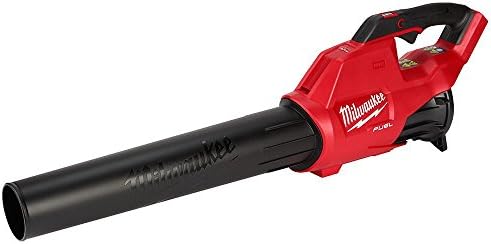
Milwaukee M18 FUEL 120 MPH 450 CFM 18-Volt Lithium Ion Brushless Cordless Handheld Blower (Battery Sold Separately)
A brushless 18 volt handheld blower rated at 450 CFM and 120 MPH. The draw is the M18 FUEL platform and the brushless motor; the battery is sold separately, so the real cost depends on what you already have on the shelf.
Visit on Amazon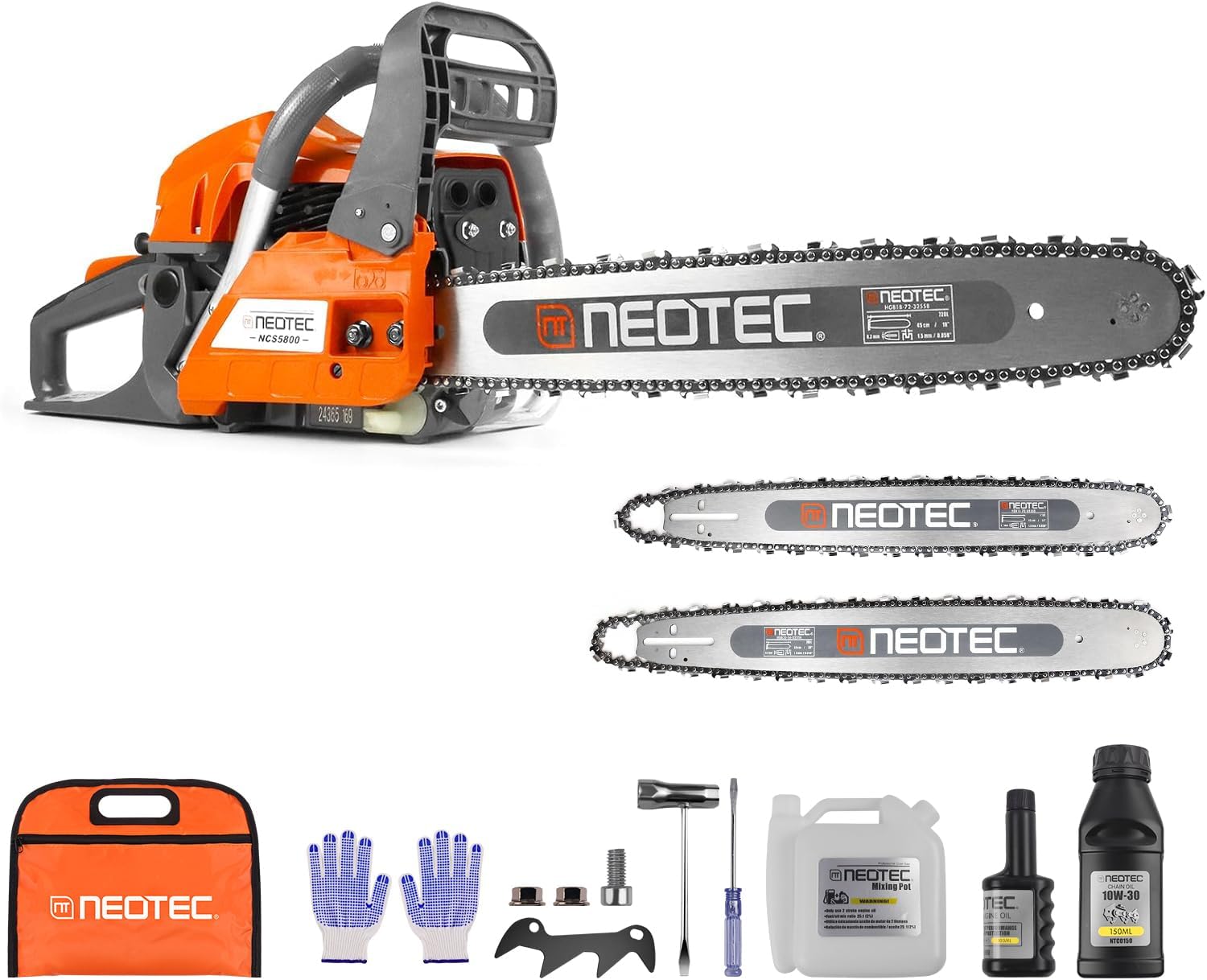
58CC Gas Powered Chainsaw 18 20 Inch Bars Chain Ergonomic Chainsaw Chain Brake Anti-Vibration System, 2-Cycle Petrol Motosierra De Gasolina for Tree Cutting Firewood Wood Yard Cleaning
Check current Amazon price
A 58 cc two-cycle gas saw that ships with both an 18 inch and a 20 inch bar and chain, plus a chain brake and an anti-vibration system. Two bar lengths let you run lighter for limbing and longer for bigger wood without buying a second saw.
Visit on Amazon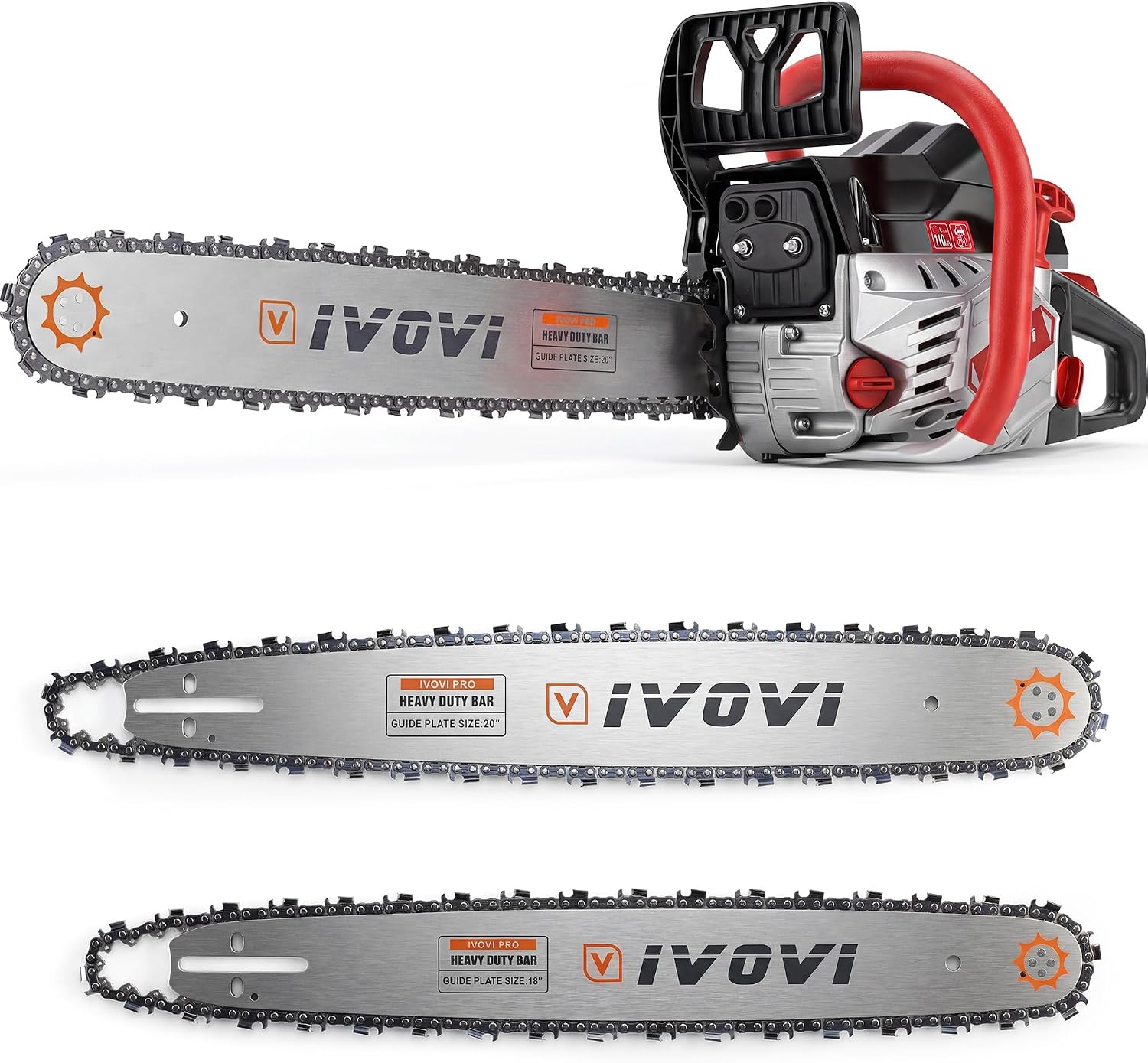
63CC Gas Chainsaw with 20-Inch and 18-Inch Bars
The largest displacement saw in this group at 63 cc, supplied with a 20 inch and an 18 inch bar. More displacement generally means more torque in big wood, and it also means more weight and a bigger appetite for fuel mix.
Visit on Amazon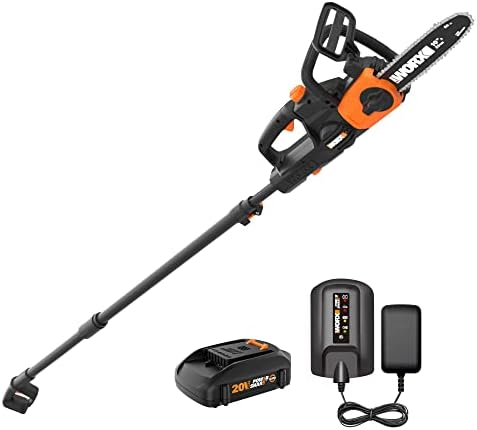
WORX Cordless Chainsaw, 20V 10" 2-in-1 Pole Saw with Auto-Tension, WG323
A 20 volt cordless 2-in-1 tool that converts between a compact chainsaw and a pole saw, with a 10 inch bar and auto-tension. The pole configuration reaches overhead limbs you would otherwise be tempted to cut from a ladder.
Visit on Amazon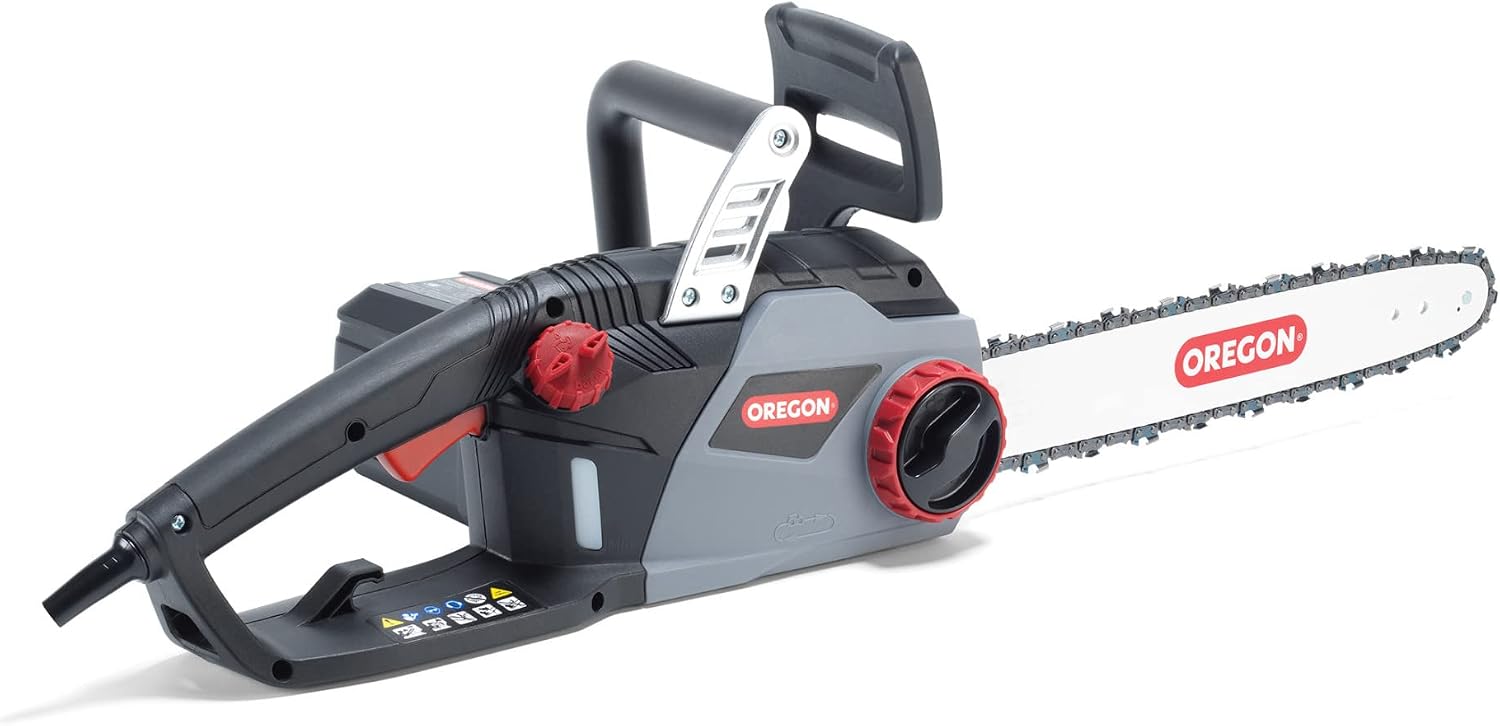
Oregon 2400W Corded Electric Chainsaw with 16" Guide Bar & Saw Chain
A corded electric saw with a 2400 watt motor and a 16 inch guide bar and saw chain. No fuel to mix and no pull start to fight, but you stay tethered to an outlet and a properly rated extension cord.
Visit on AmazonPrices and availability may change. Check the retailer for current details.
How these products were compared
This guide compares power source and what it demands from you, rated airflow in CFM and airspeed, bar length and engine displacement, ergonomics such as harness systems and anti-vibration handles, and the extras a tool needs before its first cut or first pass, whether that is a two-cycle fuel mix, an outdoor extension cord, or a battery you already own.
The specs here come from the product listings, not from a timed trial. Where a number is quoted, it is the manufacturer's rating, and where a trade-off is described, it is one that follows from the design: a backpack blower carries weight differently than a handheld, a 63 cc saw weighs more than a 20 volt trim tool, and a corded saw never runs out of juice but always runs out of cord.
How to choose the right tool
Start with the power source, because it decides almost everything else. Gas tools carry their own energy and do not care how far the wood pile is from the nearest outlet, which is why a 50.2 cc backpack blower and a 58 cc or 63 cc saw remain the standard for storm debris and acreage. The trade is maintenance: two-cycle engines need a measured fuel mix, a clean air filter, and a saw that is tuned rather than simply charged. Corded electric, like the 2400 watt Oregon saw, trades range for simplicity. You get consistent power with no fuel and no battery, and you accept an extension cord, an outlet, and a limit on how far from the house you can work. Battery sits in the middle and is the right answer for a lot of homeowners, provided the platform question is settled first.
That platform question is the one most buyers get wrong. A cordless tool is only as useful as the batteries that fit it, and a battery that fits nothing else you own is a dead end the day the tool is discontinued. Before buying the Milwaukee M18 FUEL handheld blower, check whether you already run M18 packs, because the blower is sold without one. The same logic applies to the WORX 20 volt 2-in-1 pole saw: it is a light-duty trimming tool that shines for reach and convenience, and it makes the most sense if the battery it uses is already in your garage. If you want to go deeper on that calculation, see our notes on battery platforms and the one-tool trap.
Airflow is the second decision, and it is where blower marketing gets loudest. Miles per hour is the easy number to print and the least useful one for moving a mat of wet leaves down a driveway. Cubic feet per minute, or CFM, describes the volume of air the tool moves, and volume is what clears debris. A 692 CFM backpack and a 450 CFM handheld are not the same class of tool, and the gap shows up exactly when the leaves are wet and heavy. Airspeed still matters for dislodging stuck debris from gravel and gutters, which is why the best tools publish both numbers and why you should read the CFM figure first.
For saws, match bar length and displacement to the wood you actually cut. A 16 inch bar on a corded saw handles limbs, small felling, and firewood bucking within reach of an outlet. An 18 inch bar is the comfortable all-around length for a gas saw, and a 20 inch bar is for trunks and bigger rounds, with the understanding that a longer bar on the same engine cuts slower in hard wood. Displacement is the honest measure of capability: a 58 cc saw and a 63 cc saw will both pull a 20 inch bar, and the larger engine generally holds RPM better in big wood while costing you weight and fuel. Two bars in the box, as with both gas saws here, means one powerhead can cover limbing and bucking.
Finally, decide whether you are buying one tool or building a kit. If the driveway and the wood pile are on the same property and the trees are yours, a backpack blower plus a gas saw covers the most ground. If you are trimming ornamentals, clearing a walkway, and taking down the occasional limb, a battery blower and a pole saw will do the work without fuel cans or ear-splitting noise.
Husqvarna 350BT Gas Leaf Blower
The Husqvarna 350BT is the pick here because it addresses the hardest version of the job. It is a 50.2 cc two-cycle backpack blower rated at 692 CFM and 180 MPH, with an ergonomic harness system that spreads the load across your shoulders and back instead of hanging it off one wrist. That combination is what separates a backpack blower from a handheld: the airflow rating handles wet, matted debris, and the harness keeps you working past the point where a handheld would have your forearm burning. It is the tool you reach for when the gutter line is packed and the yard is an acre.
The trade-off is everything that comes with gas. You are mixing two-cycle fuel, you are pulling a starter, you are wearing hearing protection, and you are carrying a heavier unit than any battery blower. It is not the right tool for a two-minute pass over a pool deck or a front walk. It is also not a tool you buy for a quarter-acre lot with three trees on it, because the capacity you are paying for will never get used.
Alternatives to consider
The Milwaukee M18 FUEL Handheld Blower is better suited to driveways, walkways, and quick cleanups when you already own M18 batteries, since its 450 CFM rating and brushless motor make it a grab-and-go tool with no fuel and no cord, while the WORX 20 volt 2-in-1 Pole Saw is a stronger fit when the work is overhead limbs and light trimming rather than ground-level storm debris.
The 58CC Gas Powered Chainsaw, the 63CC Gas Chainsaw, and the Oregon 2400W Corded Electric Chainsaw cover the saw side of the list. The 58 cc saw with its 18 inch and 20 inch bars is the versatile middle, the 63 cc saw is the one for bigger wood and longer bars, and the corded Oregon is the low-maintenance option for cutting that happens within reach of an outlet, with no fuel mix and no battery to charge.
Day-to-day use and maintenance
Two-cycle equipment lives or dies on fuel. Mix fresh gas at the ratio the manual specifies, use a stabilizer if the can is going to sit, and never refuel a hot engine. A saw that will not idle or start cold is usually a fuel problem before it is a brand problem, and old mix is the most common cause. Keep the chain sharp and tensioned, check the bar oil reservoir every time you fill the tank, and clean the air filter on both the saws and the backpack blower, since a clogged filter costs you power long before the engine quits.
Battery tools have a shorter list but not an empty one. Charge packs indoors at moderate temperatures, store them partway charged if they will sit for months, and keep the contacts clean. A brushless motor like the one in the M18 FUEL blower has fewer wear parts than a brushed motor, so the battery is the item that ages first. Corded tools need almost nothing beyond a look at the cord and a correctly rated extension cord, since an undersized cord starves a 2400 watt motor and makes it work harder than it should.
Safety is not a section you skim. Wear eye and hearing protection for every gas tool, wear chaps when you run a saw, and understand that kickback happens when the nose of the bar contacts something solid. Keep both hands on the handles, keep your footing clear of the cut, and never reach overhead with a saw unless you are using a pole saw designed for it. Clear the work area of people and pets before you start either tool, and let a gas blower idle down before you set it on the ground.
Buying checklist
- Measure the longest bar you realistically need, and the reach you need for overhead limbs.
- Choose CFM over MPH for blowers, and displacement over sticker claims for gas saws.
- Confirm that the exact model includes the bar lengths, harness, or chain brake you are counting on.
- Check the battery platform if the tool is cordless, and whether a battery is included at all.
- Read the starting, fueling, and maintenance instructions before the first use.
- Verify the current retailer price, availability, warranty terms, and return policy.
Final recommendation
Choose the Husqvarna 350BT Gas Leaf Blower when you are clearing large yards, wet leaves, and storm debris and want airflow that a handheld cannot match. Choose the Milwaukee M18 FUEL Handheld Blower when you already run M18 batteries and want a light tool for driveways and walkways. For cutting, pick the 58 cc gas saw as the all-around option, step up to the 63 cc saw for bigger wood, add the corded Oregon saw if your cutting happens near an outlet, and treat the WORX 2-in-1 pole saw as the reach tool for light trimming rather than a storm-work replacement.